

Beautiful Burdock Root: Arctium lappa
By Steph Zabel
Herbalist, Ethnobotanist and Educator
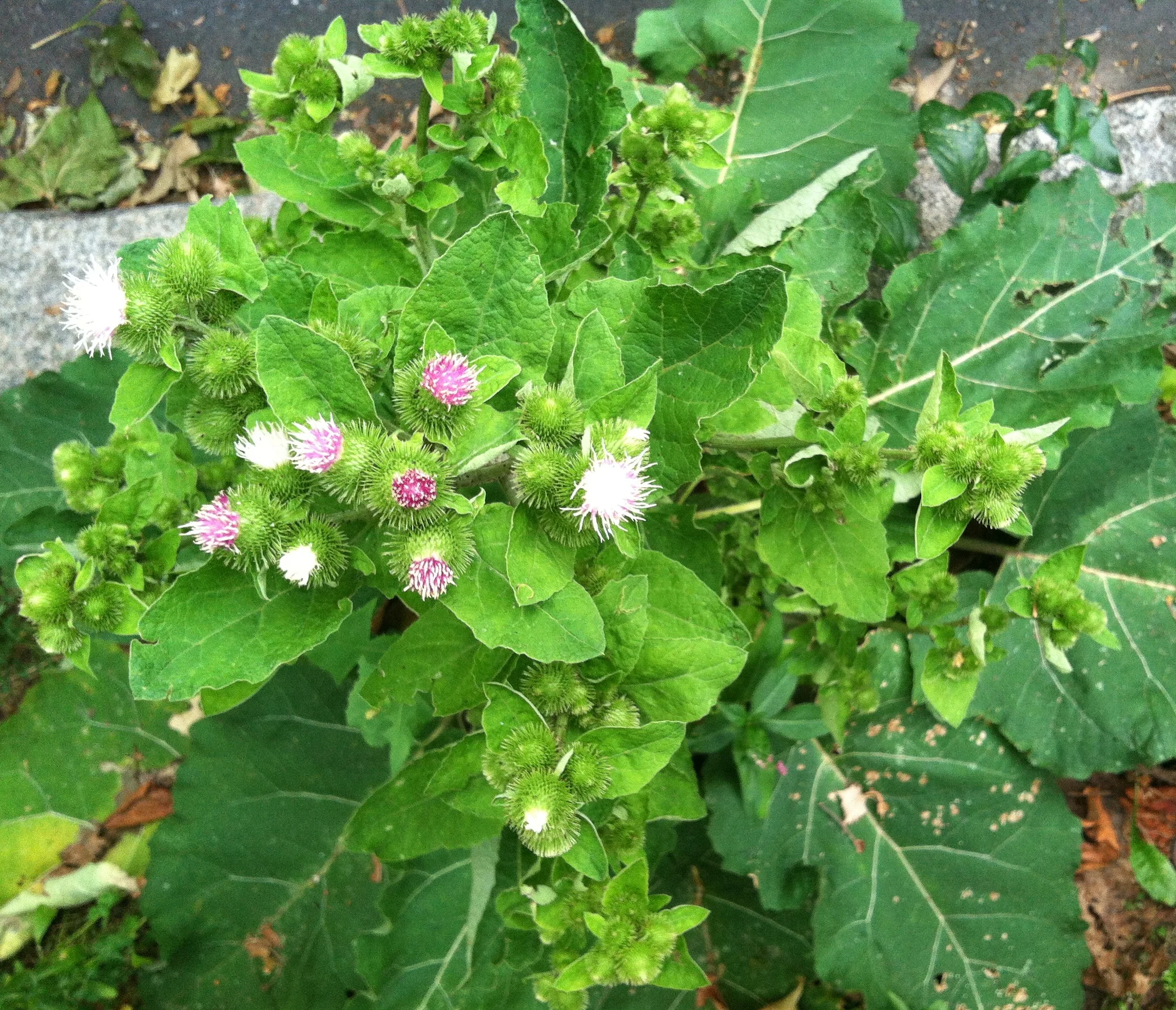
Burdock is a beautiful, large-leafed plant that pops up in areas where humans live. You’ve seen it growing around Cambridge and Somerville — I’m certain of it!
Burdock is generally called a “weed” since it likes to grow in places where it was not planted. Often overlooked, it is actually quite a lovely plant, when you take the time to admire it. The bright magenta flowers could easily be mistaken for a kind of thistle, and burdock is, in fact, closely related to thistles. The flowers are covered with prickly burrs, which interestingly were the inspiration behind the invention of Velcro! Get close to some of these clingy flowers and seed heads and you will see what I mean…
By Steph Zabel
Herbalist, Ethnobotanist and Educator
Burdock is a beautiful, large-leafed plant that pops up in areas where humans live. You’ve seen it growing around Cambridge and Somerville — I’m certain of it!
Burdock is generally called a “weed” since it likes to grow in places where it was not planted. Often overlooked, it is actually quite a lovely plant, when you take the time to admire it. The bright magenta flowers could easily be mistaken for a kind of thistle, and burdock is, in fact, closely related to thistles. The flowers are covered with prickly burrs, which interestingly were the inspiration behind the invention of Velcro! Get close to some of these clingy flowers and seed heads and you will see what I mean…
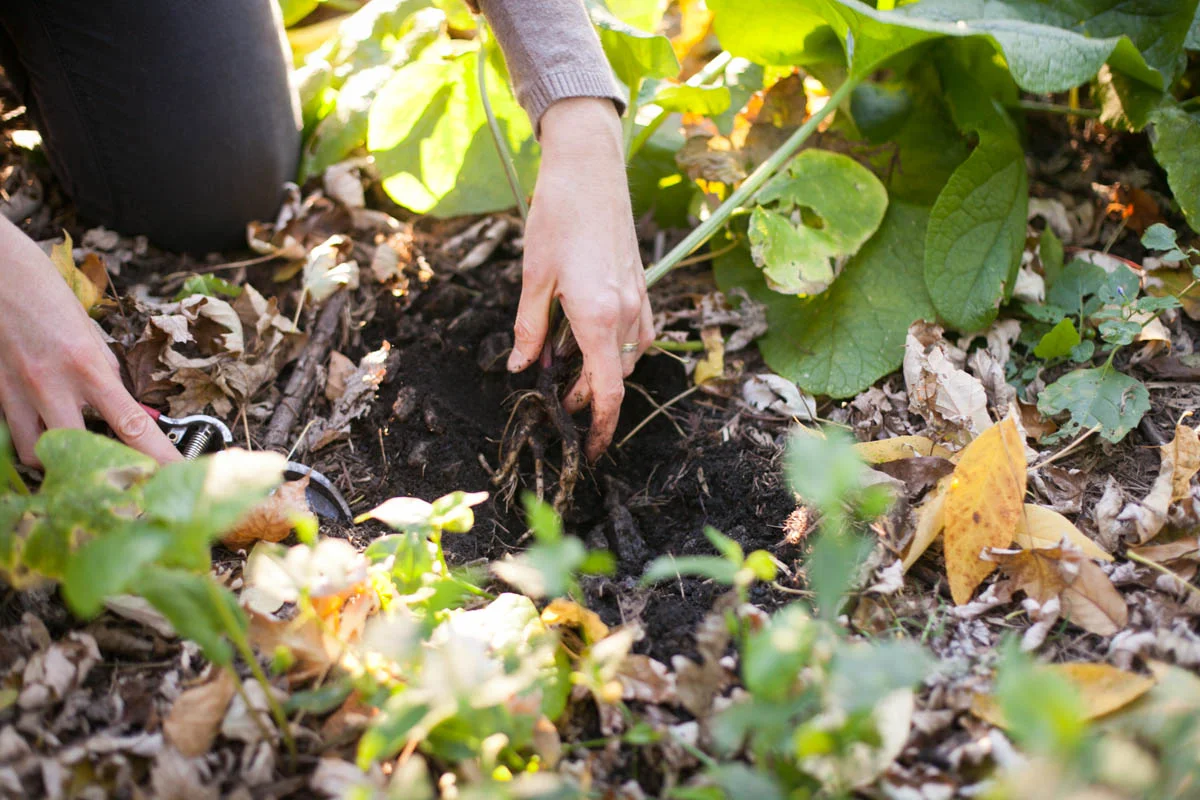
Burdock is a resourceful creature and can thrive in places where many other plants cannot. Part of its tenacity and strength is due to its long taproot, which burrows deeply down into the earth. With this advantage burdock can reach precious micro-nutrients that are often inaccessible to shallow-rooted plants.
Herein lies much of burdock’s goodness: Because of its deep earth diving, the roots contains many nutrients and minerals, as well as inulin, a special kind of storage carbohydrate (prebiotic). Inulin happens to be wonderful for the human digestive tract because it feeds and nourishes our beneficial gut flora. Taking burdock root is a good idea when there is any sort of digestive issue, especially when the good gut flora needs some support.

When taken as food, tea or tincture, burdock (slowly) acts upon the digestion and liver. It helps the system to better digest, and assimilate fats and oils — these are then more easily distributed to the skin, hair and internal tissues. Burdock is often a popular choice for helping resolve any sort of eruptive skin problem such as acne, rashes, or eczema. I will often pair it with red clover to help support the removal of waste products that may be improperly eliminating through the skin instead of through other channels. Traditionally this cleansing action led burdock to be known as a “blood purifier” because it helps to detoxify the body and blood by stimulating the release of waste products from the cells.
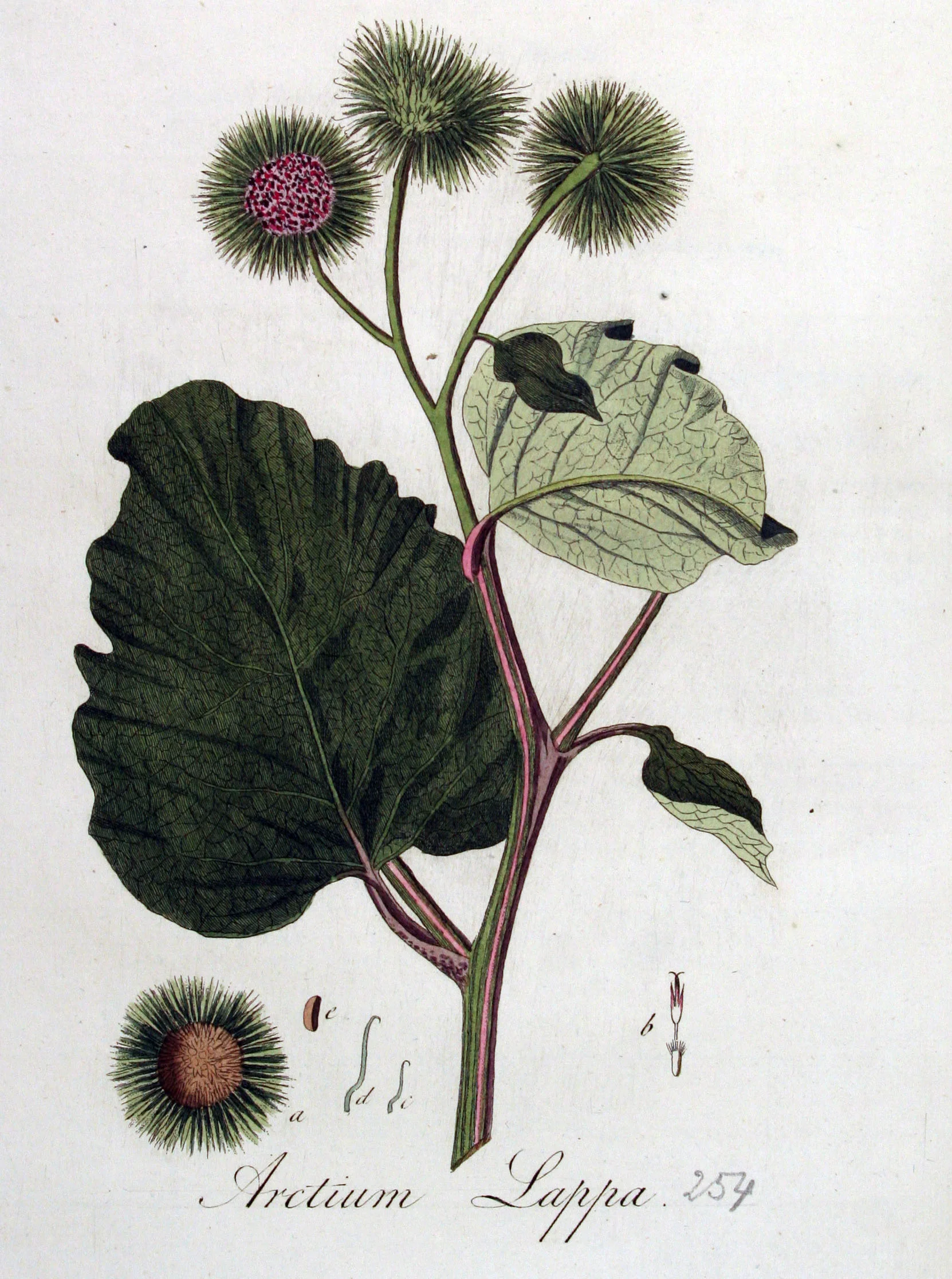
Burdock root is a gentle and nutritive tonic that helps to restore one’s natural energy and to overcome states of depletion. Not that long ago it was also used as a natural aphrodisiac! However, one important thing to know about burdock is that although it can have a very deep and profound effect on the body, it works slowly and must be taken with consistency over time. A few doses of burdock will not do the trick — this is an herb that needs to be used with commitment over several months. In exchange it will show you its ability to nourish depleted bodies, provide increased energy, and improve the function of the digestive system. Judith Berger — one of my favorite herbal writers — states, “The root’s style is almost tortoise-like as it patiently wades through tired organs, pulling poisons, chemical residues, and contaminants which slow down the lymphatic, digestive, and urinary organs.”
If you are looking to harvest your own burdock once the growing season returns, keep in mind that it is a biennial. Be sure to gather one-year-old plants in the fall, or two-year-old plants in the spring, i.e., any time before it has flowered. You want the energy of the root to still be underground rather moving upwards into the flowers and seeds.
HOW TO USE:
There are many ways to enjoy the sweet and earthy taste of burdock. You can eat the fresh or cooked roots, take it as a tincture, or drink it as a tea. If taking it as a tea, it will need to be simmered on the stove in order to draw out all of its benefits. Add 1 heaping tablespoon of the dried root to 1.5 cups of water in a small saucepan. Bring to a boil, then reduce to a simmer, cover with a lid, and let this cook for 15 to 20 minutes. Then strain and drink.
Another wonderful way to use nutritive burdock root is to steep it in apple cider vinegar. Vinegar is an excellent medium for drawing out the mineral contents of plants. Place 2 to 3 tablespoons of the dried root (or twice this amount of the chopped fresh root) in an 8 oz. glass jar. Cover with apple cider vinegar and let this mixture steep at room temperature for 2 to 3 weeks. Then strain out the roots, place the remaining liquid in a clean, dark bottle, and use this earthy mixture on vegetables or salads. I like to store my herbal vinegars in the fridge for the longest shelf life. Use up within 6 months.
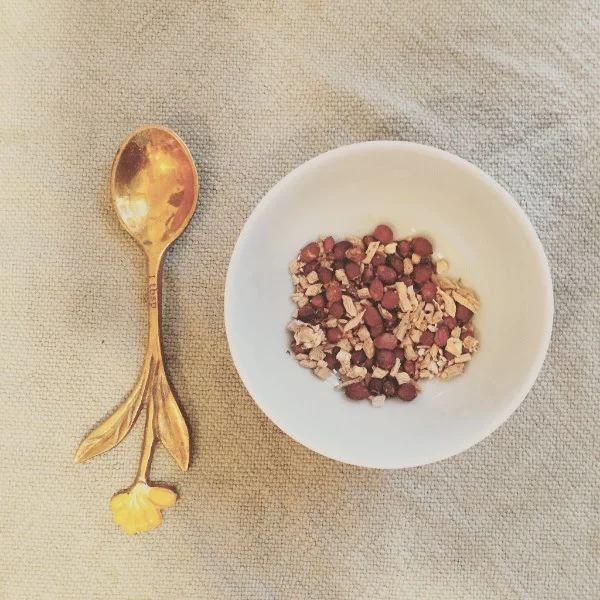
Root & Berry Tea
This is a nourishing, grounding and earthy-sweet tea for chilly days. This simple trio of berries and roots will warm your heart and spirit
Blend together:
4 Tblsp. hawthorn berries*
3 Tblsp. codonopsis root, dandelion root* or astragalus root*
1 Tblsp. burdock root*
*You can find these herbs in the bulk section at Cambridge Naturals!
Place 2 heaping Tablespoons of this mixture in 1.5 cups of water in a small saucepan. Bring to a boil then lower the heat to a simmer, cover, and let cook for 15 to 20 minutes. Strain and drink. This recipe will make enough for 3-4 servings.
Steph Zabel is an herbalist and educator based in Somerville, MA who helps urban dwellers connect with the plant world. She teaches herbal classes, is available for individual wellness consultations, and is also the founder of HERBSTALK, Boston’s community herbal conference. Learn more about her work at: www.flowerfolkherbs.com and www.herbstalk.org.
References:
https://umm.edu/health/medical/altmed/herb/burdock
http://www.botanical.com/botanical/mgmh/b/burdoc87.html
http://www.woodherbs.com/Burdock.html
http://www.herbcraft.org/burdock.html
Herbal Rituals by Judith Berge
The perfect card for the one you love!
Valentine's Day doesn't have to be about Hallmark! Good Paper Cards is a wonderful company with a mission to restore the humanity and beauty within each of us that gets so easily forgotten and tossed aside. They start with their cardmakers - women who have escaped sex trafficking in the Philippines and young adults orphaned by disease in Rwanda.
For her February Staff Pick, Grace chose three delightful handmade cards from Good Paper Cards with the theme of love. Read about her choices below!
Valentine's Day doesn't have to be about Hallmark! Good Paper Cards is a wonderful company with a mission to restore the humanity and beauty within each of us that gets so easily forgotten and tossed aside. They start with their cardmakers - women who have escaped sex trafficking in the Philippines and young adults orphaned by disease in Rwanda.
For her February Staff Pick, Grace chose three delightful handmade cards from Good Paper Cards with the theme of love. Read about her choices below!
She says... These unique pun-ny greeting cards are handmade in Rwanda by young orphans, and your fair trade purchase allows them to support their families. On the back of each card is a signature of the person who made the card for you, which I think makes it really personal and special. I thought it would be fun to accompany a card with one of our grocery items as a little Valentine's Gift this year. Here are some examples:
Give the "You Make Miso Happy" card with a jar of South River miso!


Give the "Perfect pair" card with a pair of Maggie's socks.


Give the "I'm Nuts About You" card with a jar of Wilderness Poets raw almond butter.


There are so many cute possibilities! Browse our awesome card selection to create more of your own endearing pairings.
Ashwagandha (Withania somnifera Solanaceae): The Strength of a Horse
By Steph Zabel
Herbalist, Ethnobotanist and Educator
Ashwagandha is a wonderful plant that comes to us from the Ayurvedic tradition. It is known as an herb that helps to improve one's resiliency, cope with stress, and reestablish healthy sleep patterns. It is a calming and nutritive herb that has been used for thousands of years in Ayurvedic medicine and is considered to be an important rejuvenative and tonic remedy.
Also called Winter Cherry, it is a cultivated plant of Indian origin. The roots are the prized part used in herbal preparations, and after just one growing season they can be harvested. Commonly ashwagandha roots are found in powdered form.
By Steph Zabel
Herbalist, Ethnobotanist and Educator
Ashwagandha is a wonderful plant that comes to us from the Ayurvedic tradition. It is known as an herb that helps to improve one's resiliency, cope with stress, and reestablish healthy sleep patterns. It is a calming and nutritive herb that has been used for thousands of years in Ayurvedic medicine and is considered to be an important rejuvenative and tonic remedy.
Also called Winter Cherry, it is a cultivated plant of Indian origin. The roots are the prized part used in herbal preparations, and after just one growing season they can be harvested. Commonly ashwagandha roots are found in powdered form.


Ashwagandha is a plant that has a range of benefits for the modern human: as a calming adaptogen it has been used for anxiety, stress, nervous exhaustion, adrenal burnout, depression and insomnia. Adaptogens are a class of herbs that help us to cope with daily stressors, increase our strength and resiliency, and support proper immune function. Because of these many positive qualities, in Ayurveda this plant is thought to be an herb of longevity.
When taken over time, ashwagandha is said to impart the “strength of a horse” — and helps one to have increased energy, vitality, and fertility. It was traditionally used during times of debility or to recover from long-standing illness. The root is also very high in iron and has proven useful for anemia. Like many adaptogenic herbs, it generally works best taken over the long term, consistently for many weeks or months.


One of the most interesting properties of this plant is that it has been shown to be very beneficial in restoring normal sleep patterns. Taken regularly ashwagandha may greatly help people that suffer from insomnia.
NOTE: Ashwagandha is a member of the Solanaceae or nightshade family, which is a problematic group of plants for some people. Proceed carefully if you have issues with this group of plants. Also, some people may find that ashwagandha is too warming and strong for their constitution. Remember that everyone is unique and responds differently to herbs.
HOW TO USE:
Ashwagandha is commonly found in powdered form, and can be used as such in a capsule or mixed into liquid. As a powder it is traditionally taken in warm milk or mixed with ghee. The powder also blends nicely in honey as a paste, along with other herbs such as cinnamon or powdered rose petals. Finally, tinctures of ashwagandha are also available in instances when the powder is not convenient to use.
RECIPE: Spiced Ashwagandha & Cocoa Milk
What better way to take your ashwagandha than in hot chocolate?! Make this brew on cold winter nights -- it is lovely to sip on as you are winding down from the day.
2 tablespoons Cocoa powder
1 teaspoon Ashwagandha root powder
1/4 teaspoon Cinnamon
a few sprinkles of freshly grated Nutmeg
8 oz. Coconut milk* (or other milk of choice)
Honey or maple syrup to taste
This recipe makes one serving. Pour the milk into a small saucepan and whisk in the cocoa powder, ashwaganda powder, cinnamon and nutmeg. Heat gently over low heat for a few minutes, stirring occasionally. Pour into a mug and add honey or maple syrup to your taste. Enjoy!
*If using full fat coconut milk from a can I usually dilute it down with water to equal parts, i.e. 4 oz coconut milk plus 4 oz. water
References:
http://bearmedicineherbals.com/the-winter-cherry-restoring-vitality.html
http://www.herbalremediesadvice.org/ashwagandha-benefits.html
http://www.vtherbcenter.org/wp-content/uploads/2012/04/Adaptogens.pdf
https://www.mskcc.org/cancer-care/integrative-medicine/herbs/ashwagandha
http://www.ncbi.nlm.nih.gov/pubmed/10956379
http://www.ncbi.nlm.nih.gov/pubmed/17176166
https://www.planetherbs.com/michaels-blog/the-mighty-ashwagandha-superior-aphrodisiac-and-male-fertility-tonic.html
Steph Zabel is an herbalist and educator based in Somerville, MA who helps urban dwellers connect with the plant world. She teaches herbal classes, is available for individual wellness consultations, and is also the founder of HERBSTALK, Boston’s community herbal conference. Learn more about her work at: www.flowerfolkherbs.com and www.herbstalk.org.
This blog post — Ashwagandha (Withania somnifera Solanaceae): The Strength of a Horse — is for general health information only. This blog post is not to be used as a substitute for medical advice, diagnosis or treatment of any health condition or problem. Users of this Web site should not rely on information provided on this Web site for their own health problems. Any questions regarding your own health should be addressed to your own physician or other healthcare provider.
RegActiv Probiotics: Immune, Heart and Liver Wellness through Antioxidant Support
By Miles Sarill
Supplements Buyer and M.S. Candidate - Experimental Medicine
In the last thirty years, the market for probiotics has evolved and grown greatly. No longer is the sole capsule of Lactobacillus acidophilus the only option; rather, the aisles are populated with a multitude of products each touting “more than 10 bacterial strains” with anywhere between 5 and 150 billion cells per capsule. This boom in the probiotic market is partially fueled by both consumer interest as well as novel research into the microbiome.
It is increasingly understood that our microbiome, our individual collection of bacterial strains, plays a tremendous role in our health at many levels. Although probiotic supplements are often marketed toward balancing good digestive health, novel research indicates a role for a strong gut flora in maintaining healthy immune, skin, lung, and brain health. There are thousands of scientific articles on the effects of probiotic supplementation; although many of these publications center on animal studies, there are an increasing number of human clinical trials.
By Miles Sarill
Supplements Buyer and M.S. Candidate - Experimental Medicine
In the last thirty years, the market for probiotics has evolved and grown greatly. No longer is the sole capsule of Lactobacillus acidophilus the only option; rather, the aisles are populated with a multitude of products each touting “more than 10 bacterial strains” with anywhere between 5 and 150 billion cells per capsule. This boom in the probiotic market is partially fueled by both consumer interest as well as novel research into the microbiome.
It is increasingly understood that our microbiome, our individual collection of bacterial strains, plays a tremendous role in our health at many levels. Although probiotic supplements are often marketed toward balancing good digestive health, novel research indicates a role for a strong gut flora in maintaining healthy immune, skin, lung, and brain health. There are thousands of scientific articles on the effects of probiotic supplementation; although many of these publications center on animal studies, there are an increasing number of human clinical trials.
One such research project involving humans took place at the University of Tartu in Estonia. Dr. Marika Mikelsaar was working to solve the question as to why Estonian children had more resilient immune systems compared to children from Sweden. What they had found was that Estonians grew up with a specific probiotic bacterial strain, Lactobacillus Fermentum ME-3, which the Swedes lacked. Following the isolation and identification of this strain, scientists in Tartu further characterized the biochemical activities of ME-3. What they found was that ME-3 could produce glutathione, the master regulator of antioxidant response.
Glutathione: The Master Antioxidant
Glutathione (GSH) is a tripeptide formed from the amino acids L-glutamic acid, L-cysteine and glycine. GSH is involved in many biochemical processes throughout the body. Through its antioxidant activity, GSH cooperates in transforming dangerous free radicals into water or for detoxifying environmental contaminants in the liver. GSH levels are found to be lower in states of chronic disease and in aging. Although the effects of imbalances between antioxidants and free radicals are still being researched, there is much scientific evidence to suggest that increased concentration of GSH leads to healthier cell division, liver metabolism, heart health and overall vitality.
Free radicals and reactive oxygen species are small molecules with unpaired electrons. Electrons left unpaired become unstable, and can use up electrons from DNA, proteins or molecules within our mitochondria or cell’s plasma membrane. A strong antioxidant system has been shown in research to protect our cells from free radicals and oxidative stress. It is hypothesized that lower antioxidant defenses in aging lead to increased free radical damage. Can boosting glutathione protect our cells?
Supplementing with Glutathione: Does it work?
Unsurprisingly, I’ve heard nutritionists say “glutathione precursors are worth their weight in gold.” The reason for this is that GSH itself is not well absorbed when taken in a capsule. This is partially due to the fact that much of the GSH one takes in a capsule becomes oxidized glutathione (GSSG), therefore requiring our bodies’ cells to recycle GSSG back into reduced, active, GSH.
The ways in which boosted GSH levels can be achieved through supplementation often include fueling our cells with the precursors of GSH. One such supplement precursor is N-acetyl-cysteine (NAC), which boosts GSH levels. NAC is also considered a free radical scavenger.
Supplements containing selenium, especially selenomethionine, are useful as Selenium becomes incorporated into enzymes such as glutathione peroxidase, which uses glutathione to detoxify the reactive oxygen molecule H2O2 into water. Similarly, vitamin B2 is necessary for the conversion of oxidized glutathione back into active, reduced, glutathione. Hence, both selenium and B2 may be an important part of maintaining good antioxidant balance and wellness during the cold season.
Some extracts from plants, such as milk thistle, or green tea, contain antioxidant polyphenols which instruct our cells to produce more glutathione. This effect is mediated through the transcription factor, Nrf2. When Nrf2 is activated, it transcribes for a battery of genes that mediate Phase II detox and antioxidant activity.
Well, what about the RegActiv probiotics? As previously stated, a strong connection between intestinal health and immune health has been established by nutritional research, with probiotics underlying support to this link. Lactobacillus Fermentum ME-3 is a strain that produces glutathione, as well as recycles inactive, oxidized GSSG. Even though ME-3 would reside in the intestines, scientific research indicates that ME-3 raises the blood markers of antioxidant activity.

RegActiv probiotics are also designed to affect three different areas of wellness in the body where antioxidant defense is needed: immune, heart and liver health. In the Immune and Vitality formula, ME-3 is paired with vitamin C and B vitamins for promoting healthy immune activity and function. In the RegActiv Cardio Wellness, the active form of CoQ10 – Ubiquinol – is used in conjunction with pantethine. Pantethine, a derivative of vitamin B5, may help balance healthy cholesterol levels. For those looking for love for their liver, RegActiv Detox & Liver Health provides ME-3 in conjunction with the glutathione precursor N-acetyl-cysteine and silymarin from milk thistle. Silymarin is an extract of compounds that induce Nrf2 activation, transcribing for enzymes that create more GSH.
Taken together, RegActiv probiotic supplements represent a different approach in antioxidant support. An increasing understanding of both the importance of probiotics in whole-body wellness and the role of glutathione in immune, heart and liver health by the scientific community has led to the discovery and development of Lactobacillus Fermentum ME-3 as a supplement for consumers.
REFERENCES
1) Kullisaar T, Songisepp E, Aunapuu M, Kilk K, Arend A, Mikelsaar M, Rehema A, Zilmer M. Complete glutathione system in probiotic Lactobacillus fermentum ME-3. Prikl Biokhim Mikrobiol. 2010 Sep-Oct;46(5):527-31. PubMed PMID: 21058502.
2) Mikelsaar M, Zilmer M. Lactobacillus fermentum ME-3 - an antimicrobial and antioxidative probiotic. Microb Ecol Health Dis. 2009 Apr;21(1):1-27. Epub 2009 Mar 16. PubMed PMID: 19381356; PubMed Central PMCID: PMC2670518.
These statements have not been evaluated by the Food and Drug Administration. This product is not intended to diagnose, treat, cure or prevent any disease. The information presented here is not meant to replace professional advice, diagnosis, or care from a licensed healthcare practitioner.
The author declares no conflicts of interest.
Staying Hygge this [Holiday] Season
This blog post is an update of an earlier one we wrote last January. As we approach the winter solstice, it's the perfect time to start thinking about how to stay hygge all winter long!
In Denmark, the winter nights are long and cold and very dark (sounds pretty similar to Boston!). Those savvy Danes combat this seasonal dreariness with the art of hygge (pronounced 'hooga') a word that roughly translates to "coziness". This means things like lighting lots of candles, cooking meals and playing games with friends and family, wrapping up in warm blankets and reading good books by the fireplace.
Through the holiday season and beyond, incorporating hygge into your daily life can help keep that warm, festive spirit alive throughout the winter. Here are some ideas to help you bring the art of hygge into your home!
This blog post is an update of an earlier one we wrote last January. As we approach the winter solstice, it's the perfect time to start thinking about how to stay hygge all winter long!
In Denmark, the winter nights are long and cold and very dark (sounds pretty similar to Boston!). Those savvy Danes combat this seasonal dreariness with the art of hygge (pronounced 'hooga') a word that roughly translates to "coziness". This means things like lighting lots of candles, cooking meals and playing games with friends and family, wrapping up in warm blankets and reading good books by the fireplace.
Through the holiday season and beyond, incorporating hygge into your daily life can help keep that warm, festive spirit alive throughout the winter. Here are some ideas to help you bring the art of hygge into your home!


Candle light can really lift your spirits on these dark, dark nights! We suggest this beautiful Oakmoss + Leather travel candle from Simply Curated - the deep, rich, musky scent will really help you get in the hygge frame of mind. We suggest donning some warm flannel, turning on some jazz, and sipping your wintertime favorite beverage as you enjoy the flickering glow!
The next morning, pour yourself a cup of Counter Culture Coffee's Iridescent Blend. CCC donates a portion of proceeds from every pound they sell to organizations doing important work in the communities where they source coffee - to complete the cycle of good works, good cheer, and great coffee - truly embodying the hygge spirit we think! CCC's #anycoffeeanybrew campaign shows that there are so many ways to brew a delicious cup - check out the brewing guides on their website.


Christmas trees in a bottle. Need we say more?! This Christmas Tree Cabin Spray by Juniper Ridge is the epitome of holiday smells. Spray the scents of hygge all over your house - in your living room, bedroom, even the bathroom! When the holiday rush is over, it will help transport you back to that festive frame of mind.
Nothing says hygge like curling up with a good book - and better yet, an adult coloring book! It's another 6 months till summer, people, so surround yourself with the joy of plants with this "Just Add Color: Botanicals" book by Lisa Congdon. It will delight your creative senses and add bring a pop of color into these long, dark nights!


Feeling hygge is also about being comfortable and happy in your skin, even in these months of cold, dry air! This beautiful Patchouli & Geranium Body Oil from Thesis Beauty is the perfect antidote to all of those winter skin challenges. We suggest performing the ayurvedic practice of self-massage to increase circulation and keep your skin soft and moisturized! Rub this oil deep into your skin for 10 minutes before a warm shower: massage in circular motion towards the heart; rinse with water but not with soap.
This beautiful Bamboo Aromatherapy Diffuser from NOW uses ultrasonic technology to release a cold mist, filling your home with the pleasing, hygge scents of the pure essential oils of your choice. The cold mist maintains the integrity and holistic properties of the essential oils. Use a single oil or an enticing, hygge combination like bergamot & clove, or frankincense & orange.
Let us know how you're staying hygge this season!
Chicory (Cichorium intybus Asteraceae): A Root for the Season
By Steph Zabel
Herbalist, Ethnobotanist and Educator
Fall is the traditional time to harvest roots — it is the season when the cold-sensitive, above ground parts of the plants die back, and the energy returns underground. In many plants the root is an important storage organ, keeping hold of carbohydrates and nutrients during the dormant season. For this reason, we harvest many roots in the fall, when they are at their peak.
We are most familiar with the vegetable roots and tubers that grace our winter dishes (carrots, beets, parsnips, potatoes, etc…) However, one of the roots I am most enamored with is the humble and often-overlooked chicory. I’m sure you’ve seen this wild and weedy plant growing around our city environs. It is a very hardy creature and can grow in almost any soil. You’ll often see it along roadsides and sidewalks. It is most noticeable in late summer/early fall when its sweet blue flower is in full bloom.
By Steph Zabel
Herbalist, Ethnobotanist and Educator
Fall is the traditional time to harvest roots — it is the season when the cold-sensitive, above ground parts of the plants die back, and the energy returns underground. In many plants the root is an important storage organ, keeping hold of carbohydrates and nutrients during the dormant season. For this reason, we harvest many roots in the fall, when they are at their peak.
We are most familiar with the vegetable roots and tubers that grace our winter dishes (carrots, beets, parsnips, potatoes, etc…) However, one of the roots I am most enamored with is the humble and often-overlooked chicory. I’m sure you’ve seen this wild and weedy plant growing around our city environs. It is a very hardy creature and can grow in almost any soil. You’ll often see it along roadsides and sidewalks. It is most noticeable in late summer/early fall when its sweet blue flower is in full bloom.
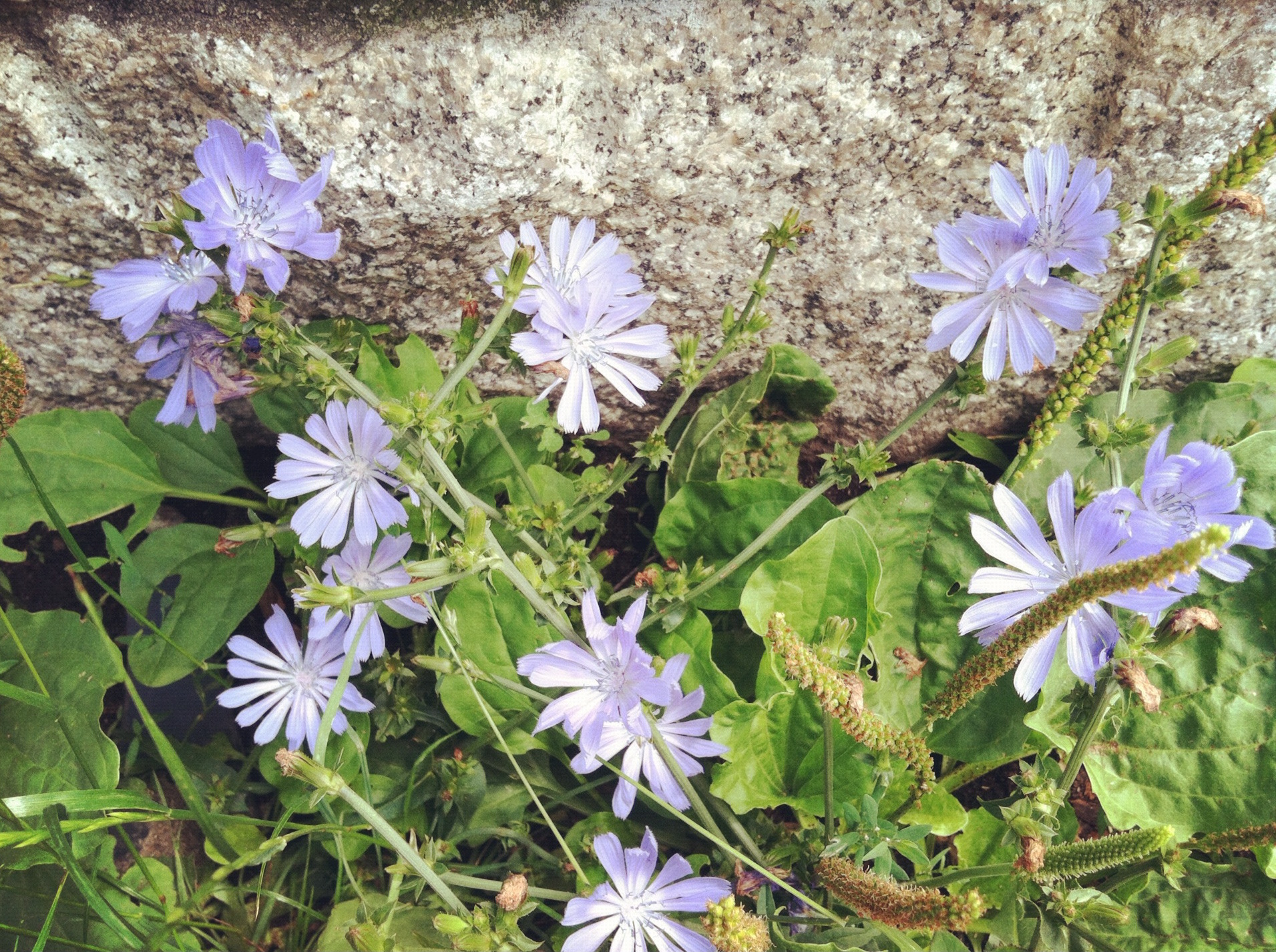

Chicory is a good plant to know. It is a local wild edible, and the leaves, flowers and root can all be used in culinary creations. In fact, when you see large “dandelion” leaves sold in fancy grocery stores, more likely than not they are actually misnamed chicory leaves! Dandelion and chicory are closely related plants and both have bitter tasting leaves that are great for our digestive health.
Chicory is also the same plant as Belgian endive. When it is cultivated in the dark it produces small pale leaves that add a sophisticated bitter note to any meal.
The bitter taste of chicory is in fact where much of its benefits lie. It supports and strengthens digestive function because of its bitter constituents that enhance digestion, increase the flow of bile, and help with the absorption of nutrients. Similar to dandelion, chicory also possesses liver cleansing and detoxifying properties.

Chicory was traditionally used for gall stones, gout, indigestion and constipation; any issue related to the digestive tract may benefit from this useful plant. Either the leaves can be incorporated into the diet, or the root can be used as a tea. It is often used as a coffee substitute or added to coffee to reduce its over-stimulating effect; chicory root has a similar bitter and deep flavor, and a very dark color. Or, use it in chai: every fall I make a big batch of my herbal root chai tea blend, which features roasted chicory root - yum!
Beyond its bitter side, chicory is also a nutritive plant. It is high in folate and has often been used for anemia. It also contains a unique constituent in its root, called inulin, which is a special kind of starch. This inulin feeds our beneficial gut flora; it acts a prebiotic (rather than a probiotic). Using chicory root can therefore help to increase the good bacteria living in our digestive tract.
HOW TO USE:
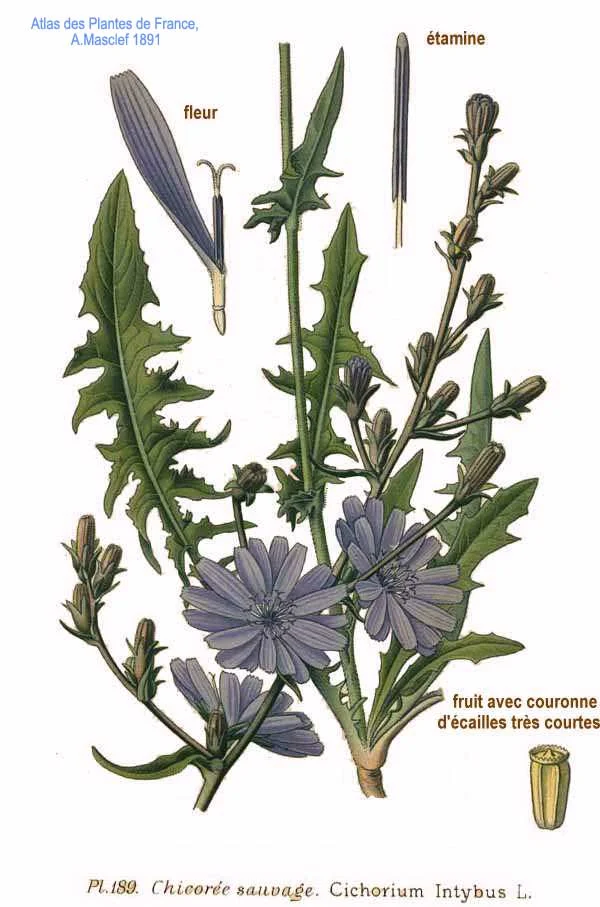
To make a decoction (a simmered tea) place 1 Tblsp. of roasted chicory root in 2 cups of water; simmer in a small covered saucepan for 10 to 20 minutes. Then strain out the root, and add honey and/or milk to taste.
The young leaves are edible and can be added to salad, or sautéed like spinach. The older the plant gets the more bitter its leaves will become.
If neither of drinking nor eating large quantities of chicory appeal to you, then why not try your hand at a chicory infused vinegar? You can use this as a condiment on meals — dash it over roasted vegetables, or drizzle on salads. Or, use it as a digestive tonic and take a spoonful before or after meals…
Digestive Bitters in Vinegar
2/3 cup roasted chicory root
1/3 cup roasted dandelion root
1/3 cup burdock root
1/3 cup chamomile
Place all ingredients in a glass quart sized jar. Cover completely with apple cider vinegar, filling the jar to the top. Stir to remove any air bubbles and add more vinegar if necessary. Place a sheet of wax paper over the jar if you are using a metal lid (vinegar corrodes metal) or use a plastic lid. Label with the ingredients and date. Let this steep for 3 to 4 weeks, shaking occasionally. Strain out through a fine sieve or through cheesecloth. Bottle the resulting liquid in a dark glass bottle.
Steph Zabel is an herbalist and educator based in Somerville, MA who helps urban dwellers connect with the plant world. She teaches herbal classes, is available for individual wellness consultations, and is also the founder of HERBSTALK, Boston’s community herbal conference. Learn more about her work at: www.flowerfolkherbs.com and www.herbstalk.org.
References:
https://www.botanical.com/botanical/mgmh/c/chicor61.html
http://www.wildmanstevebrill.com/Plants.Folder/Chicory.html
http://www.americanherbalistsguild.com/sites/default/files/bitters-mase-2015_1.pdf
The Earthwise Herbal by Matthew Wood
This blog post — Chicory (Cichorium intybus Asteraceae): A Root for the Season — is for general health information only. This blog post is not to be used as a substitute for medical advice, diagnosis or treatment of any health condition or problem. Users of this Web site should not rely on information provided on this Web site for their own health problems. Any questions regarding your own health should be addressed to your own physician or other healthcare provider.
MariBerry (Mulled Elderberry) Syrup!
As the colder season sets in here in the north east, we tend to spend more time indoors: cooking, creating, gathering with friends, and nourishing ourselves with nutrient-rich foods and supportive, warming beverages. This year at Cambridge Naturals we've put together our own herbal mulling spice mix that we hope will add a little magic to your potlucks, holiday gatherings, and colder days.
With taste and immunity in mind, we thoughtfully blended a handful of organic ingredients from our bulk herb section that can be used to make traditional beverages like mulled wine and cider. We also like to blend the mix with black tea or chaga mushroom adding milk and honey for a spicy, warming chai.
As the colder season sets in here in the north east, we tend to spend more time indoors: cooking, creating, gathering with friends, and nourishing ourselves with nutrient-rich foods and supportive, warming beverages. This year at Cambridge Naturals we've put together our own herbal mulling spice mix that we hope will add a little magic to your potlucks, holiday gatherings, and colder days.
With taste and immunity in mind, we thoughtfully blended a handful of organic ingredients from our bulk herb section that can be used to make traditional beverages like mulled wine and cider. We also like to blend the mix with black tea or chaga mushroom adding milk and honey for a spicy, warming chai.
We've also created a mulled version of the well-loved elder berry syrup that is simple to make, fills the house with the aroma of spices, and supports the entire family through the winter season that often brings colds, flus, and shivers. In honor of Maribeth who created the recipe, we're calling it MariBerry Syrup.
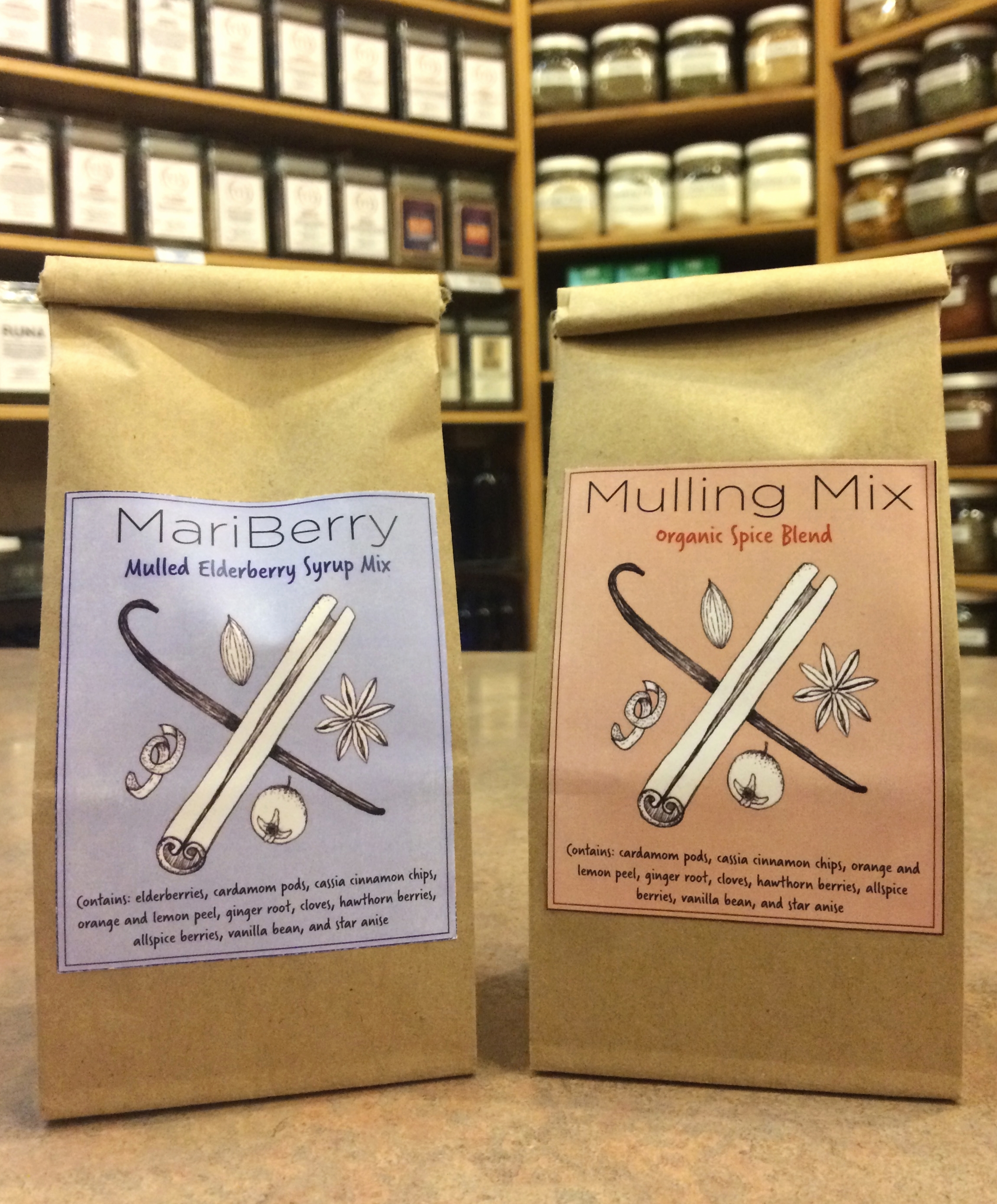
Our mulling spice mix includes cardamom pods, cassia cinnamon chips, orange and lemon peel. ginger root, cloves, hawthorn berries, allspice berries, vanilla bean, and star anise. We've also included a recipe card for our MariBerry Syrup which combines this mulling mix with elder berries and honey to make a yummy, supportive syrup. Come pick up a bag at the store for several opportunities to create tasty, cozy beverages!
If you'd like to read more about Elderberry, please visit our post by community herbalist Steph Zabel.
St. John’s Wort (Hypericum perforatum): An Herb for Body & Spirit
By Steph Zabel
Herbalist, Ethnobotanist and Educator
St. John's Wort is a plant of ancient use, one that has been a protector and healer of people for centuries. Folklore dictates that the herb wards off evil influences and protects against harmful, unseen forces.
While we may not use it in quite the same way as it once was, St. John’s Wort continues to offer physical, emotional and spiritual protection for modern humans living in a world with its own unique challenges and negative influences.
In recent times St. John’s Wort has been popularized for its ability to lift the spirits and to alleviate mild depression and seasonal affective disorder. In my experience it is indeed very useful when one feels melancholic, especially in the deep winter months. It seems fitting that such bright yellow flowers would be uplifting in darker days, especially Hypericum flowers which bloom right at the peak of summer, when the days are longest. If you sometimes suffer from seasonal melancholy or from “the blues”, you might consider bringing this joyful, light-filled herb into your life.
By Steph Zabel
Herbalist, Ethnobotanist and Educator
St. John's Wort is a plant of ancient use, one that has been a protector and healer of people for centuries. Folklore dictates that the herb wards off evil influences and protects against harmful, unseen forces.
While we may not use it in quite the same way as it once was, St. John’s Wort continues to offer physical, emotional and spiritual protection for modern humans living in a world with its own unique challenges and negative influences.
In recent times St. John’s Wort has been popularized for its ability to lift the spirits and to alleviate mild depression and seasonal affective disorder. In my experience it is indeed very useful when one feels melancholic, especially in the deep winter months. It seems fitting that such bright yellow flowers would be uplifting in darker days, especially Hypericum flowers which bloom right at the peak of summer, when the days are longest. If you sometimes suffer from seasonal melancholy or from “the blues”, you might consider bringing this joyful, light-filled herb into your life.
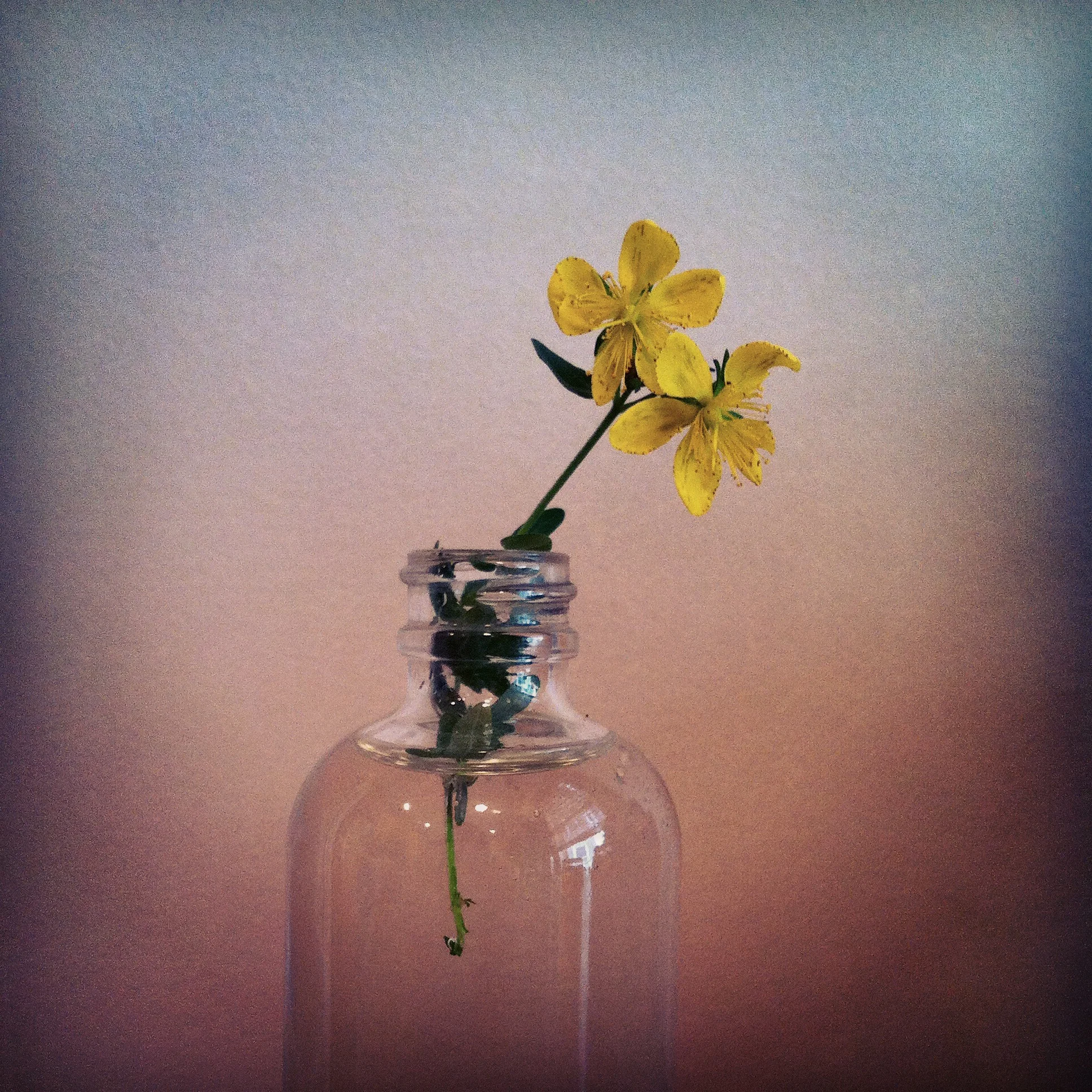
St. John’s Wort also has a great affinity for the whole nervous system. In particular I have found it remarkable for its ability to help with feelings of nervousness, anxiety and vulnerability. Personally, I have used both the flower essence and the tincture with very noticeable results to help myself feel protected, safe and centered when I otherwise would have felt anxious. In general, I find that St. John’s Wort is an amazing support for sensitive people who tend to feel uncomfortable or overwhelmed in new social situations, or who need to feel more protected in order to express themselves.
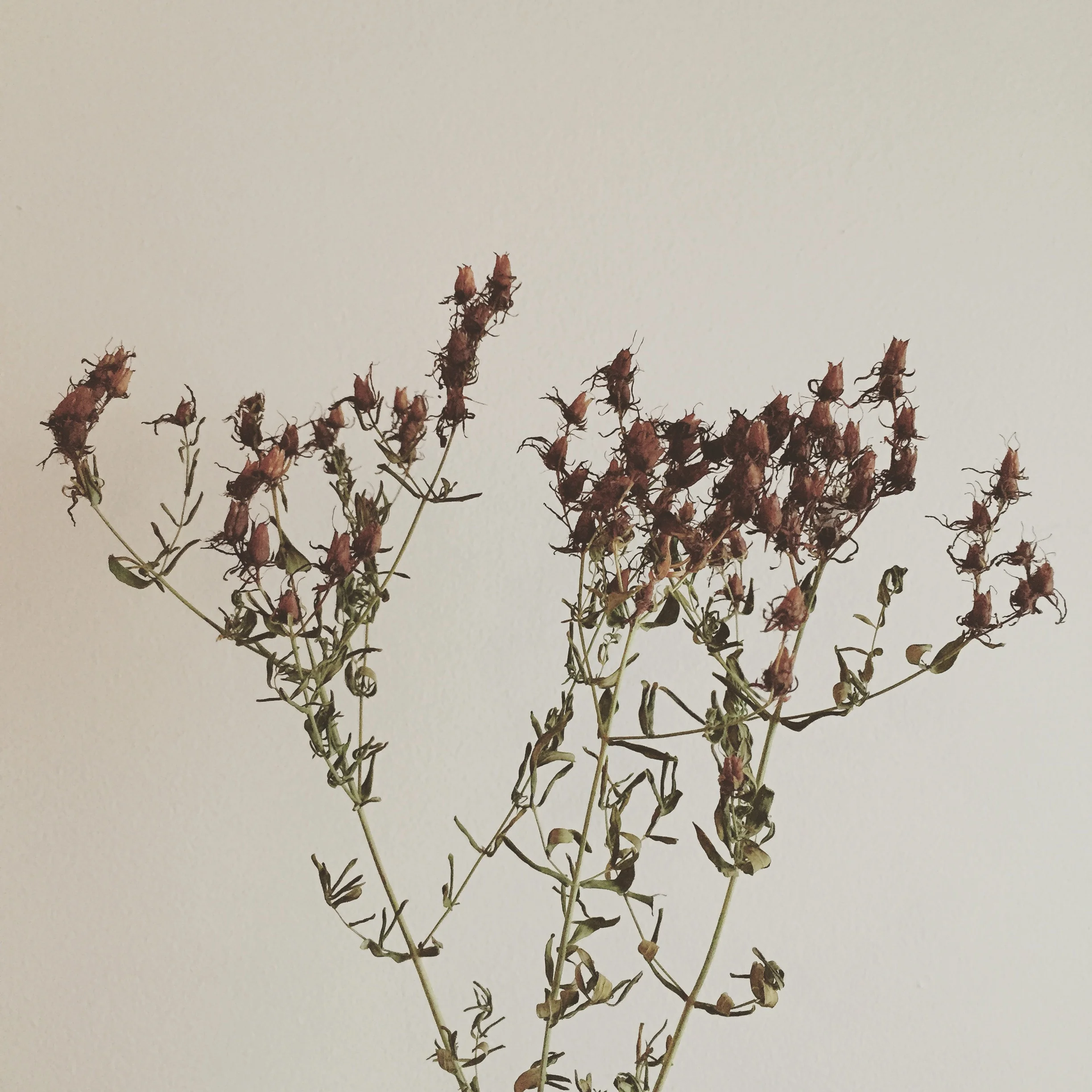
St. John's Wort is a slightly bitter herb, which makes it beneficial for the digestive organs by stimulating gastric juices and bile flow. It also affects the liver, speeding up the metabolic process and removing toxins from the system. This brings me to a word of caution about Hypericum: if you are taking any pharmaceutical medications it is best to avoid using this plant. St. John’s Wort increases the activity of liver enzymes that metabolize drugs so using this herb in combination with any medications is not recommended.
Traditionally, this beautiful plant has also been used externally as a wound healer. The infused medicinal oil, red from the crimson-hued juice of the flower buds, can be rubbed into the skin. This oil has been used with great success to help with the pain of burns, sore muscles, sciatica and damaged nerves. I have seen it work wonders for the excruciating pain of shingles.
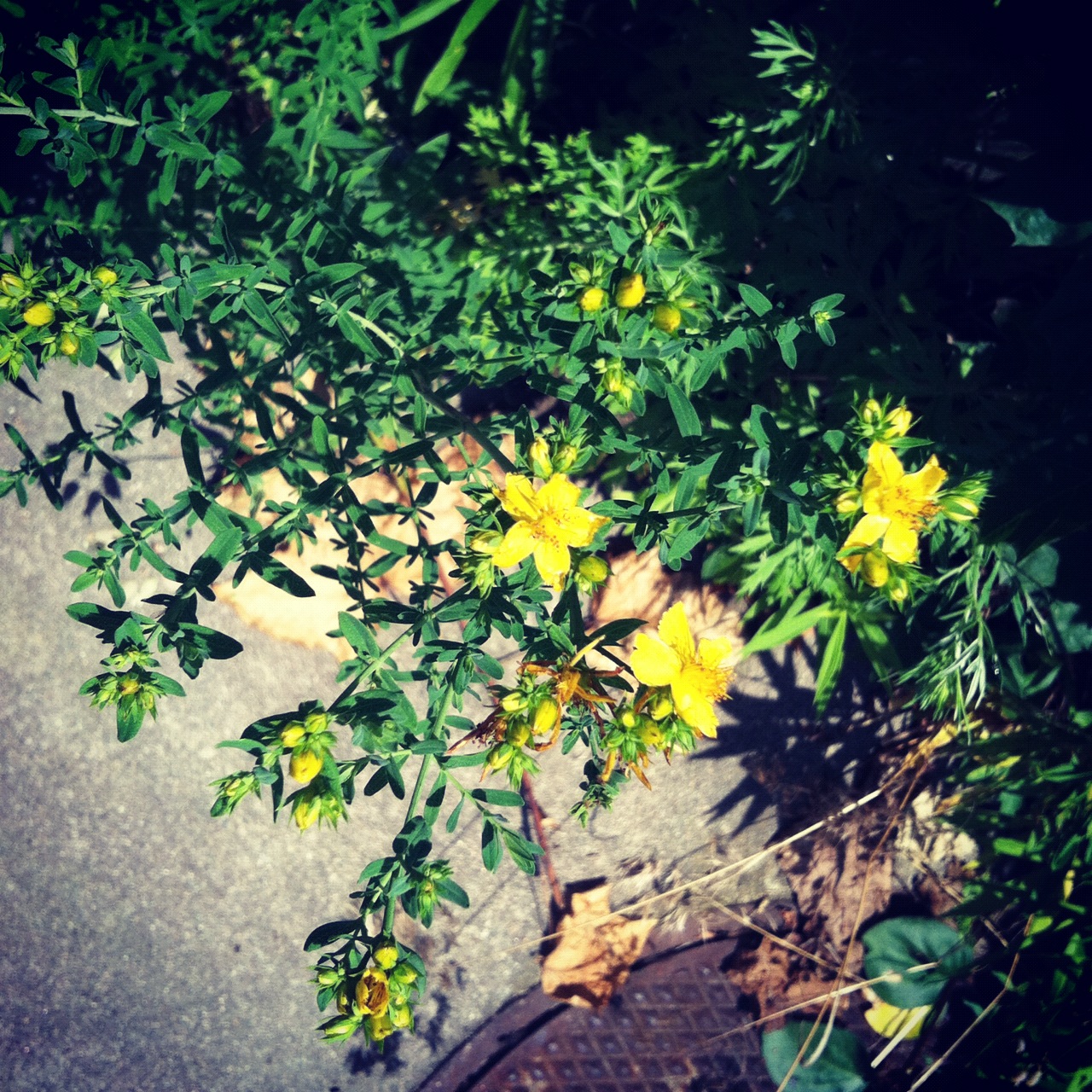
Although it’s now too late in the season, next time you come across a flowering St. John’s Wort, crush a blossom between your fingers. It will exude a deep red stain. This pigment is the bioactive compound hypericin, where much of Hypericum’s medicine resides. Then, take one of the plant’s leaves and hold it up to the sunlight. Can you see small window-like holes in the leaf? This is another excellent way to identify the plant — there aren’t many leaves that are able to let the sunlight shine right through them.
HOW TO USE:
St. John’s Wort may be used in tea or tincture form, but remember that if you are on any medications ingesting the physical herb is not recommended.
The infused medicinal oil can be used topically, and is a wonderful addition to any home apothecary for use on minor wounds, burns and sore muscles.
As a flower essence St. John’s Wort is especially beneficial for sensitive people, providing emotional protection, healthy boundaries, and the ability to share one’s own unique inner light with others.
This beautiful plant has many gifts to offer us — I encourage you to seek out St. John’s Wort and to welcome it’s joyful, healing qualities into your life.
Steph Zabel is an herbalist and educator based in Somerville, MA who helps urban dwellers connect with the plant world. She teaches herbal classes, is available for individual wellness consultations, and is also the founder of HERBSTALK, Boston’s community herbal conference. Learn more about her work at: www.flowerfolkherbs.com and www.herbstalk.org.
REFERENCES:
https://umm.edu/health/medical/altmed/herb/st-johns-wort
Wood, M. The Earthwise Herbal: A Complete Guide to Old World Medicinal Plants
http://www.herbcraft.org/commonherbs.html
http://medherb.com/hypericum-drug-herb.html
http://www.healthy.net/Materia_Medica/St_Johns_Wort_Herbal_Materia_Medica/283
This blog post — St. John’s Wort (Hypericum perforatum): An Herb for Body & Spirit — is for general health information only. This blog post is not to be used as a substitute for medical advice, diagnosis or treatment of any health condition or problem. Users of this Web site should not rely on information provided on this Web site for their own health problems. Any questions regarding your own health should be addressed to your own physician or other healthcare provider.
New Tonic Blends from Oregon's Wild Harvest!
"Everything is interrelated. Healthy food is our medicine. Growing herbs on a holistic farm is just another quest in our path to provide customers with only the healthiest plant material available on the planet." - Randy Buresh, Co-Founder, Oregon's Wild Harvest
The power of herbal remedies and food as medicine is a synergistic relationship between all of our senses coming in contact with a plant or blend of plants. The experience begins with our nose, scent triggers a response in our body that yes, this is good, show me more.
As we begin to taste, we wake up our cells to the medicine as it enters our blood stream. Finally we begin to feel the nuances and effects of the herbs or food we have just consumed. This can happen in a matter of seconds and linger long after we've sipped our tea or eaten our breakfast.
"Everything is interrelated. Healthy food is our medicine. Growing herbs on a holistic farm is just another quest in our path to provide customers with only the healthiest plant material available on the planet." - Randy Buresh, Co-Founder, Oregon's Wild Harvest
The power of herbal remedies and food as medicine is a synergistic relationship between all of our senses coming in contact with a plant or blend of plants. The experience begins with our nose, scent triggers a response in our body that yes, this is good, show me more.
As we begin to taste, we wake up our cells to the medicine as it enters our blood stream. Finally we begin to feel the nuances and effects of the herbs or food we have just consumed. This can happen in a matter of seconds and linger long after we've sipped our tea or eaten our breakfast.
Here at Cambridge Naturals we patiently awaited the arrival of certified biodynamic herbal tonics by Oregon's Wild Harvest. They are here! We are elated to share this limited run of supplements that were made in small batches, only from the plants the land yielded. We are honored to be one of the few shops to carry these products. Below I share two of the six tonics that I've quickly become a fan of.

HappyBelly is Oregon's Wild Harvest's take on herbal bitters. Fresh burdock root, artichoke leaf, fresh dandelion root, peppermint leaf, and yarrow are combined to create a delicious, powerful blend of herbs to support healthy digestion. A serving size of only 1/2 a teaspoon is recommended and the taste is warm and spicy finishing with a hint of sweet licorice root and cinnamon bark. I've used this blend before a meal to promote healthy digestive juices and afterward to keep gas and bloating at bay. With the colder seasons upon us, I can see myself using this blend to promote circulation and especially to help break down rich, hearty, and sometimes indulgent meals.

Namaste is a blend to soothe a frazzled or anxious nervous system. This is possibly one of the most important tonics for me, especially during times of transition, whether that be seasonal or just throughout my day. Some of my strongest herbal allies make up this blend: fresh milky oat tops, fresh passionflower tops, skullcap tops, and fresh lemon balm. With a hint of lavender, just the aromatics of this blend quickly quiet my overactive system, bringing me into a state of calm peace. I not only find this blend to be helpful during stressful situations, but it has been important for promoting a deep, restful sleep when I can't seem to quiet my mind.
Here at the store we offer 4 other flavors, creating a 6-tonic rainbow of herbal support. We'd be happy to talk to you about all of them and find the best blend for you.

This blog post — New Tonic Blends from Oregon's Wild Harvest! — is for general health information only. This blog post is not to be used as a substitute for medical advice, diagnosis or treatment of any health condition or problem. Users of this Web site should not rely on information provided on this Web site for their own health problems. Any questions regarding your own health should be addressed to your own physician or other healthcare provider.
Six Autumn Essentials to Get You Through 'til Winter Break

The holiday break is just around the corner, folks! Alex put together this list of six must-haves for getting through the fast-paced autumn season in style:
Simply Curated: These small sized travel candles are beautiful and smell great. I love the idea of being able to bring them with me on my travels! Simply Curated uses 100% pure soy wax that is sourced from the US only, as well as domestically sourced wood wicks. They are always hand poured and phthalate free and oh so pretty!
Klean Kanteen: recently introduced these slimmer mouthed insulated bottles. Perfect for the winter, they will keep your coffee or tea hot literally for hours. Or for that hardcore New Englander, it will keep the ice in your cold brew from melting. Either way, you will be cutting down on those wasteful to go cups and sipping on something delicious!
Soul Sunday: This beautifully branded aromatherapy roll-on are made from coconut oil and 100% pure essential oils. perfect for decompressing on the go, you can apply this oil to your temples and wrists and breathe in!
Perfect Fuel: These little bites of energy will satisfy your chocolate craving while providing a quick boost! This Boston based company makes bite sized chocolate with ginseng, espresso or chia. All delicious and help get you through your day or work out!
Pure Life GABA-Max: Stressed? Me too. That’s okay… with a little bit of GABA, one may feel chill within no time. The main ingredient of this formula is compound known as Phenyl-GABA, a derivative of the well established endogenous inhibitory neurotransmitter in our brains, GABA. When taken orally, Phenyl-GABA crosses the blood-brain barrier and may support feelings of relaxation. While many like this product, please do consult your physician when trying any new supplement!
Herbalogic Fixed Focus: Herbalogic focuses on Chinese herbal blends and use three methods of extraction, water, glycerin and alcohol, to provide you with an extra potent and unique product. Their Fixed Focus blend helps support mental clarity and concentration without making you feel wired or jittery.