

BOOK REVIEW: Darkness Before Dawn: Redefining the Journey through Depression
A collection of the essays of 19 “exceptional and compassionate” authors and teachers of psychotherapy, Buddhism, and spiritual practices this book brings the personal experience of depression to inform these writings.
These are not the usual self-help essays, but rather the wisdom of self-knowledge and the personal experience of depression from these writers/teachers.
Edited by Tami Simon, Founder of Sounds True
Review by Elizabeth, CN co-owner

A collection of the essays of 19 “exceptional and compassionate” authors and teachers of psychotherapy, Buddhism, and spiritual practices this book brings the personal experience of depression to inform these writings.
These are not the usual self-help essays, but rather the wisdom of self-knowledge and the personal experience of depression from these writers/teachers.
They radically re-interpret the way that we perceive the understanding and the experience of depression. While supporting traditional psychotherapy and medication for what they offer in the way of relief, these writers offer us their own experiences, insights and the practices which they have found most valuable in embracing their personal forms of depression.
Included in this collection are:
- Thomas Moore, PhD, on Saturn’s gifts
- Sally Kempton on shifting from suffering and into witnessing awareness
- Mark Nepo, poet, on embracing both emptiness and aliveness
- Mary Pipher, PhD, on how despair can open us to long-hidden joy
- Christina Baldwin on “ineffable sorrow”
- Parker J. Palmer on finding meaning and connection through the experience of depression
… and the writings of 13 others.
Editor Tami Simon says…
"This book is not meant to 'fix' us,
but to befriend, accompany, and inspire us
in our experience of depression."
BOOK REVIEW: Yoga Mind, Peaceful Mind: Simple Meditations for Overcoming Anxiety
Actually doing yoga - practicing the postures - has many well-documented health benefits.
… But sometimes the physical demands of the actual postures, or just the demands of life in general get in the way of a regular physical practice of the postures. If that is true for you… then this book is your perfect answer.
Book by Mary NurrieStearns LCSW RYT and Rick NurrieStearns
Review by Elizabeth, CN co-owner

Actually doing yoga - practicing the postures - has many well-documented health benefits.
… But sometimes the physical demands of the actual postures, or just the demands of life in general get in the way of a regular physical practice of the postures. If that is true for you… then this book is your perfect answer.
In Yoga Mind, Peaceful Mind, two long-time yoga teachers and writers present an approach to anxiety relief that may allow you to overcome your anxieties and life stressors. This book emphases the contemplative aspects of the yoga tradition. Rather than focusing on the physical aspects of yoga, it allows us to access a variety of very useful daily meditations.
The book does not focus on yoga postures or asanas, rather it provides us with the tools to refocus ourselves through the use of targeted mediations, healing affirmations, insights and a series of teachings from the yogic tradition.
This book works well for mental yogic healing and allows those with physical disabilities to access the yoga traditions.
BOOK REVIEW: Full: How I Learned to Satisfy My Insatiable Hunger and Feed My Soul
Burdened by food and self-esteem issues? Then this book is for you!
This author comes to a point in life where she wants OUT from under the burden of an “unhappy relationship” with food. Kimber begins to love her body, feed her soul and transform her life through the practices of yoga and mediation and the cultural understanding of Buddhism.
The first step in her journey was to learn to love herself, accept her body and to let her own heart strivings guide her forward. She worked to include her own body in the “circle of what is beloved.”
Book By Kimber Simpkins
Review by Elizabeth, CN co-owner
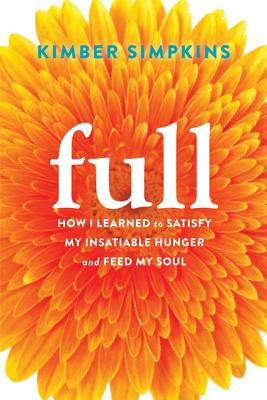
Burdened by food and self-esteem issues? Then this book is for you!
This author comes to a point in life where she wants OUT from under the burden of an “unhappy relationship” with food. Kimber begins to love her body, feed her soul and transform her life through the practices of yoga and mediation and the cultural understanding of Buddhism.
The first step in her journey was to learn to love herself, accept her body and to let her own heart strivings guide her forward. She worked to include her own body in the “circle of what is beloved.”
These are 4 important topics she covers:
- You can't tell how someone feels about their body by how attractive they look to you.
- All women carry feelings of unworthiness!
- We all wonder about our worthiness.
- Speaking aloud the voice in our heads helps us feel less alone.
- With a little encouragement, we can find beauty in ourselves.
And she quotes Anne Sexton in saying, “Put your ear down close to your soul and listen hard.”
Read this compelling book and... listen hard!
Sweet Marshmallow Root: Althaea officinalis
By Steph Zabel
Herbalist, Ethnobotanist and Educator
Marshmallow root, as the name implies, was once included as an ingredient in the original sticky-sweet marshmallow candy. Alas, commercial marshmallows no longer contain this herb, but you can still make your own "real" ones at home! Check out the recipe below...
For centuries mallows have been used for food - both the leaves and the roots are edible. Marshmallow is closely related to other beloved plants such as cotton, hibiscus, and okra.
Beyond its food uses, marshmallow is a gentle medicinal plant. The nutritive and sweet root imparts a unique mucilaginous quality when extracted in water. Marshmallow has a high concentration of polysaccharides that impart a viscous and soothing quality to the liquid in which it is extracted.
By Steph Zabel
Herbalist, Ethnobotanist and Educator
Marshmallow root, as the name implies, was once included as an ingredient in the original sticky-sweet marshmallow candy. Alas, commercial marshmallows no longer contain this herb, but you can still make your own "real" ones at home! Check out the recipe below...
For centuries mallows have been used for food - both the leaves and the roots are edible. Marshmallow is closely related to other beloved plants such as cotton, hibiscus, and okra.
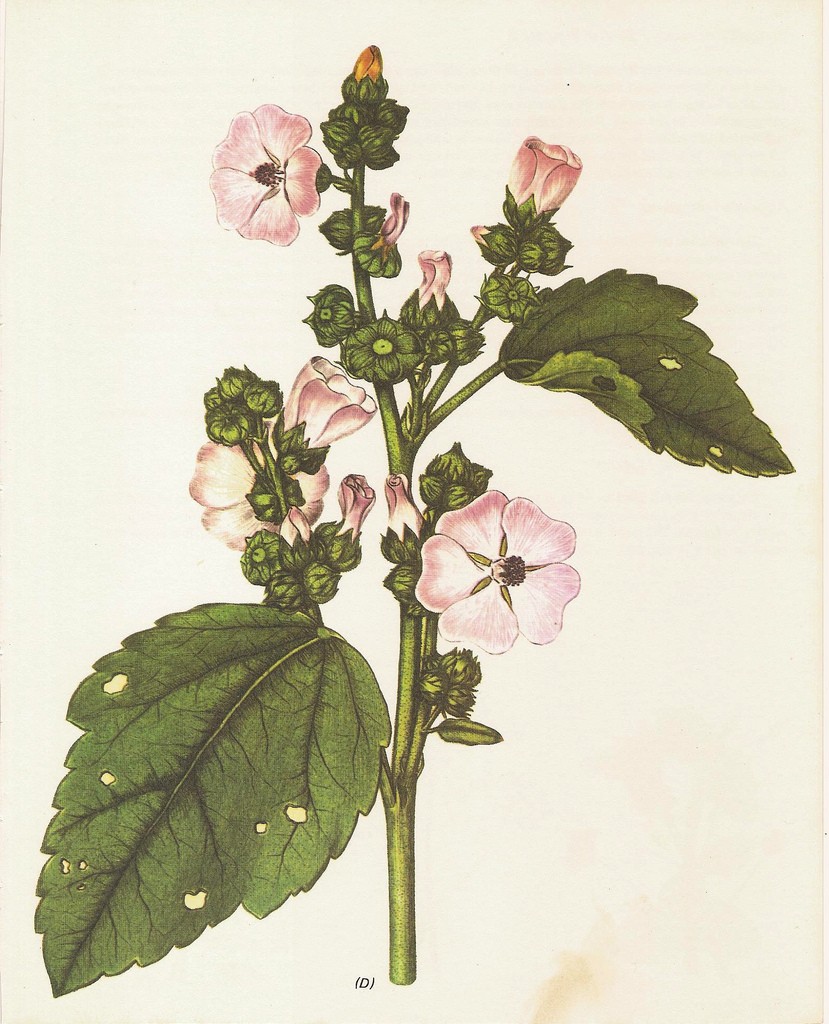
Beyond its food uses, marshmallow is a gentle medicinal plant. The nutritive and sweet root imparts a unique mucilaginous quality when extracted in water. Marshmallow has a high concentration of polysaccharides that impart a viscous and soothing quality to the liquid in which it is extracted.
This marshmallow mucilage has many benefits. Its anti-inflammatory and emollient properties are cooling and soothing to our internal tissues, with a special affinity for the mucous membranes of the gastrointestinal, respiratory and urinary tracts. This comes in handy for inflammatory conditions such as ulcers, heartburn, indigestion and Chrone's disease. Marshmallow root can also be used to address sore throats and dry coughs, and has been traditionally used for urinary issues such as cystitis and UTIs.

Photo credit: Todd Danforth

Photo credit: Todd Danforth
Externally, both the leaves and the roots of marshmallow are used on burns, wounds and all inflammatory skin disorders. It is extremely soothing for any sort of skin irritation.
How to Use Marshmallow
Marshmallow root can be found finely cut up, or as a powder. Either form can be used. To get the most benefit out of the soothing, mucilaginous properties of the root be sure to extract it with cold or lukewarm water, since hot water will break down the beneficial polysaccharides.
Marshmallow Water
Add 2-3 Tblsp. powdered marshmallow root OR 1/4 cup cut marshmallow root to a quart-sized glass jar. Pour cold water to the top of the jar, covering the root and blending well, or just cap the jar and shake vigorously. Allow this to sit at room temperature for at least an hour or two up to 8 hours. Pour through a fine sieve and drink. The final marshmallow water should be viscous, pale yellow colored, slightly sweet tasting, and soothing.
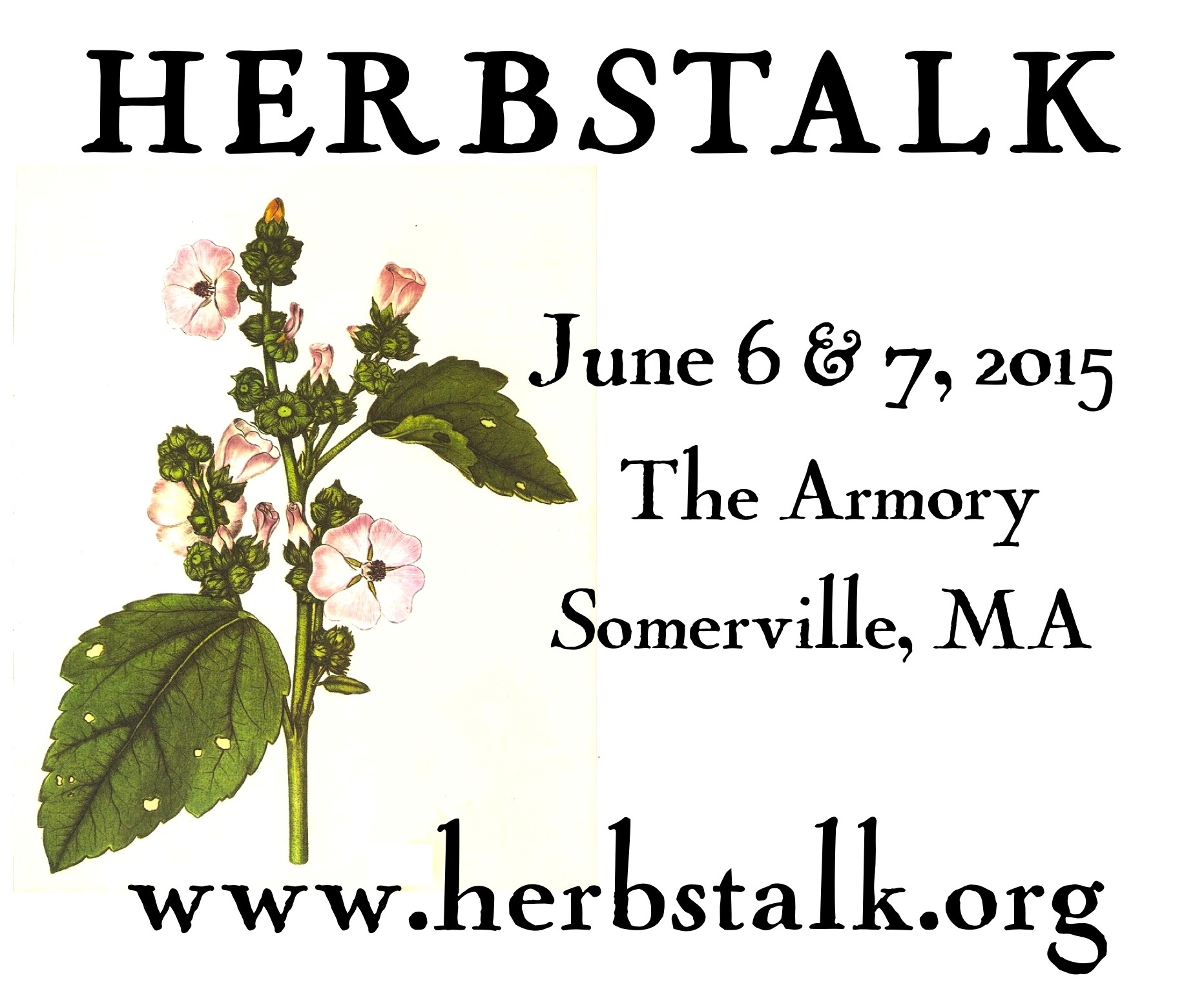
Marshmallow is the "herb of the year" at Herbstalk! Herbstalk creates educational community events that teach people about plants. We host classes on herbal and holistic health topics, offer urban plant walks, and bring together herbal crafters & artisans from across New England. Our next event takes place on June 6 & 7 at the Armory in Somerville. For more details and the full class schedule please visit: www.herbstalk.org
REFERENCES:
by Matthew Wood
by Rosalee de la Foret
by Maude Grieves
Steph Zabel is an herbalist and educator based in Somerville, MA who helps urban dwellers connect with the plant world. She teaches herbal classes, is available for individual wellness sessions, and is also the founder of HERBSTALK, a community herbal conference. Learn more about her work at: www.flowerfolkherbs.com and www.herbstalk.org.
This Web site — Herbs and Botanicals — is for general health information only. This Web site is not to be used as a substitute for medical advice, diagnosis or treatment of any health condition or problem. Users of this Web site should not rely on information provided on this Web site for their own health problems. Any questions regarding your own health should be addressed to your own physician or other healthcare provider.
Mother's Day Gift Guide
Finding the perfect gift for the mom(s) in your life doesn't have to be work! We've put together a few of our favorite products that are sure to put a smile on her face and some pep in her hard-working step.

Illustrations by Jessica Casler © 2015
Pukka Womankind Tea
This beautiful blend of herbs is perfect for bringing balance and bliss into your morning routine. Made with fragrant vanilla, hibiscus and rose, tangy sweet cranberry, earthy beetroot and licorice, and soothing chamomile and shatavari, this tea makes a wonderful gift for that strong, beautiful mama in your life.
Niche Boston succulent
Springtime calls for P L A N T S! We've been getting regular deliveries of these beautiful succulents, cacti, ferns and terrariums from our favorite urban garden shop across the river, Niche Boston. Complete with beautiful ceramic and metal pots, they make an excellent gift for the green thumb woman in your life.
100% Pure Mascara
This incredible mascara from 100% pure comes in colors like blackberry and dark chocolate - and they smell amazing, seriously! This company uses the cleanest
Urban moonshine joy tonic
Mothers of all kinds are the hardest workers! It can be a challenge to take time for herself when caring for so many others. This wonderful formula from the expert herbalists at Urban Moonshine in Burlington VT "promotes a positive mental attitude and promote a relaxed feeling when overworked or overwhelmed." A great gift for that powerful woman in your life.
Weleda Evening Primrose Body Oil
This luxurious organic oil makes a fantastic massage oil, belly balm, or overall body moisturizer. Evening primrose, olive, wheat germ, sea buckthorn and jojoba seed oils deliver essential fatty acids and omegas 3, 6, 7 and 9 to help restore and moisturize skin. Its rich, velvety texture offers a nourishing treatment that leaves skin healthy, firm and renewed. Perfect gift to help that special mama relax and rejuvenate!
Schmilk Chocolate
Let's just get one thing straight. Chocolate = Love. Show your favorite mamas that you love them with the gift of something sweet! This vegan milk chocolate from Schmilk leaves absolutely nothing wanting - rich, creamy, lightly sweet and completely delicious.
Thesis Rose Candle
We can't get enough of this lightly scented, completely beautiful candle from local body care company Thesis. Made with soy wax and essential oils and housed in amber glass, the candle will burn for many hours, giving off a soft glow and filling the room with the delicious scent of rose petals.
Oats / Avena Sativa: A Tonic Herb That Nourishes & Calms
By Steph Zabel
Herbalist, Ethnobotanist and Educator
Oats are incredibly nourishing, especially for the nervous system. When used in the “milky” stage they feed nervous tissue and help to restore normal nerve function and vitality. This is one of my absolute favorite herbs since it is so gentle but so powerful, and makes a noticeable difference for anyone who is stressed, overly sensitive, depleted or worn out. To me, they are a prime remedy for most city-dwellers
By Steph Zabel
Herbalist, Ethnobotanist and Educator
Oats are incredibly nourishing, especially for the nervous system. When used in the “milky” stage they feed nervous tissue and help to restore normal nerve function and vitality. This is one of my absolute favorite herbs since it is so gentle but so powerful, and makes a noticeable difference for anyone who is stressed, overly sensitive, depleted or worn out. To me, they are a prime remedy for most city-dwellers.
Oats are amazing for helping people to overcome nervous exhaustion, shattered nerves, or emotional instability. They help people who are over-worked or burnt out, providing much needed food and minerals for a depleted system, including magnesium, calcium and silica. As a very calming and soothing herb oats are also useful for sleep issues and insomnia, or any kind of mental or physical agitation.
In addition to its nutritive value, oat tea is a gentle way to restore emotional balance. Drinking daily oat infusions is a great practice for anyone who is constantly stressed or upset, and is especially good for driven types who work, work, work! I find oats to also be a lovely, soothing and supportive herb to use during times of loss or sorrow. Blended with other heart-healing herbs it feels like a sweet and comforting friend.

Oats come in a variety of forms. Everyone knows of rolled oats or steel-cut oats as a breakfast food. However, oat tops (the seed of the plant) or oat straw (the stems/leaves of the plant) are what I recommend for making nourishing teas. You can also take the tincture, but just be sure to look for milky oat tincture – this means that the oats were harvested at a time when the seed yields a milky substance when crushed. This is where much of its nutritional and medicinal value lies.
HOW TO USE:
Use the dried oat tops or straw to make a nourishing tea blend. Add one big handful (½ – ¾ cup) to a glass quart jar. Pour boiled water over the herb, cover, and let steep overnight to extract as much of the medicinal and nutritive qualities as possible. Oats are a food-grade herb that can be taken consistently over long periods of time. Drink 1 – 2 quarts of overnight-steeped oat infusion per day.
Note: While they are one of the safest and gentlest of herbs, oats may not be suitable for people who have severe gluten intolerance due to possible cross-contamination from gluten-containing grains.
RECIPE: City-Dweller’s Tonic Tea
Oats are my go-to herb for feeling more calm and nourished. They blend beautifully with other gentle, soothing herbs to support the nervous system. Use the recipe below as a starting point, and switch out the linden for other herbs such as lemon balm, violet and/or chamomile as you wish.


Ingredients:
1 cup Oat Tops
½ cup Linden
1-2 Tblsp. Lavender
Mix together all the herbs. Add ¼ cup of this blend to a glass quart jar. Cover with boiled water, cap, and let steep overnight, or at least 6 hours. Strain and drink at room temperature, or gently re-heat.
Steph Zabel is an herbalist and educator based in Somerville, MA who helps urban dwellers connect with the plant world. She teaches herbal classes, is available for individual wellness sessions, and is also the founder of HERBSTALK, a community herbal conference. Learn more about her work at: www.flowerfolkherbs.com and www.herbstalk.org.
REFERENCES:
http://www.cshs.com/herbsOfMonth/oats.html
http://www.blessedmaineherbs.com/mioaavsa.html
http://www.gaiaherbs.com/products/ingredient/349/Wild-Oats
http://bearmedicineherbals.com/sweet-cream-the-medicine-of-milky-oats.html
This Web site — Herbs and Botanicals — is for general health information only. This Web site is not to be used as a substitute for medical advice, diagnosis or treatment of any health condition or problem. Users of this Web site should not rely on information provided on this Web site for their own health problems. Any questions regarding your own health should be addressed to your own physician or other healthcare provider.
Maribeth's Wholesome Spring Blend Tea
Our herbalist-in-training on staff, Maribeth, created this wonderful tea blend to help us transition physically and mentally into springtime! The perfect beverage for a warm(er) day like today!
Ingredients: Nettle Leaf, Dandelion Root, Oatstraw, Lemon Balm, Red Clover, Raspberry Leaf, Calendula
As the weather warms and the plants stir under melting snow, so do our spirits return after a harsh north east winter. As the earth transitions, so do our bodies emerge to flow with the rhythms of Spring. Our inner fluids begin to move just as the sap runs through the veins of the tree. Our lymph system and organs of elimination are in need of support as we release the stagnation of winter.
Our herbalist-in-training on staff, Maribeth, created this wonderful tea blend to help us transition physically and mentally into springtime! The perfect beverage for a warm(er) day like today!
Ingredients: Nettle Leaf, Dandelion Root, Oatstraw, Lemon Balm, Red Clover, Raspberry Leaf, Calendula
As the weather warms and the plants stir under melting snow, so do our spirits return after a harsh north east winter. As the earth transitions, so do our bodies emerge to flow with the rhythms of Spring. Our inner fluids begin to move just as the sap runs through the veins of the tree. Our lymph system and organs of elimination are in need of support as we release the stagnation of winter.
This gentle herbal blend was formulated to support the release our bodies go through as we shed our winter armor and prepare for the renewal Spring brings. Cleansing and nourishing, these herbs support our body's natural detoxification process while supplying fortifying vitamins and minerals we may be craving after a long winter. I like to drink our Wholesome Spring Blend this time of year to rejuvenate my body, mind, and spirit.
For the most therapeutic results, I like to add a handful of this blend to a quart jar, cover with boiling water, cap tightly, and steep overnight, or at least 6 hours. Reheat as needed or drink at room temperature throughout the day. You may also steep 1 tbsp. to a mug of boiling water for at least 20 minutes. Make sure to cover your mug to preserve all of the nutrients and essential oils!

For the most therapeutic results, I like to add 4-6 tablespoons of this blend to a quart jar, cover with boiling water, cap tightly, and steep overnight, or at least 6 hours. Reheat as needed or drink at room temperature throughout the day. You may also steep 1 tbsp. to a mug of boiling water for at least 20 minutes. Make sure to cover your mug to preserve all of the nutrients and essential oils!
If you'd like to make your own blend, you can find all of these herbs in our bulk herb department. Choose your measurements of choice whether they be cups or teaspoons and blend:
2 parts Red Clover Blossoms
2 parts Nettle Leaf
1 part Oatstraw
1 part Dandelion Root
1/2 part Raspberry Leaf
1/4 part Lemon Balm
1/4 part Calendula
This Web site — Herbs and Botanicals — is for general health information only. This Web site is not to be used as a substitute for medical advice, diagnosis or treatment of any health condition or problem. Users of this Web site should not rely on information provided on this Web site for their own health problems. Any questions regarding your own health should be addressed to your own physician or other healthcare provider.
Visiting Gaia Herbs' Turmeric Farm in Costa Rica
Our General Manager recently went to Costa Rica to visit the organic turmeric farm of Gaia Herbs, one of our largest herbal medicine suppliers. She writes about the experience below:
When I think of Costa Rica, I usually think of rainforests and three-toed sloths lazing about the verdant splendor. I’m adding turmeric to that lush list, having made my first trip to Costa Rica last month to visit one of our favorite herbal companies’ organic turmeric farms.
The company I visited is Gaia Herbs, and we have been carrying their products since they first started doing business in the late 1980s. Their name is synonymous with high quality, and for good reason. Gaia tests all raw source materials and each batch of product for purity, integrity, and potency. They are so transparent in their manufacturing processes that they actually make their test results available to the public via their “Meet Your Herbs” page on their website. That’s right: you can find out which tests were performed on any of their products to guarantee it is what it says it is, and has the potency it claims on the package.

Visiting Gaia's turmeric farm and getting our hands on the freshest product!
Visiting Gaia’s organic turmeric farm on the Nicoya Peninsula was nothing less than spectacular. Gaia founder, Ric Scalzo, guided our group of retailers on the farm while explaining every aspect of growing and harvesting organic turmeric. Scalzo waxed poetic about the plant “microbiome,” or the importance of growing plants that had a symbiotic effect with the turmeric and the soil microorganisms. A burgeoning worm compost pile further ensured Gaia provides its organic turmeric with the richest soil possible.
One of my favorite parts of the farm tour was after we finished watching turmeric being harvested, and we went to where it was being sorted, washed, and dried. Gaia’s local farm operations manager, Luis Iglesias, explained how he had sought to employ local women in an otherwise economically depressed area. News spread by word-of-mouth, and the number of Gaia’s female farm employees grew exponentially.
I feel very fortunate to have had this opportunity to visit Gaia’s organic turmeric farm in Costa Rica. It has further solidified my already quite positive opinion of Gaia Herbs and what they do, not just for raising the bar for herbal medicine manufacturing practices but also for demanding companies improve the lives of people who work for them and the world at large!
VIOLET: Viola odorata and related species
By Steph Zabel
Herbalist, Ethnobotanist and Educator
As I sit down to write this article about one of my favorite spring plants, the snow outside is flying, adding to our record-breaking, epic winter. But despite the piles of snow that remain in our streets and yards, the thaw has begun, the days are warming, and we will soon see the plants re-emerge from their slumber. This is certainly a month full of hope and renewal.
By Steph Zabel
Herbalist, Ethnobotanist and Educator
As I sit down to write this article about one of my favorite spring plants, the snow outside is flying, adding to our record-breaking, epic winter. But despite the piles of snow that remain in our streets and yards, the thaw has begun, the days are warming, and we will soon see the plants re-emerge from their slumber. This is certainly a month full of hope and renewal.
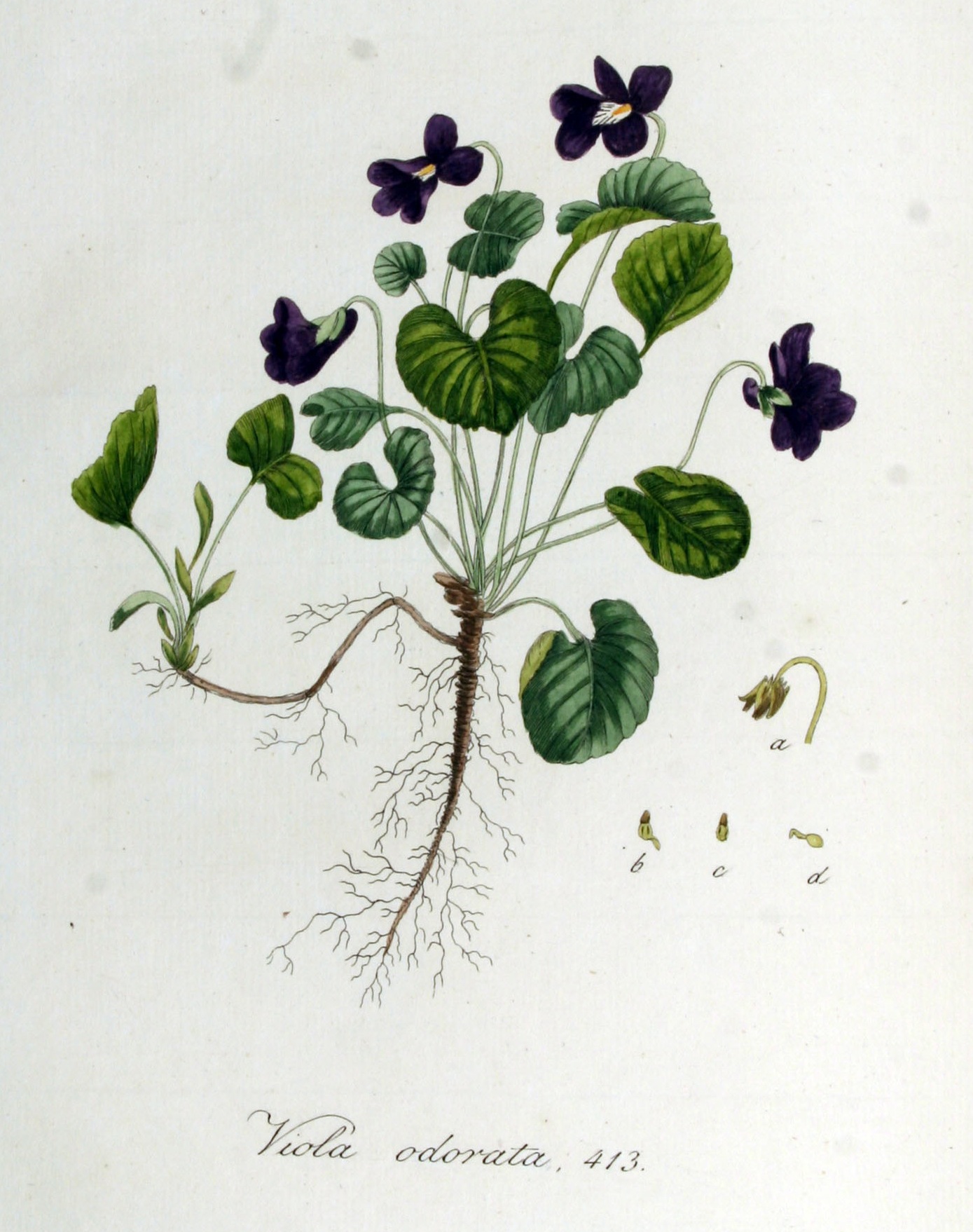
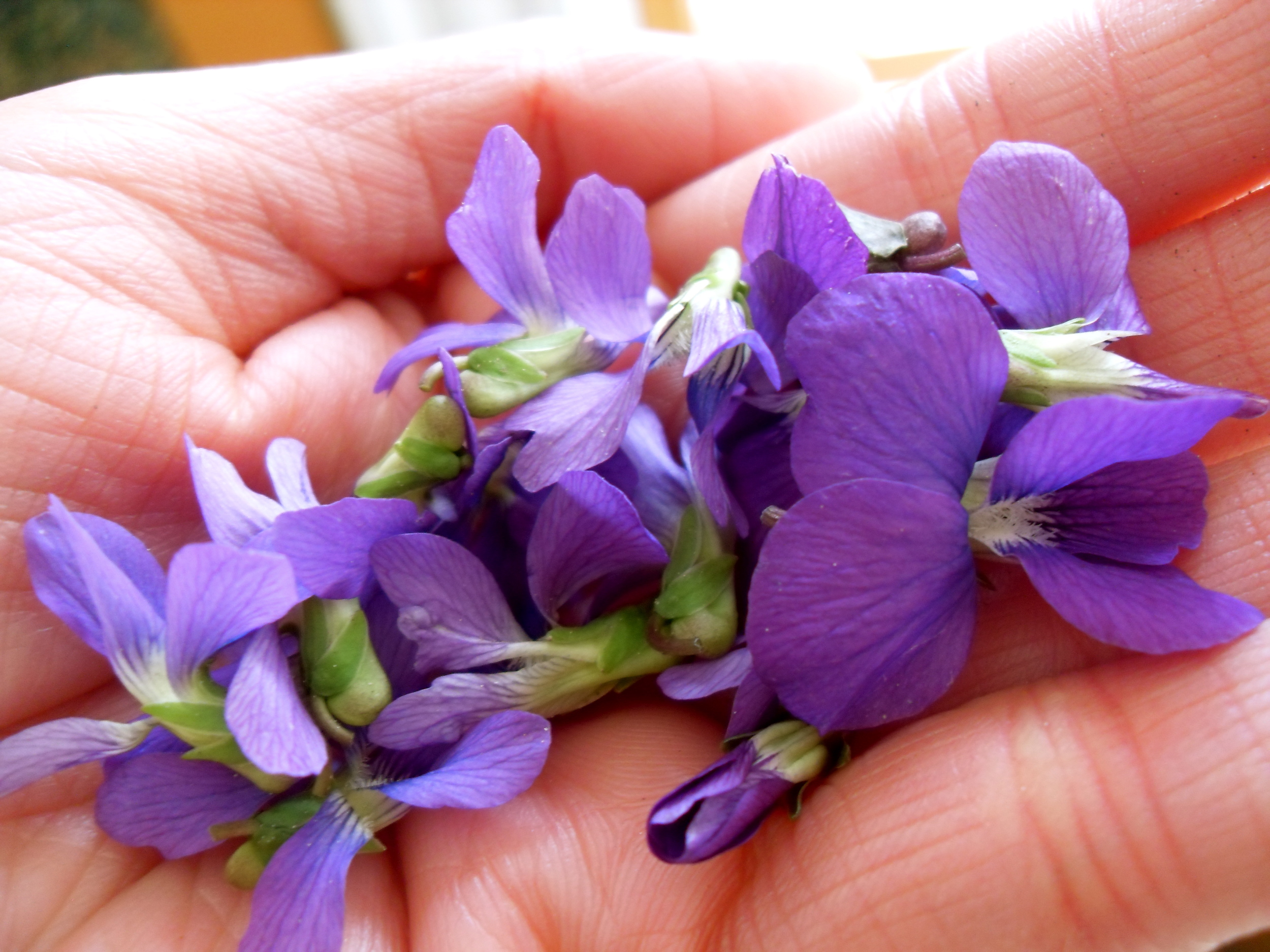
I could not think of a better plant to symbolize spring’s feeling of renewal than the sweet violet flower. With its tender, young, heart-shaped leaves, and its brilliantly colored purple flowers, it is truly a balm to a winter-weary spirit. As the violets bravely emerge in chilly temperatures and before most other plants, I think of them as sweet love letters unfolding from the earth.
One of our best and most nutritious wild spring edibles, violet leaves and flowers are high in Vitamins A & C. You can eat them raw, plucked right from the garden; I like to add them to fresh salads for a beautiful spring touch.
Violet has a slight mucilaginous quality to it, which means it contains a type of polysaccharide that imparts a viscous quality to water when extracted – a quality that is extremely soothing and cooling to mucous membranes. As such, violets can help calm inflammatory conditions, whether it is itchy skin, inflammation in the gut, or a scratchy, sore throat. Use violets on any irritated tissue – they will provide a cooling and soothing relief. Or as the famous English herbalist Culpepper said, “All the Violets are cold and moist, and are used to cool any heat or distemperature of the body, either inwardly or outwardly.”
Violet is also known as a traditional “blood purifier” or alterative herb. This makes it a wonderful and gently detoxifying plant for the spring season, helping our bodies to wake up from the winter and move along any stagnation. Just as the sap in the trees starts to move, so must we move the inner fluids of our bodies, especially through the filter of our lymphatic system. Violet is one of our best lymphatic herbs and is often used to support the removal of toxins from the system. Herbalist Matthew Wood especially recommends violet for “lymphatic stagnation and swollen glands, often in the throat or around the ears.”
If you read old herbal texts from a few centuries ago you will discover that violet was also prescribed as a support for emotional upset – it was said to “comfort and strengthen the heart” and to “to moderate anger.” Violet has an amazing ability to bring its soothing comfort to any inflammatory situation, whether physical or emotional.
Botanically speaking, the violet plant is quite unique. Violets actually produce two different kinds of flowers – first the spring-born flowers (which attract both bees and humans alike). Usually, however, these flowers do not produce seed. Later in the season, violets produce a second kind of flower that grows close to the earth, or underground. Called cleistogamous flowers, these hidden blooms do not usually fully open, and are self-pollinated. Try pulling away the leaves of a clump of violet in late summer or early fall to find these unusual, pale flowers. If you happen to find a seed pod, take a peek inside – you will be most amazed to find a capsule full of luminous, iridescent seeds that shimmer in the sunlight. The first time I discovered the hidden secret of the humble violet, it took my breath away with its beauty.
HOW TO FORAGE AND USE:
Violets are abundant in early spring, and may even spontaneously grow in your backyard or garden. As with harvesting any wild plant, be sure that you are collecting plants in an area that is free from contamination. It is always a good idea to test your soil for heavy metals, and to stay away from collecting near busy roadsides.

Once you have determined a suitable place to harvest your violets, you can pluck the young leaves and flowers when they first emerge and eat them raw in fresh salads. Violets are in their prime when the weather is still cool, so take advantage of the flowers while they are available. Once the weather turns warm, only the leaves will remain.
You can also use dried violet leaf and flower when the fresh plant is not available, but the vivid purple-blue color of the flower will fade once dried. To make a violet infusion, steep up to 1 Tblsp. dried leaf in 8 oz. hot water for at least 10-15 minutes. If you would like to extract more of the soothing, mucilaginous qualities mentioned above, steep the dried leaf in cold water instead, which will preserve the beneficial polysaccharides.
Violet blends well with other herbs such as rose, oat tops and linden for a relaxing tea.
Note: The Violet we speak of here (Viola odorata and related species) is NOT the same as the indoor houseplant, the African Violet, which is unrelated and poisonous. Be sure to only use plants you have positively identified.
A Spring Recipe: VIOLET SYRUP adapted from herbalist Susan Weed
Ingredients:
1/2 pound fresh violet flowers
2 cups water
2 cups raw honey
Directions:
Enlist all the help you can to pick violet blossoms. Boil the water and pour over the fresh blossoms; cover. Let steep overnight in nonmetallic container. The next day, strain out the flowers and reserve the bright purple liquid. Combine the violet infusion and honey in a saucepan. Simmer gently, stirring, for ten or fifteen minutes, until it seems like syrup. Fill clean jars. Cool. Keep well chilled to preserve.
Steph Zabel is an herbalist and educator based in Somerville, MA who helps urban dwellers connect with the plant world. She teaches herbal classes, is available for individual wellness sessions, and is also the founder of HERBSTALK, a community herbal conference. Learn more about her work at: www.flowerfolkherbs.com and www.herbstalk.org.
References:
http://blog.chestnutherbs.com/even-violets-need-a-plan-b
This Web site — Herbs and Botanicals — is for general health information only. This Web site is not to be used as a substitute for medical advice, diagnosis or treatment of any health condition or problem. Users of this Web site should not rely on information provided on this Web site for their own health problems. Any questions regarding your own health should be addressed to your own physician or other healthcare provider.
The Minimalist Makeover: Simple, healthy and all YOU, with five beautiful products
This guest post was written by Kristin Jorgenson, one of our favorite customers and sales brokers, who works with Dr. Hauschka skin care. Kristin has gorgeous skin and wears flawless, minimal make up, always looking completely radiant when she pops in the store.
The Minimalist Makeover is for anyone who wants to achieve a healthy, natural look using just a few skin-loving, non-toxic cosmetics. The look is also known as “YOU, on the best day of your life.”
You: hydrated, healthy, rested, and happy, on a gorgeous, breezy summer day, sparkling, in love.
Before applying any make-up, one must care for their skin with a gentle cleanser, toner and the appropriate day cream for their skin’s current condition. I love Dr. Hauschka’s Quince Day Cream for its clean finish and protective antioxidant ingredients.
Here are the top 5 products I use when performing a Minimalist Makeover, all by Dr. Hauschka Skin Care:

| ONE |
Dr. Hauschka Foundation: This is a brand new formula that I’m wild about. It goes on smoothly and evenly on a well-moisturized face. The foundation contains oils of coconut, apricot and macadamia, which sounds like dessert but lends to hydration and smooth, protected skin. The coverage is light to medium, never heavy, allowing the skin’s natural radiance to come through - but effectively concealing any blemishes or colorations that are inconsistent. I’ve found this new foundation to work as well as a concealer when sponged under the eyes - which was a nice surprise, and keeps us on our theme of minimalism.
|TWO|
Translucent Bronzing Tint: This product is well loved by make up artists everywhere for its perfected formula and unbelievable versatility. The liquid mineral tint contains olive oil and beeswax for a hydrating, blendable application, anthyllis (a healing botanical extract present in many Dr. Hauschka products) and witch hazel for a toning effect. The bronzing tint can be mixed with day cream, sunscreen, or foundation to deepen the shade. It can also be applied strategically with fingers, a makeup sponge or a makeup brush to contour areas of the face, which would naturally be touched by the sun.
|THREE|
Rouge: I love rouge. The right rouge brings the face back to life almost instantly. Dr. Hauschka has really accomplished minimalism by providing the only 3 rouge shades one could need- a bright coral, a rosy pink and a soft nude. These mineral rouge powders contain silk powder, lending a slight luminescence in the light, as well as witch hazel and sage to soothe and refresh. Dr. Hauschka’s International Make-up artist Karim Sattar taught us to ad a touch of rouge to the eyelids to give a youthful look. I’m hooked on that technique.
|FOUR|
Mascara: Natural mascara is sometimes the product that brings people to natural cosmetics due to eye sensitivity. Many people, however, transition to natural mascara more slowly because they believe that eyelashes aren’t as affected by chemicals as the skin is. I’d like to challenge this! Dr. Hauschka’s Mascara contains delicious smelling Rose Petal Wax, soothing eyebright and black tea and neem leaf extract the strengthen lashes. For more oomph, the volume mascara is a firmer formula with a great volumizing brush. Ingredients such as candellila wax, beeswax, neem leaf extract and cane sugar result in plump, long and healthy lashes for beautiful, expressive eyes.
|FIVE|
Novum Lipstick: This is my favorite decision to make when finishing a makeover. By this point, the person is relaxed and their skin is looking fresh and dewy. Using hair, eye, skin tone and colors/type of clothing I choose either a pop of color or a shade very close to their natural lip color. Dr. Hauschka’s Lipstick Novum is the most hydrating lip color I have ever used thanks to Vitamin E rich Moroccan Oil, Jojoba Oil and protective Rose Wax. Lipstick Novums come in 4 amazing shades, Sand Dune (a copper nude with hints of lavender), Miraculous Rose (a tawny pink), Laid Back Apricot (a warm peach) and Exhilarating Berry (a gorgeous shade somewhere between raspberry and wine that looks different on every person I’ve ever used it on).
Enjoy!