
The Naturalist Blog
*
The Naturalist Blog *
Partners in Wellness: Nordic Naturals!
This post was written by Zach, our Supplements Department Lead and one of our store managers. He is passionate about Omega-3's and especially Nordic Naturals brand! Select Nordic Naturals products are on sale through the month of August - ask us in store for details!
Often people come into the store and ask me about what they can do to be healthy besides just exercising or eating well. In the face of so much conflicting advice on diet, lifestyle, and even what it means to be healthy, it can be tough to know which supplements to choose.
This post was written by Zach, our Supplements Department Lead and one of our store managers. He is passionate about Omega-3's and especially Nordic Naturals brand! Select Nordic Naturals products are on sale through the month of August - ask us in store for details!
Often people come into the store and ask me about what they can do to be healthy besides just exercising or eating well. In the face of so much conflicting advice on diet, lifestyle, and even what it means to be healthy, it can be tough to know which supplements to choose.
One of the most beneficial and important supplements is Omega-3’s. These uber healthful nutrients found primarily in fatty-fish (and some seeds, legumes, and nuts) are one of the most common supplements that people take (via capsule or oil) because we must supplement in order to meet our needs. There are countless studies showing the potential benefits of increased Omega-3 intake in everything from promoting a healthy cellular response, to boosting your immune system, to cognitive (brain) health, to promoting a healthy heart, plus many more benefits.* But with this popularity also comes a dilemma: which product to choose.

At Cambridge Naturals we take Omega-3’s seriously, both from a health perspective and from a social/economic/environmental perspective as well. And so we are proud to partner with Nordic Naturals, a world wide leader in Omega-3’s.

Founded in 1995 by Joar Opheim and still family-owned, Nordic Naturals represents the highest quality fish oils in the US. Not only are they making the best products, they are leading the industry in taste, quality, testing, research, and social responsibility. They only use wild-caught, sustainably-sourced fish and are certified across their entire brand by Friend Of The Sea™, one of the top seafood sustainability certifications. Through various philanthropic causes, they are also creating positive social and economic change.**
Nordic’s reputation for high quality extends very, very far, even reaching the western medical channel. Nordic Naturals omega-3 supplements have been used in over 40 published trials and are in use in another 40 through various research institutions, universities, and hospitals including Harvard University, Columbia, Duke, and UCLA to name a few. When it comes to research and credibility, Nordic goes above and beyond!
*These statements have not been evaluated by the Food and Drug Administration. Products made by Nordic Naturals are not intended to diagnose, treat, cure, or prevent any disease.
**Causes and groups partnered with include but are not limited to:
- APA: American Pregnancy Association
- Best Friends Animal Society
- Big Brothers Big Sisters
- GOED: Global Organization for EPA and DHA Omega-3s
- Homeless Garden Project
- Institute of Women’s Health
- NCNM: National College of Natural Medicine
- Paws and Stripes
- Save our Shores
- Second Harvest Food Bank
- Vitamin Angels
- WildCat Sanctuary
- Carter’s Kids
Not Just Skin Deep: Five Favorite Sunscreens For Glowing Summer Skin
By Mary, Customer Service Specialist & CN Blog Contributor
If the last heat wave was any indication, the sun remains strong even as summer’s end looms ever near. Like most health conscious consumers, we at Cambridge Naturals are especially careful what products we use on our body’s largest organ: our SKIN! I don’t think I’m alone when I say the scent of SPF-laden sunscreens I remember from my childhood has no place in my current beach bag. I guess with age comes a higher standard for skincare, among other things.
A fully stocked shelf of sunscreen can be intimidating when all you want is one bottle to get the job done. I’ve narrowed down our collection to a few favorites from skin-brightening to toddler-approved.
By Mary, Customer Service Specialist & CN Blog Contributor
If the last heat wave was any indication, the sun remains strong even as summer’s end looms ever near. Like most health conscious consumers, we at Cambridge Naturals are especially careful what products we use on our body’s largest organ: our SKIN! I don’t think I’m alone when I say the scent of SPF-laden sunscreens I remember from my childhood has no place in my current beach bag. I guess with age comes a higher standard for skincare, among other things.
A fully stocked shelf of sunscreen can be intimidating when all you want is one bottle to get the job done. I’ve narrowed down our collection to a few favorites from skin-brightening to toddler-approved.
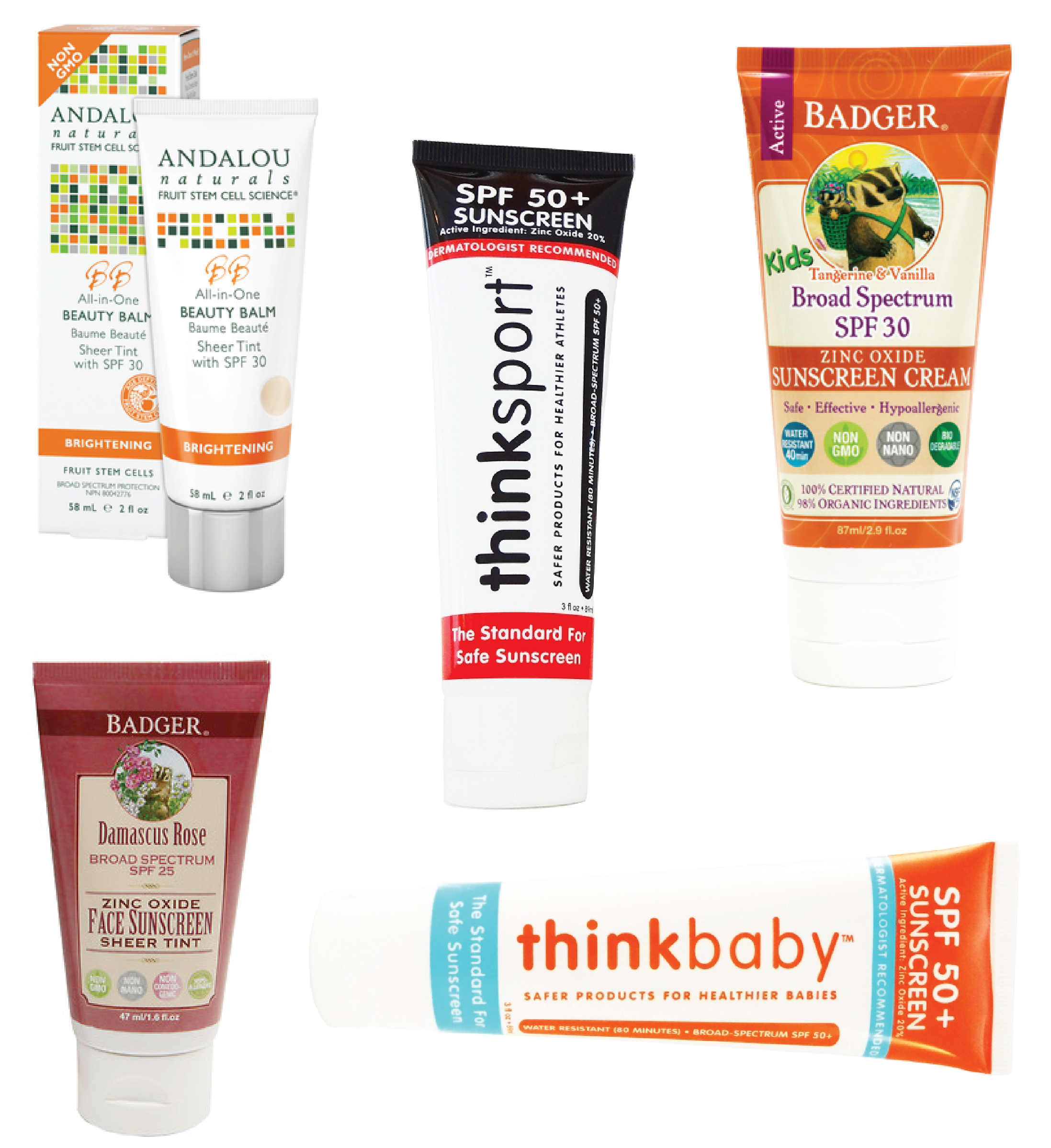
For Everyday Sun Soakers: Badger Rose Tint
This sunscreen gives your face the protection it needs without the white sheen! The sheer tint is just enough coverage to even out skin tone and the ingredients nourish and restore tired skin. The luxurious rose essential oil-based scent makes this an easy choice for daily use.
For Tightening & Brightening: Andalou BB Creams
Want a product that has more than one function? Andalou Naturals makes multiple BB creams that do just that. These BB creams, or Beauty Balms, blend sun protection with coverage, moisturizers, and antioxidants that nourish skin. Depending on your skins needs, whether it’s aging concerns or oil control, Andalou has multiple options so you can find your perfect match.
For All Over Protection: Thinksport Regular
This is the official staff favorite in terms of full body sun protection for long summer days spent outdoors. It absorbs almost immediately and feels like a moisturizer rather than a suit of sun armor. Bonus - it's water resistant for up to 80 minutes!
For Fussy Kids: Badger Kids
Some kids loathe sunscreen entirely based on the scent alone. Can you blame them? Luckily Badger makes a sunscreen with these kids in mind. Their Broad Spectrum SPF 30 Kids Sunscreen Cream has a clean and natural tangerine and vanilla scent that is nice and sweet. On top of that, it absorbs super well, so they won’t have any reason to complain!
For Little Ones: Thinksport Baby
Just like the all over ThinkSport Original, this one is great to have for trips to beach with a baby. Just as highly absorbing as its counterpart, your little one will be able to crawl their way through sand castles sunburn free. Confession: I’m deep into my twenties and I love this one for my own sensitive skin. Don’t let the name fool you, grown ups can use this one too!
Not Just Skin Deep: Introducing Pacifica Beauty
This post is written by Caitlin, our Body Care Department Lead:
Cambridge Naturals is bursting with color! This week, we introduced Pacifica Beauty to our Body Care Department.
Pacifica was formed in 2008 by Brook Harvey-Taylor and her husband, Billy Taylor. The couple cultivated the idea for Pacifica while taking a drive home from a surfing trip and applied their mutual love for fragrance & perfumes along with their passion for the arts & outdoors. Pacifica was originally born as a natural perfume and candle company and has since grown into a wildly successful cosmetic, beauty and body care leader.
This post was written by Caitlin, our Body Care Department Lead:
Cambridge Naturals is bursting with color! This week, we introduced Pacifica Beauty to our Body Care Department.

Bex is PUMPED about Pacifica Beauty
Pacifica was formed in 2008 by Brook Harvey-Taylor and her husband, Billy Taylor. The couple cultivated the idea for Pacifica while taking a drive home from a surfing trip and applied their mutual love for fragrance & perfumes along with their passion for the arts & outdoors. Pacifica was originally born as a natural perfume and candle company and has since grown into a wildly successful cosmetic, beauty and body care leader.
If you are looking to transition away from your current beauty routine, or just want to shake up your makeup, we’ve got you covered! From eyeliners, mascaras, brow gels, highlighters and eye shadows to lip sticks, lip gloss, blush and bronzer to primers, foundations, concealers and under-eye brighteners, we have something for everyone!

Pacifica offers an extensive line of gluten-free, 100% vegan and cruelty-free cosmetics that don’t contain harsh chemical ingredients found in most mainstream cosmetics AND they’re not harsh on your wallet! Prices range from $9.99 to $31.99, making Pacifica an affordable option if you’re looking to make a new makeup leap.
My new personal favorite is the Dream Big Lash Extending 7 in 1 Mascara! This Mascara is unbelieveable! It offers: lash serum, instant length, lash lift, volume, conditioning, rich color and a 2-in-1 brush in just one wand! You have the power to choose length or volume with the simple twist of the wand - you will see the mascara brush lengthen and shorten right before your eyes!
We're so excited about our new Partnership with Pacifica! Be sure to celebrate with us during Pacifica’s demo on Friday, August 5th from 4-7 in store only at Cambridge Naturals!
Hibiscus: Relief for Summer Heat
By Steph Zabel
Herbalist, Ethnobotanist and Educator
As we move through the changing seasons of the year, so do our bodies change, along with what we need and crave. In the summertime, obviously, most of us are looking for ways to stay cool, refreshed and hydrated in the sometimes-unbearable heat. Especially with our recent tropical-like weather, it is important to balance out the heat of the season with foods and herbs that help to cool and rejuvenate the body.
By Steph Zabel
Herbalist, Ethnobotanist and Educator
As we move through the changing seasons of the year, so do our bodies change, along with what we need and crave. In the summertime, obviously, most of us are looking for ways to stay cool, refreshed and hydrated in the sometimes-unbearable heat. Especially with our recent tropical-like weather, it is important to balance out the heat of the season with foods and herbs that help to cool and rejuvenate the body.
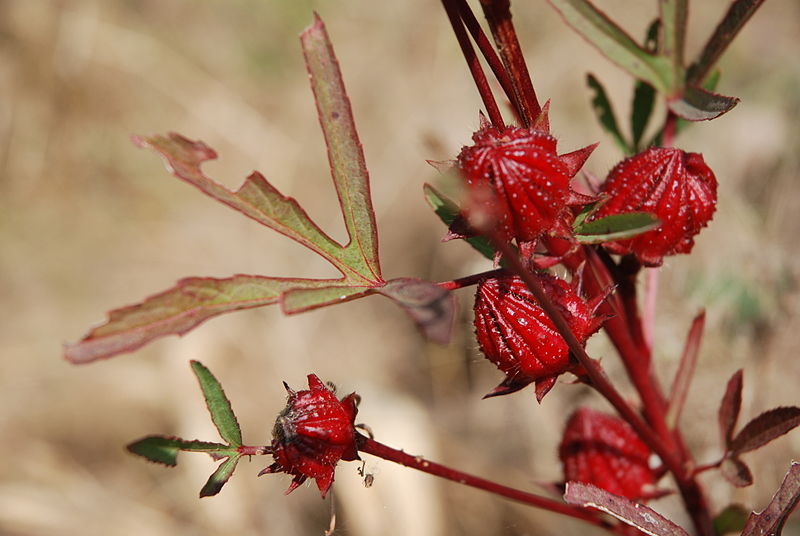
Photo credit: Thomas Schoch via WikiCommons
So, let’s look at an herb used, grown and beloved in all tropical areas around the globe: the wonderful and beautiful Hibiscus.
Most people are familiar with some of the garden varieties of hibiscus, which have large, showy flowers that are brightly colored in shades of orange, red or pink. But hibiscus sabdariffa is a bit different from these other family members in that its flower is a pale pink or peach.
However, the flower is not the sought-after part of this plant — it is actually the calyx (the leaf-like structures that surround the flower) that are harvested and used for tea and other herbal preparations. Hibiscus sabdariffa — also called roselle — grows in most tropical areas of the world including Mexico, Latin America, India and North Africa. It has been used for centuries in various healing traditions and contains many wonderful healing properties for the modern-day, city-living human, especially those of us who deal with stress, inflammation, and heat on a regular basis.
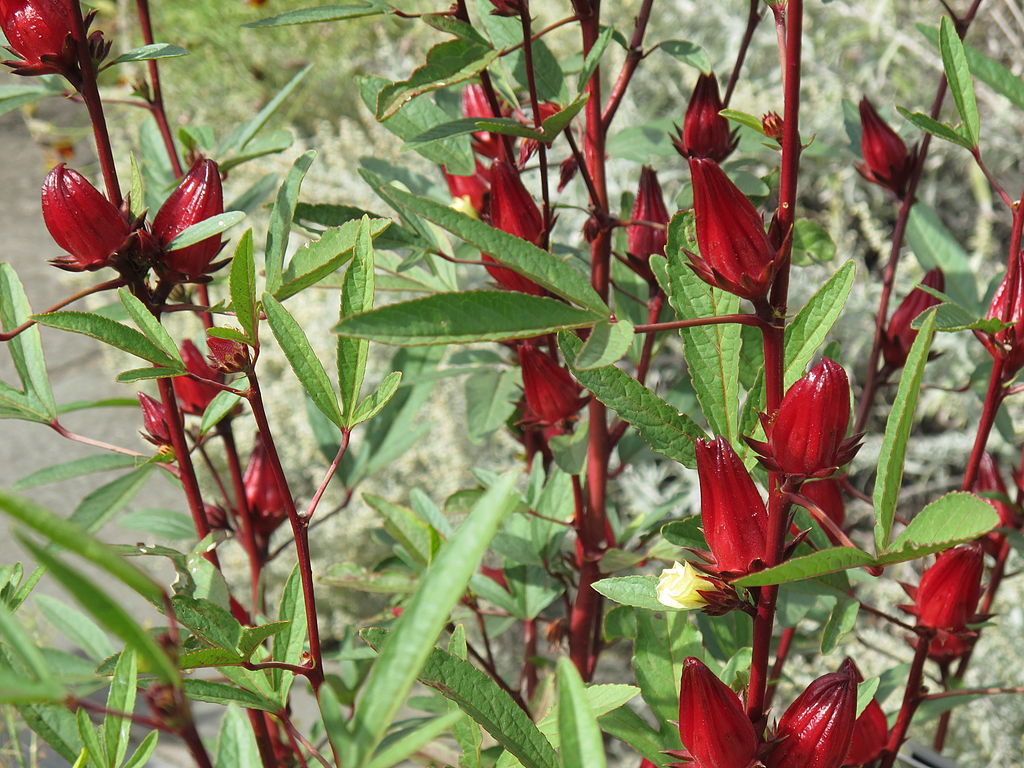
Photo credit: InvertZoo via WikiCommons
The deeply pigmented calyx is high in anti-oxidant bioflavonoids, which offer many potent anti-inflammatory and cardio-protective qualities. Traditionally, hibiscus tea was used to address heart disease, high cholesterol, high blood pressure and as a general preventative against free radical stress on the body. It is an excellent heart tonic, especially because of its high content of bioflavonoids, which help protect the entire cardiovascular system.
Hibiscus is my go-to summer herb. As soon as the temperature starts to rise above 80 degrees, I break out my stash. There is no other herb that I have experienced that is so well-suited to the dog days of summer. Hibiscus is tremendously cooling, and helps to bring the body temperature down. Also, perhaps due in part to its tart flavor, it is very thirst-quenching and helps to keep us hydrated while we are sweating away in the summer heat. The taste is refreshing and flavorful, a bit sour and energizing, and many people find that it is almost addictive. In my home as soon as one batch of hibiscus tea has disappeared I’ll make another one right away so that there is always plenty to gulp down when needed.

Photo Credit: Pradeepkannamkulat via WikiCommons
Besides its wonderful effects on the heart and on summer-weary bodies, hibiscus is known to have anti-bacterial properties. It has also been used as a beauty tonic to help smooth and repair the skin, lending its anti-inflammatory effects for topical use. Hibiscus has been known to improve scalp health, reduce dandruff, and improve overall hair growth. It was a traditional remedy for loss of hair and was used as a rinse over the scalp for this purpose. It also makes for a lovely natural colorant in cosmetic products (such as lip balm) due to its beautiful, deep, ruby-red color.
Although hibiscus truly shines as an important summertime herb, we must remember that it can be used throughout all seasons. Its high vitamin C content makes it useful for colds and flu during the winter season, helping to gently support our immune systems. And because it’s an herb that naturally contains mucilage (a type of soluble fiber that becomes viscous when extracted) it is also quite soothing for irritated and scratchy throats and coughs.
HOW TO USE HIBISCUS:
One of the best ways to use hibiscus in the summertime is to make a cold water infusion — also called a sun tea — with the dried herb. Simply add 1 - 2 tablespoons of the dried herb per one cup of cold water in a glass jar. Let this steep for 3 to 5 hours at room temperature; or place in a sunny windowsill to use the heat of the sun to extract the herbs.
You can also use this tea to make hibiscus ice cubes for adding to special beverages. Or, if you really want to be creative, mix a strong brew of hibiscus tea with your favorite chopped up fruit (strawberries, cherries or raspberries are all great choices) and an optional sweetener, and pour the blend into popsicle molds for a delicious and tart summer treat!

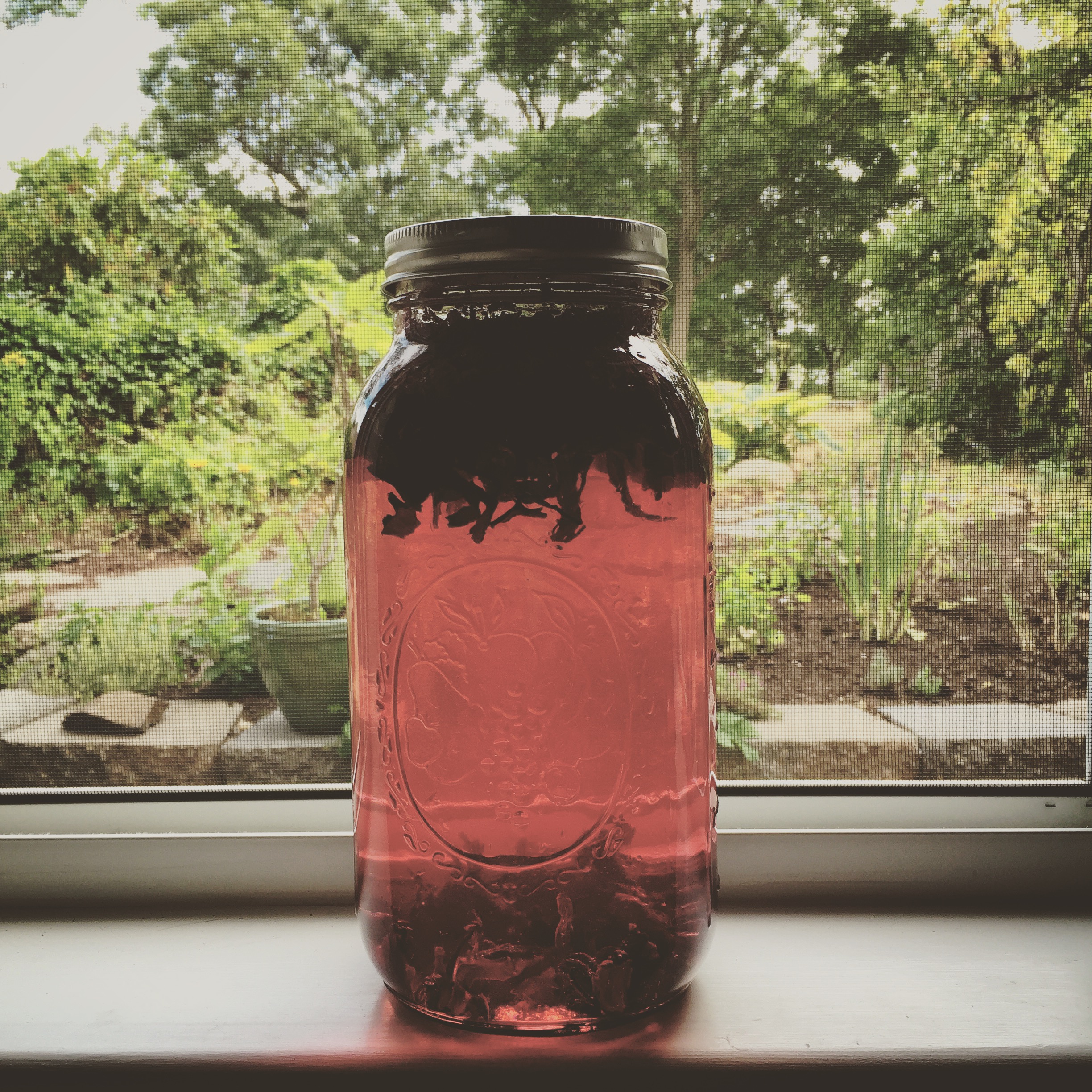
REFRESHING SUMMERTIME SUN TEA:
This tea is wonderfully cooling, refreshing and hydrating on hot summer days.
4 tablespoons dried hibiscus
2 tablespoons dried rose petals
1/2 - 1 tablespoon dried spearmint
Add all herbs to a quart-sized glass jar and cover completely with cold water. Give it a stir and then cap tightly. Place the jar in a sunny window and let it infuse for 3 to 6 hours until the desired flavor is reached. Strain out the herbs and enjoy! (The remaining herbs can be steeped again, but will be weaker the second time around.)
NOTES:
Use with caution in people with heartburn as the sour taste may be aggravating. Also, hibiscus is sometimes intercropped with peanuts so use with caution in people with nut allergies.
Steph Zabel, MSc, is an herbalist and educator who helps urban dwellers connect with the plant world. She teaches herbal classes, is available for individual wellness consultations, and is also the founder of HERBSTALK, Boston’s community herbal conference. Learn more about her work at: www.flowerfolkherbs.com and www.herbstalk.org.
References:
Herbal Gram
Science Direct
Chestnut Herbs
Gaia Herbs
NYR Natural News
This blog post — Herb of the Month: Chamomile — is for general health information only. This blog post is not to be used as a substitute for medical advice, diagnosis or treatment of any health condition or problem. Users of this Web site should not rely on information provided on this Web site for their own health problems. Any questions regarding your own health should be addressed to your own physician or other healthcare provider.
Summer Camp Survival!
This blog post was written by Mary, the newest addition to our team! Mary recently graduated from UVM Burlington with a degree in Nutrition & Food Science, and is a major camping enthusiast. She has fond childhood memories of packing up her trunk for several weeks in the woods!
It's that time of year again. Time to pack a bag, or if you're like me pack a trunk, and GO CAMPING! Summer camp is one of my fondest memories from my childhood and I'm happy to see the tradition of overnight camp still holding strong. We've had so many visits from parents anxious to collect all of the products required to keep campers happy that we decided it was time to share our favorites. Whether you're looking for the right sunscreen or sunburn relief, Cambridge Naturals has you covered.
This blog post was written by Mary, the newest addition to our team! Mary recently graduated from UVM Burlington with a degree in Nutrition & Food Science, and is a major camping enthusiast. She has fond childhood memories of packing up her trunk for several weeks in the woods!
It's that time of year again. Time to pack a bag, or if you're like me pack a trunk, and GO CAMPING! Summer camp is one of my fondest memories from my childhood and I'm happy to see the tradition of overnight camp still holding strong. We've had so many visits from parents anxious to collect all of the products required to keep campers happy that we decided it was time to share our favorites. Whether you're looking for the right sunscreen or sunburn relief, Cambridge Naturals has you covered.

The best thing to pack to ensure a good outdoors experience is anything that helps prevent future discomfort from happening in the first place. This means loading up on sunscreen and bug spray, and we have plenty of that! It can be hard to choose which is the best when faced with a wall of options that all seem to blend together after a minute or two, so I've rounded up my favorites. Badger's Active Kids SPF 30 sunscreen remains a favorite. This locally-made cream is perfect for fussy kids who normally resist applying (and re-applying) sunscreen thanks to its tangerine and vanilla scent. Note: although 100% certified natural and made with 99% organic ingredients, it is not edible - however delicious it smells! If you need something with higher protection, ThinkSport has SPF 50+ and options for babies, kids, and grown ups, all of which rub in easier than most zinc-laden creams. As Stream2Sea's featured retailer of the month, we are happy to say that if (or should I say when?) a sunburn should occur, you can also get their Sunburn Relief in both full and travel size.

Bug bites and all the evil they bring with them are a growing concern, as are the common deet-containing sprays. Luckily we sell Badger's Anti-Bug line and it is now 10% off through the month of July! This includes the Anti-Bug Balm and the After-Bug Balm, both with plenty of certified organic oils that skin loves and bugs hate. So all your bug bases are covered at a discount.
Although camping requires a certain "back to the land" mentality, some of us find it difficult to give up our civilized dispositions so easily. There's no shame in wanting to be one with nature while also smelling and looking good. To make things easier I recommend everyone's favorite all-in-one product, the legendary Dr. Bronner's, for all your body and hair washing needs - available in eight essential oil-based scents. This cuts down water use and gives campers more time for the fun stuff. If you or your child is especially lazy in the hygienic sense we sell Action Wipes for a decent full body cleanse with one giant wipe.

Now for the fun part: the stuff you put all your new stuff in! We have a plethora of cases for toothbrushes and soaps by Radius. Kids and adults alike can choose whatever color fits their personality and they can be found right next to our travel size section filled with the cute, mini sized version of your favorites soaps and toothpastes! If you already have some larger products stocked up, we have GoToobs for easy transfer into a travel friendly and spill proof containers.
Let us not forget, once the kids are dropped off, there's care packages to be sent! We have plenty of shelf stable treats and funny cards to surprise your favorite camper with.
RegActiv Probiotics: Immune, Heart and Liver Wellness through Antioxidant Support
This post was originally published back in December of last year. We have RegActiv probiotics on sale in the month of July - save 20% off!!
By Miles Sarill
Supplements Buyer and M.S. Candidate - Experimental Medicine
In the last thirty years, the market for probiotics has evolved and grown greatly. No longer is the sole capsule of Lactobacillus acidophilus the only option; rather, the aisles are populated with a multitude of products each touting “more than 10 bacterial strains” with anywhere between 5 and 150 billion cells per capsule. This boom in the probiotic market is partially fueled by both consumer interest as well as novel research into the microbiome.
Read more in the original post: http://www.cambridgenaturals.com/blog/regactiv-probiotics
This post was originally published back in December of last year. We have RegActiv probiotics on sale in the month of July - save 20% off!!
By Miles Sarill
Supplements Buyer and M.S. Candidate - Experimental Medicine
In the last thirty years, the market for probiotics has evolved and grown greatly. No longer is the sole capsule of Lactobacillus acidophilus the only option; rather, the aisles are populated with a multitude of products each touting “more than 10 bacterial strains” with anywhere between 5 and 150 billion cells per capsule. This boom in the probiotic market is partially fueled by both consumer interest as well as novel research into the microbiome.
Read more in the original post: http://www.cambridgenaturals.com/blog/regactiv-probiotics
DIY Natural Whitening Toothpaste by Jenn
This blog post was written by Jenn, who is a Customer Service Specialist at the store by day and an Industrial Design student by night! She also designs and handcrafts some beautiful wooden necklaces that we carry. She has a passion for herbs and DIY body care. Read her tips for making your own natural and effective toothpaste below!
Natural & Whitening?! What kind of witchcraft is this?! For most of us, when we think of a whitening toothpaste, our first thought isn’t necessarily "natural" - but with a little help from an unlikely source it can be! Like most of you, I am a huge proponent of all things natural, and if I can make it myself - well, that's even better!
This blog post was written by Jenn, who is a Customer Service Specialist at the store by day and an Industrial Design student by night! She also designs and handcrafts some beautiful wooden necklaces that we carry. She has a passion for herbs and DIY body care. Read her tips for making your own natural and effective toothpaste below!
Natural & Whitening?! What kind of witchcraft is this?! For most of us, when we think of a whitening toothpaste, our first thought isn’t necessarily "natural" - but with a little help from an unlikely source it can be! Like most of you, I am a huge proponent of all things natural, and if I can make it myself - well, that's even better! My teeth have a tendency to stain now and again with my over consumption of tea, coffee, kombucha, and chocolate. I thought there was no hope and that I would either have to quit my delicious habits or give in to those nasty chemical ridden whitening products *shudders*. However, through trial, error, and lots of research I have put together a recipe that not only whitens but is squeezable and it only takes a few simple ingredients some you may have right in your kitchen. You can also buy all of these ingredients at Cambridge Naturals - many of them from our bulk section!
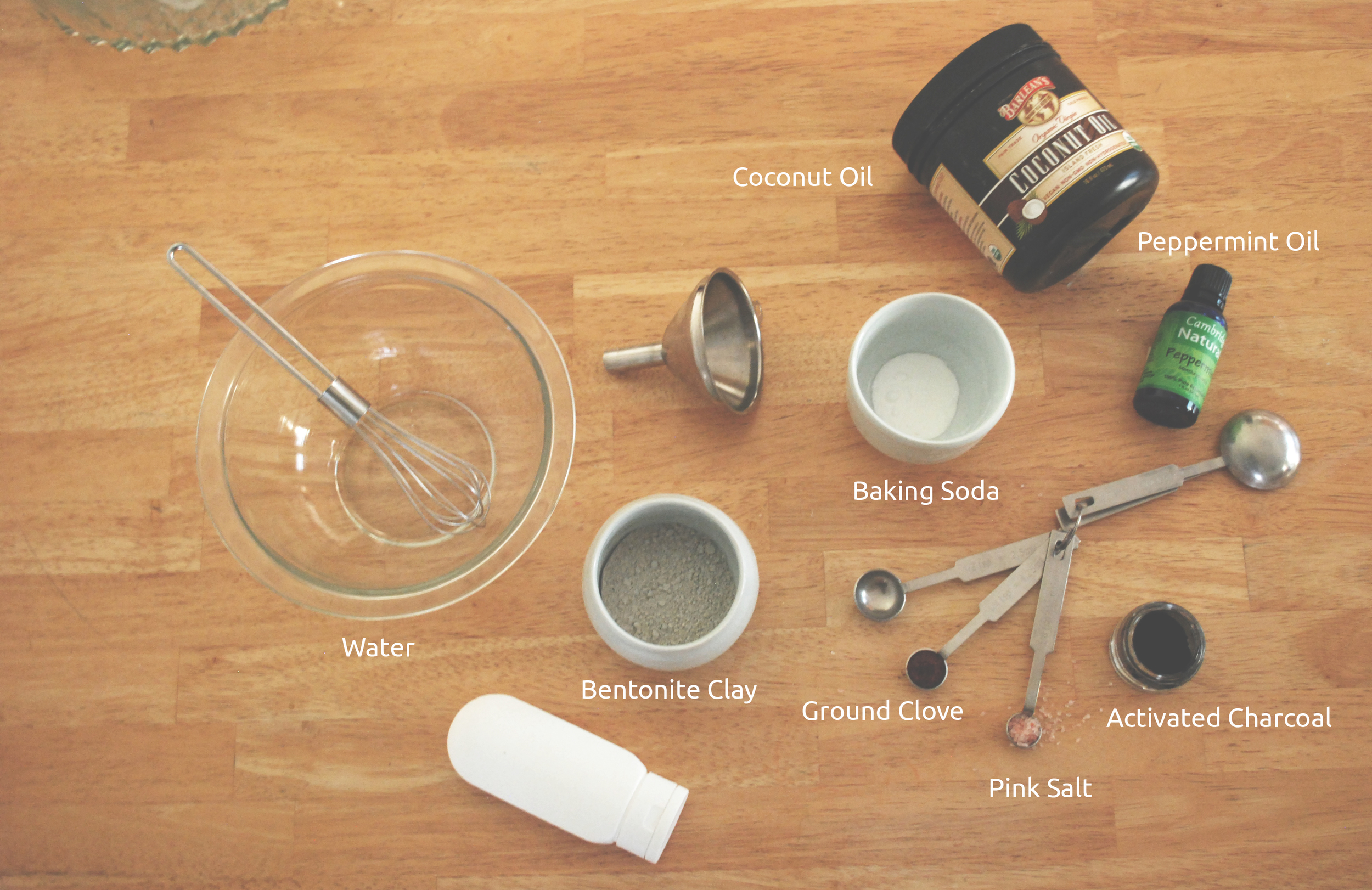
Photo credit: Jenn M
Combine all the dry ingredients in one bowl and all the wet ingredients into another bowl. Then slowly mix the dry ingredients in with the wet ingredients. Once everything is thoroughly mixed together, put it into any container (I use a little squeezable tube) and it's ready to use! This recipe usually lasts me about 2 weeks, so feel free to adjust accordingly, and enjoy your newly sparkling pearly whites!
What you will need:
2 tbsp of Bentonite Clay
3 tbsp Distilled Water
2 tbsp Coconut Oil (liquid state)
½ tbsp Baking Soda
¼ tsp Powdered Clove
⅛ tsp Himalayan Pink Salt
⅛ tsp Activated Charcoal
5 Drops Peppermint Essential Oil*
*I would NEVER suggest taking essential oils internally, but with this recipe you're not actually swallowing it and using very little!
Herb of the Month: Chamomile
CHAMOMILE: Matricaria recutita and Chamaemelum nobile (Anthemis nobilis) Asteraceae
By Steph Zabel
Herbalist, Ethnobotanist and Educator
The Greeks call it earth apple, Germans call it mother’s herb, and in Mexico it is known as manzanilla, or little apple. No matter the name, no matter the language, chamomile is a culturally important plant known and loved around the world.
CHAMOMILE: Matricaria recutita and Chamaemelum nobile (Anthemis nobilis) Asteraceae
By Steph Zabel
Herbalist, Ethnobotanist and Educator
The Greeks call it earth apple, Germans call it mother’s herb, and in Mexico it is known as manzanilla, or little apple. No matter the name, no matter the language, chamomile is a culturally important plant known and loved around the world.
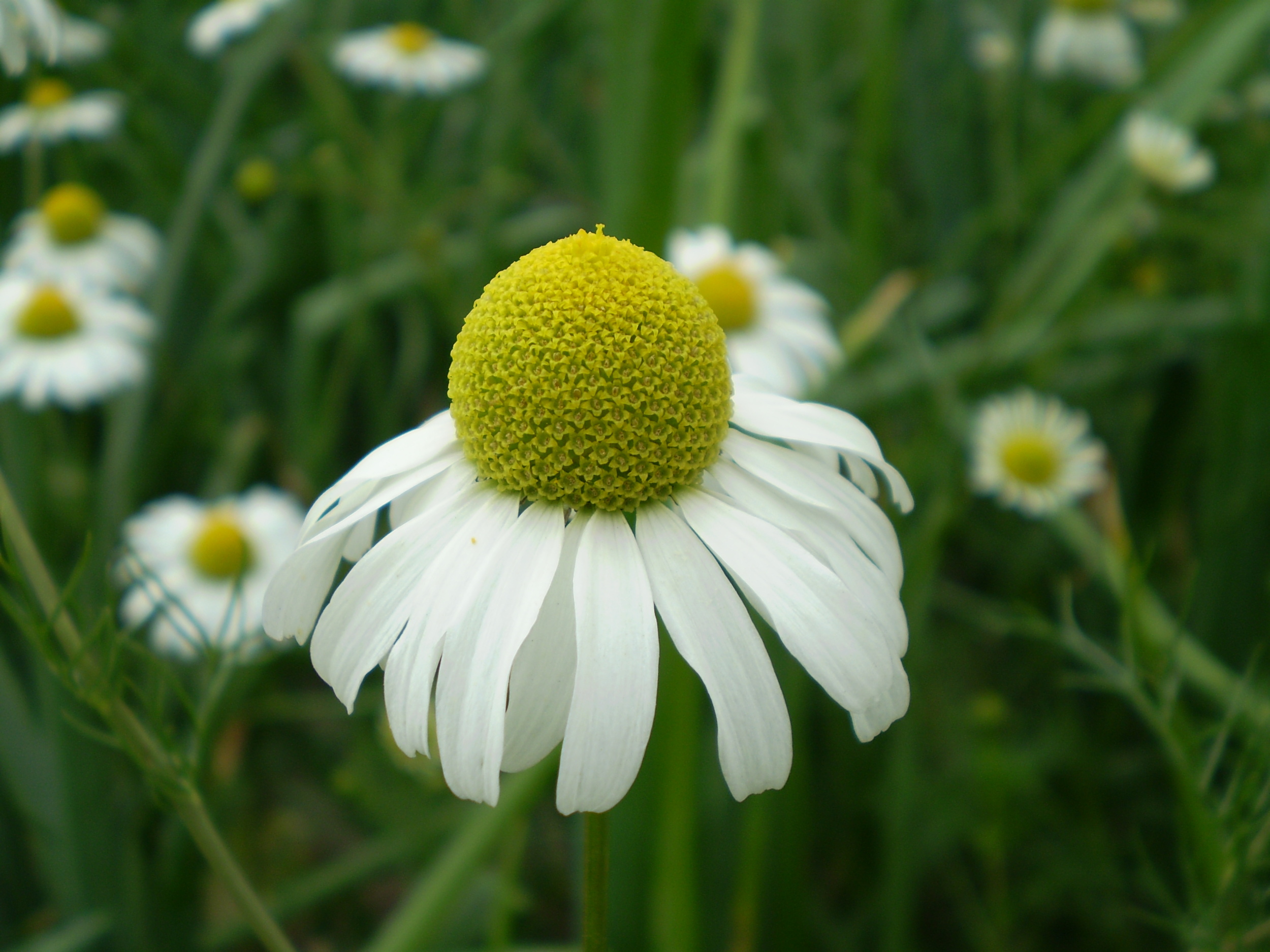
Photo Credit Rob Hille via Wikipedia

Photo Credit Mussklprozz via Wikipedia
Due to its lovely aromatic scent combined with its very useful actions on the human body, chamomile has become one of our most common and recognizable herbs. Practically all restaurants and cafes serve up chamomile tea, and it is one of the few medicinal herbs that all grocery stores will stock in their tea sections. Could there be anyone who has not had chamomile tea before? It is a flavor that is known by almost everyone.
There are two plants that are called chamomile: the more popular and common German chamomile (Matricaria recutita) and the Roman chamomile (Chamaemelum nobile). Although they are different species, they are used interchangeably in herbal medicine. Both are very aromatic, with the lovely, sweet scent of apples.

Photo credit: Köhler's Medizinal-Pflanzen, published 1887 via Wikipedia
Chamomile has been used as a medicine for thousands of years, dating back to the ancient Egyptians, Romans, and Greeks. It was also one of the nine sacred herbs of the Anglo-Saxons. Because of its various healing powers, chamomile was believed to be a gift of the gods.
When we think of chamomile first we must think of its affinity for the digestive organs. This cheery herb is renowned for its use in various ailments such as indigestion, stomach-ache, flatulence, and inflammation in the gut. Chamomile contains an essential oil called azulene, which is a beautiful deep blue oil when distilled. This oil possesses tremendous anti-inflammatory properties that helps soothe and relax the walls of the intestines and remove excess gas. In addition, although chamomile has a sweet aroma and taste to it, it is also mildly bitter. This bitterness helps stimulate liver function and the production of bile, thus aiding in the overall process of digestion. Chamomile truly shines for issues of the stomach and intestines, and is a wonderful and easy addition to the home apothecary.
Chamomile is also an excellent herb for nervousness, tension and anxiety, especially for the type that manifests in the digestive organs (i.e. that feeling of knots or butterflies in the stomach). The flowers have traditionally been used to calm frayed nerves, and to quell irritable behavior. For most people a cup of chamomile tea is instantly relaxing and soothing. It is perfect as a before bedtime tea, or after a long and stressful day.
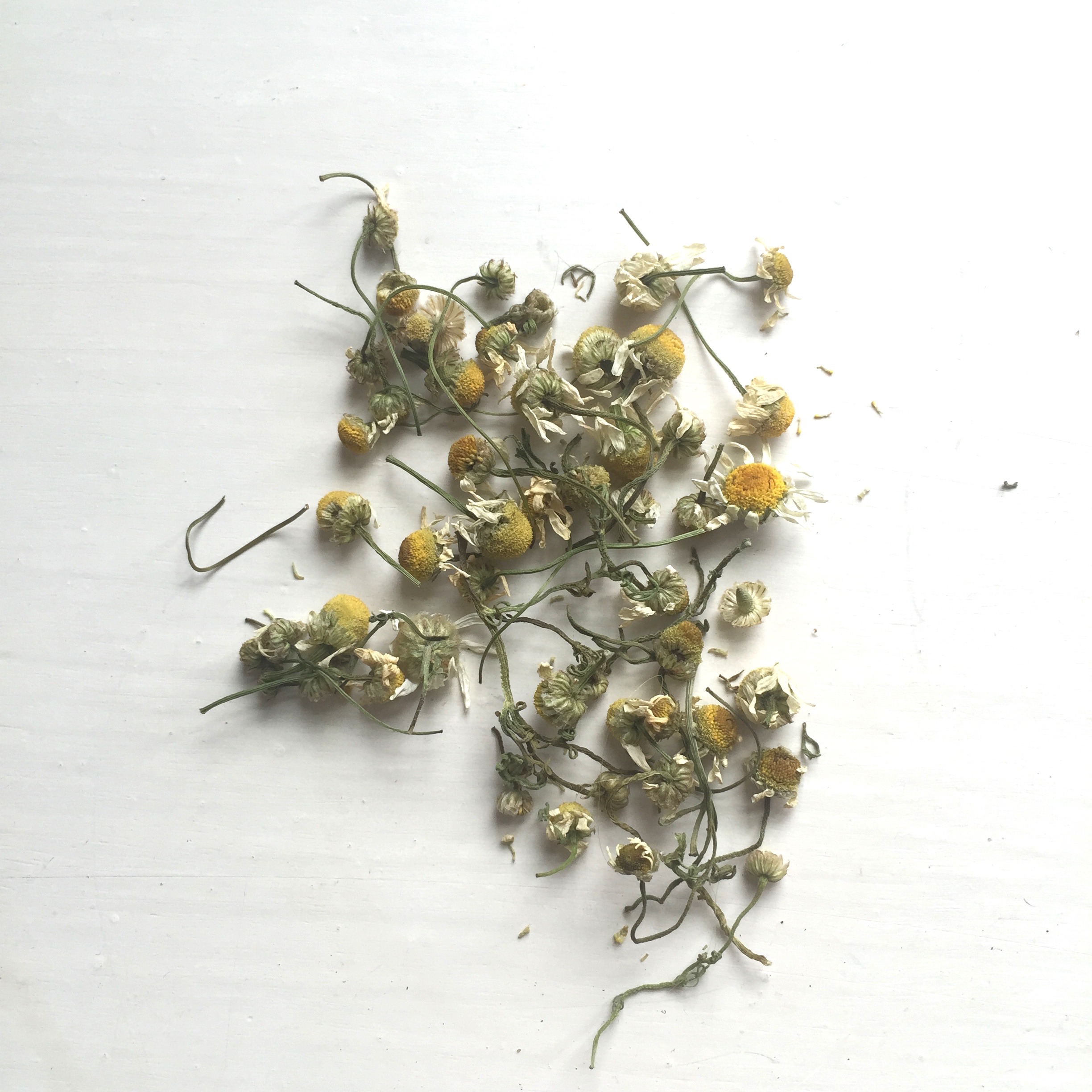
Photo credit: Steph Zabel
Perhaps chamomile is most famous for its use with babies and children; it is after all called the “mother’s herb” in Germany for good reason. It is very safe for young people and especially suited to children who are irritable, whining, hypersensitive and/or restless. Given as a diluted tea, or used in a bath, chamomile calms irritable behavior. And this action isn’t just for children! One of our most famous American herbalists, Matthew Wood, is often quoted on chamomile, writing that it is “the remedy for babies of any age.” In my own practice, I find this to be very true! Chamomile is wonderful for any temperamental outbursts, heated emotions, or irritable and childish behavior. Every now and then, we all must whine and complain, but when it becomes a constant theme, chamomile is the answer!
On another note, here on the east coast we have a close cousin of chamomile that grows wild in lawns and pathways where humans walk. Called pineapple weed (Matricaria matricarioides), this plant grows abundantly throughout the city and has an intoxicating sweet scent. Its flowers are not as showy as true chamomile since they lack the white ray petals, but if you take the yellow center and crush it between your fingers you will be amazed at its amazingly strong scent. Pineapple weed can be used just like chamomile.
A word of caution: A small number of people are allergic to chamomile and other related plants in the Asteraceae family, so do be aware that it may provoke an allergic reaction in people who are sensitive.
HOW TO USE CHAMOMILE:
Tea infusion: Use 2 teaspoons of the dried herb per cup of hot water. Cover and let steep up to 10 minutes. It becomes quite bitter the longer it is steeped.
Chamomile mixes well with peppermint, sage, fennel, calendula and/or wood betony for digestive issues
Tincture: Use 10 to 30 drops of chamomile tincture as needed for stomach ache, tension or nervousness
Essential oil: Use 10 to 15 drops of the essential oil diluted in a carrier oil (such as olive oil) for topical use on minor wounds and inflammation
RECIPE: Chamomile infused wine
1 bottle of your favorite white wine (a sweet wine like a Riesling would work well)
2 - 3 tablespoons of dried chamomile flowers
Place the chamomile in a quart sized glass jar. Pour the wine over the herb. (A whole bottle of wine will fit into a quart sized jar.) Give it a stir so that the chamomile is completely submerged in the wine. Cap with a lid and keep at room temperature for at least 3 hours. Or, steep for longer (up to 8 hours) for a stronger flavor. Pour the wine through a fine sieve to remove the chamomile. Enjoy chilled for a sweet and relaxing summer wine.
Steph Zabel, MSc, is an herbalist and educator who helps urban dwellers connect with the plant world. She teaches herbal classes, is available for individual wellness consultations, and is also the founder of HERBSTALK, Boston’s community herbal conference. Learn more about her work at: www.flowerfolkherbs.com and www.herbstalk.org.
References:
https://whisperingearth.co.uk/2010/04/17/more-musings-on-chamomile-a-herb-for-the-child-in-us-all/
http://umm.edu/health/medical/altmed/herb/german-chamomile
http://www.botanical.com/botanical/mgmh/c/chammo49.html
http://www.ncbi.nlm.nih.gov/pmc/articles/PMC3210003/
The Book of Herbal Wisdom by Matthew Wood
Herbs: Partners in Life by Adele G. Dawson
This blog post — Herb of the Month: Chamomile — is for general health information only. This blog post is not to be used as a substitute for medical advice, diagnosis or treatment of any health condition or problem. Users of this Web site should not rely on information provided on this Web site for their own health problems. Any questions regarding your own health should be addressed to your own physician or other healthcare provider.
Featuring: Holy Sponge!
This blog post was written by Caitlin, our Assistant Body Care Lead and an intrepid product tester! Read below to learn more about Holy Sponge! and what a Menstruation Activist is.
I remember the first time I tried using a tampon - it was terrifying. I felt like I was taking a foreign object and entering a foreign place. Over a short period of time (no pun intended), I got used to using tampons, and they easily found a way into my monthly routine. To me, there was nothing friendly about a tampon, and pads just simply were not appealing. Now that I have grown well into my womanhood and learned to love my body and my monthly cycle, I have also learned to love the power of choice as a female consumer! Enter: the Holy Sponge!
This blog post was written by Caitlin, our Assistant Body Care Lead and an intrepid product tester! Read below to learn more about Holy Sponge! and what a Menstruation Activist is.
I remember the first time I tried using a tampon - it was terrifying. I felt like I was taking a foreign object and entering a foreign place. Over a short period of time (no pun intended), I got used to using tampons, and they easily found a way into my monthly routine. To me, there was nothing friendly about a tampon, and pads just simply were not appealing. Now that I have grown well into my womanhood and learned to love my body and my monthly cycle, I have also learned to love the power of choice as a female consumer! Enter: the Holy Sponge!

Photo via Holy Sponge! Instagram feed
The Holy Sponge! was created by Janeen Singer, a self-proclaimed menstrual activist who wanted to provide women with safe, earth-friendly alternatives to toxic, commercial menstrual products. Although a sponge may seem intimidating at first, you might find yourself surprised by the soft, silky body of the sponge. Before inserting, the sponge should be run under warm water to soften making for easier and more gentle insertion than a dry, cotton tampon.
The Holy Sponge lasts for 3-6 cycles and is fully compostable - making this both a great economic and eco-conscious consumer option. For someone who doesn’t even like to carry a wallet, nevermind a purse, the Holy Sponge is a true savior! No purses, bags, or backpacks required to accompany you on your next trip to the bathroom making the sponge an extremely discreet way to experience your monthly cycle.
Janeen and her team have put great care and energy into creating Moon Ritual Kits which come with a set of 2 professionally and sustainably harvested sponges, an easy-to-read illustrated guide for care and use, a small vial of organic tea tree oil for disinfecting, responsibly harvested dried herbs for a bath or cleansing ritual, and a cotton carrying bag. The Holy Sponge team is also quite accommodating and will gladly disinfect your sponges with peroxide instead of tea tree oil if you happen to have an allergy, sensitivity, or preference.

Photo via Holy Sponge! Instagram feed
If you are interested in trying the sponge, you will be investing in an educational exploration of your body. I am now even more amazed at what my body is capable of and how easy the sponge is to use - once it’s in, you can hardly tell it’s there!
You can learn more about Janeen and the Holy Sponge at http://www.holysponge.net/
Mugwort: A Wild Beauty in Urban Places
By Steph Zabel
Herbalist, Ethnobotanist and Educator
When I first moved to Boston a decade ago I felt like a country girl in the big city. I’d traveled and lived in several places before, but had never before set down roots in an urban environment. I was used to living amongst trees and woods, and wide-open spaces. Although I loved my new city home, I greatly missed natural open spaces, and forests, and wild places.
So I found consolation in a different sort of wildness: in untamed, weedy plants that sprout up in the neglected areas of town. Of all of these – the dandelions, chickweeds, shepherd’s purses and burdocks that I came to know and love – mugwort was the one to capture me the most.
When I first made acquaintances with this lovely creature I knew nothing of the plant, not even its name. I just loved the beautiful shape, tall stature, silvery leaves, and gracefulness as I observed mugwort swaying in the wind, or in the passing rumble of a train.
By Steph Zabel
Herbalist, Ethnobotanist and Educator
When I first moved to Boston a decade ago I felt like a country girl in the big city. I’d traveled and lived in several places before, but had never before set down roots in an urban environment. I was used to living amongst trees and woods, and wide-open spaces. Although I loved my new city home, I greatly missed natural open spaces, and forests, and wild places.
So I found consolation in a different sort of wildness: in untamed, weedy plants that sprout up in the neglected areas of town. Of all of these – the dandelions, chickweeds, shepherd’s purses and burdocks that I came to know and love – mugwort was the one to capture me the most.
When I first made acquaintances with this lovely creature I knew nothing of the plant, not even its name. I just loved the beautiful shape, tall stature, silvery leaves, and gracefulness as I observed mugwort swaying in the wind, or in the passing rumble of a train.


I used to walk one particular route to work that always led me past a population of mugwort. It was an unpleasant and ugly stretch to walk through, full of trash and city grime, but the mugwort always provided a glimpse of beauty and grace with its silvery green glow. It felt like the mugwort was welcoming me to my new city, and whispered to me an important reminder: that I could find beauty wherever I looked for it.
Upon delving deeper into my work with the herbs I discovered many things about mugwort that enamored me with the plant even more. I found out that it is a plant of ancient use and was known as the Mater Herbarum — the mother of all herbs. Mugwort was held sacred by various cultures and thought to be the oldest of plants. In particular it was believed to be a plant that offered protection to humans. It was once common to hang a sprig of mugwort over the doorway — or to burn it as an incense — to keep illness and evil spirits away from the home.
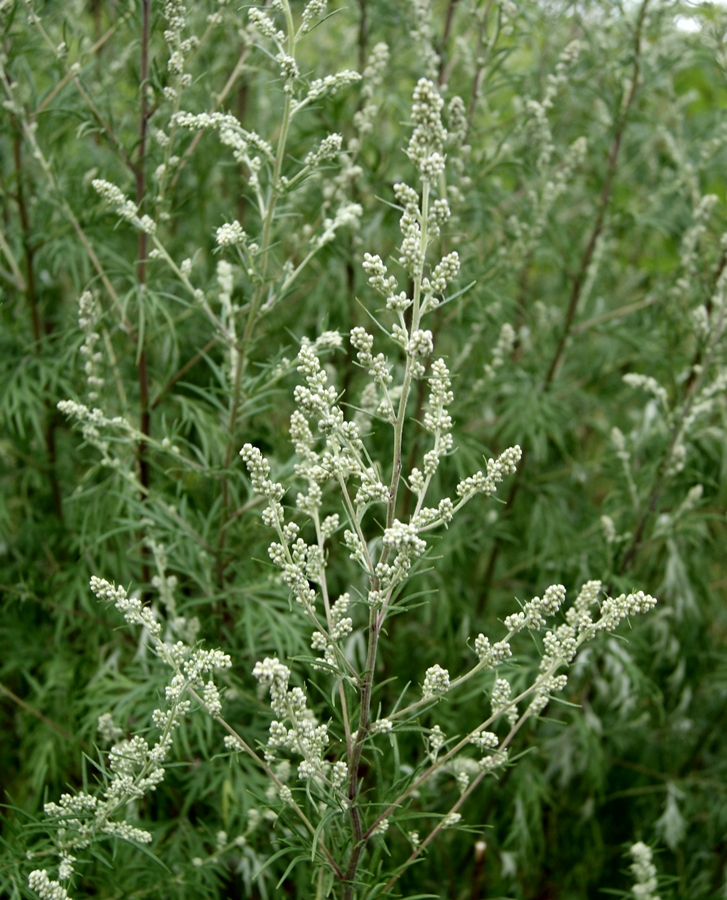
Its botanical name Artemisia refers to the goddess Artemis, hinting at its divine origins. Named after the lunar goddess of childbearing and the wilderness, mugwort is steeped in much folklore about its healing virtues. It has traditionally held a powerful affiliation with the moon and was considered to be a prime herb for women. Artemisia vulgaris has been used to soothe the pain of childbirth as well as monthly menstrual cramping. It may also help to regulate the menstrual cycle to a normal, cyclical rhythm. Herbalist Matthew Wood says that mugwort will restore the injured female nature.
Mugwort’s actions on the body are warming and slightly stimulating. As such it helps to increase circulation throughout the body and to remove stagnant blood (hence its use for the menstrual cycle). In Traditional Chinese medicine a related Artemisia species is made into moxa for use over stiff joints and cold, stagnant areas of the body.
As for its stimulating properties, mugwort is well known for its ability to impart vivid dreams and to promote creative meditation. Many people will find that simply drinking a cup of mugwort tea before bed will have a marked effect on their dreams. Because of this property, however, avoid mugwort when you are trying to get a deep and restorative night’s sleep!
I love what one of my favorite herbal writers, Judith Berger, has to say about this special plant. She says that regular use of mugwort “strengthens our ability to absorb intuitive information as we preserve an aspect of sharpness in our interaction with the complex, topside world.” In other words, mugwort helps us to enhance our intuition in order to better navigate daily reality.
Mugwort can be found growing in disturbed areas and along roadsides wherever humans reside. If you are harvesting the plant for internal use be sure to avoid collecting near traffic-laden roads, or in areas where the soil may be contaminated. Clip the tall stalks so that you are harvesting the upper third of the plant. The best time to collect mugwort is right before its very tiny flower buds open. Hang a bundle of the stalks upside down to dry.
HOW TO USE MUGWORT:
➤ Use 1/2 to 1 tablespoon of dried herb per mug of hot water; let steep at least 10 minutes. Drink before bedtime to increase dreams.
➤ Infuse into vinegar to extract its rich mineral content (mugwort is high in calcium and magnesium)
➤ Infuse into oil to use for topical applications as a warming, stimulating remedy, for cold joints or for menstrual cramping
Caution: As a uterine stimulant and emmenogogue, mugwort should not be used during pregnancy.
MUGWORT DREAM TEA
Here’s a lovely tea that I like to make after dinner to help wind down before bed-time, and to ease me into the dream world:
1 part linden
1 part lemon balm
½ part oat tops
¼ part mugwort
small pinch of lavender
Let steep for at least 15 minutes. Sip mindfully and breathe in the vapor of the tea, and see if you don’t have a very deep night’s sleep, with dreams that you remember the next day…
Steph Zabel, MSc, is an herbalist and educator who helps urban dwellers connect with the plant world. She teaches herbal classes, is available for individual wellness consultations, and is also the founder of HERBSTALK, Boston’s community herbal conference (taking place on June 4 & 5!). Learn more about her work at: www.flowerfolkherbs.com and www.herbstalk.org.
Resources:
Herbal Rituals by Judith Berger
The Earthwise Herbal: A Complete Guide to New World Medicinal Plants by Matthew Wood
http://www.bloodandspicebush.com/blog/mugwort-the-cingulum-sancti-johannis
https://www.botanical.com/botanical/mgmh/m/mugwor61.html
http://www.eattheweeds.com/mugwort/
http://www.herbalpedia.com/Mugwort.pdf
This blog post — Chickweed: Stellaria media — is for general health information only. This blog post is not to be used as a substitute for medical advice, diagnosis or treatment of any health condition or problem. Users of this Web site should not rely on information provided on this Web site for their own health problems. Any questions regarding your own health should be addressed to your own physician or other healthcare provider.