
The Naturalist Blog
*
The Naturalist Blog *
Our Graceful Linden Tree: Tilia americana
By Steph Zabel
Herbalist, Ethnobotanist and Educator
This time of year as you walk around our city streets, you’re very likely to come across a beautiful tree filled with creamy white, fragrant flowers. Its aroma is so gorgeous that it makes both bees and hurried city folk slow down their pace.
This tree, which tends to go unnoticed when it's not in flower, is our graceful linden (Tilia americana). We are fortunate to have many lindens in our neighborhood — there are even a few streets named after this beauty. Linden makes for an excellent city tree due to its ability to tolerate pollution and harsh urban environments. In addition, it is also an important food source for bees, a wonderful shade tree, and — with its heart-shaped leaves and delightful flowers — brings beauty wherever it grows.
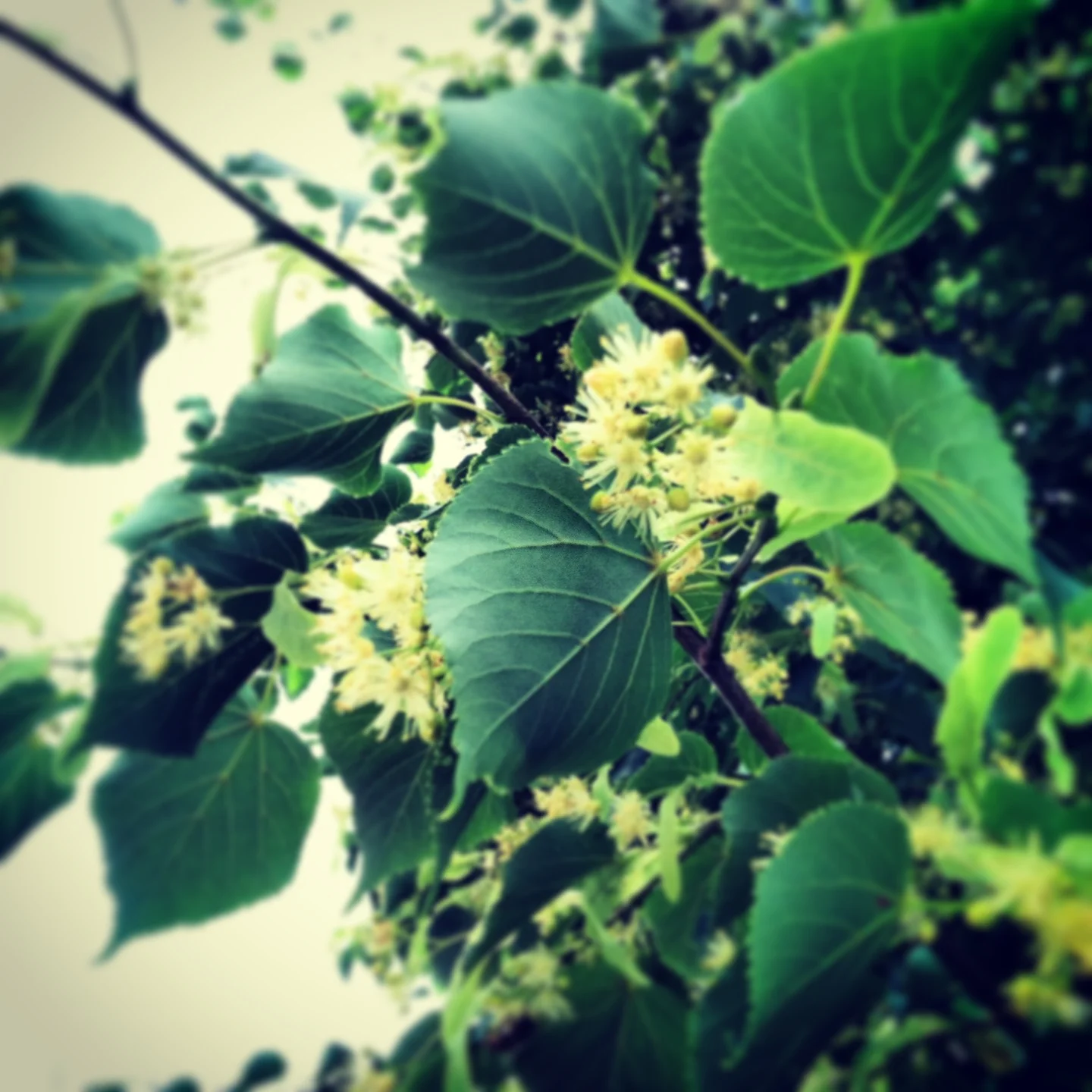
Not surprisingly, linden is one of my favorite herbs to give to people. It has many healing virtues and is also a very safe and gentle remedy for people of all ages and constitutions. In Europe, it was traditionally used in baths for young children before bed to help them have a sound night’s sleep. Stressed-out adults can also benefit immensely from a linden bath.
But if a bath is not for you, a cup of linden tea will do the trick. Well-loved for its soothing properties, it is one of the herbalist’s favorite relaxing nervines, meaning that it helps to soothe and calm the nervous system. It truly is useful for any kind of anxiety or tension, whether it manifests as headaches, nervous tension, restlessness, tense muscles, or poor sleep. I mix it into bed-time blends to help people unwind after a long day and prepare for a deep night’s sleep. Even though linden is so gentle, I have personally found it to be a profound herb for anyone needing better sleep. It mixes beautifully with other relaxing herbs such as oats, skullcap or lavender. Linden seems to have an ability to help you feel how tired you truly are, so that you can finally get the sleep you need.

Beyond its wonderful soothing qualities, linden is a plant that supports a healthy heart. As noted above, linden helps to relax us when we are feeling tense, so it has traditionally been used for the emotional causes behind hypertension and heart palpitations. With its supportive, opening and calming properties linden can help to address emotional issues and stress that may manifest as physical imbalances.
Linden is also a demulcent herb: high in mucilage it imparts a cooling and soothing quality on dry and irritated tissues. This soothing, anti-inflammatory action works on both our internal tissues and our external skin - you use it as a wash or a compress on itchy or inflamed skin.
This beautiful, gentle tree has so much to offer us: from anxiety and stress, to tense hearts and minds, to troubled sleep - it is is a beautiful balm that grows right on our city streets.


HOW TO USE:
Linden Sun Tea
Linden makes for a delicious cold-brewed tea. This method is perfect in the summer time when it is too hot to boil water.
To Brew:
Place 1 heaping handful of dried linden leaves and flowers in a glass quart-sized jar. Cover with cold water and stir. Place on the cap then set in a sunny windowsill for 3-4 hours. Strain out the herb. Chill in the refrigerator if desired or drink at room temperature. The longer it steeps the more the mucilaginous quality (which makes the liquid viscous) will be drawn out.
Soothing Linden Sleep Blend:
2 Tblsp. linden
2 Tblsp. oat tops or oat straw
1 Tblsp. skullcap
1/2 Tblsp. chamomile
pinch of lavender
Blend all herbs together, then use 1 heaping spoonful per mug of hot water. Let steep at least 10 minutes, then strain. Best enjoyed at dusk.
Steph Zabel is an herbalist and educator based in Somerville, MA who helps urban dwellers connect with the plant world. She teaches herbal classes, is available for individual wellness sessions, and is also the founder of HERBSTALK, a community herbal conference. Learn more about her work at: www.flowerfolkherbs.com and www.herbstalk.org.
REFERENCES:
http://umm.edu/health/medical/altmed/herb/linden
http://www.herbalremediesadvice.org/linden-flower-tea-benefits.html
http://www.healthy.net/Materia_Medica/Linden_Herbal_Materia_Medica/240
This blog post — Our Graceful Linden Tree — is for general health information only. This blog post is not to be used as a substitute for medical advice, diagnosis or treatment of any health condition or problem. Users of this Web site should not rely on information provided on this Web site for their own health problems. Any questions regarding your own health should be addressed to your own physician or other healthcare provider.
Savory Summer: Herbal Spice Rub
We have some incredibly skilled people on our staff!! Maribeth, our resident "herbalist in training" and Alex, a talented illustrator, put together this delicious herbal spice rub for all your summertime cooking needs. It's a well-balanced, delightfully aromatic blend that would be perfect on anything from grilled veggies to grass-fed steak. Or - mix a couple of tablespoons into a simmering pot of rice or couscous for a flavorful grain dish.
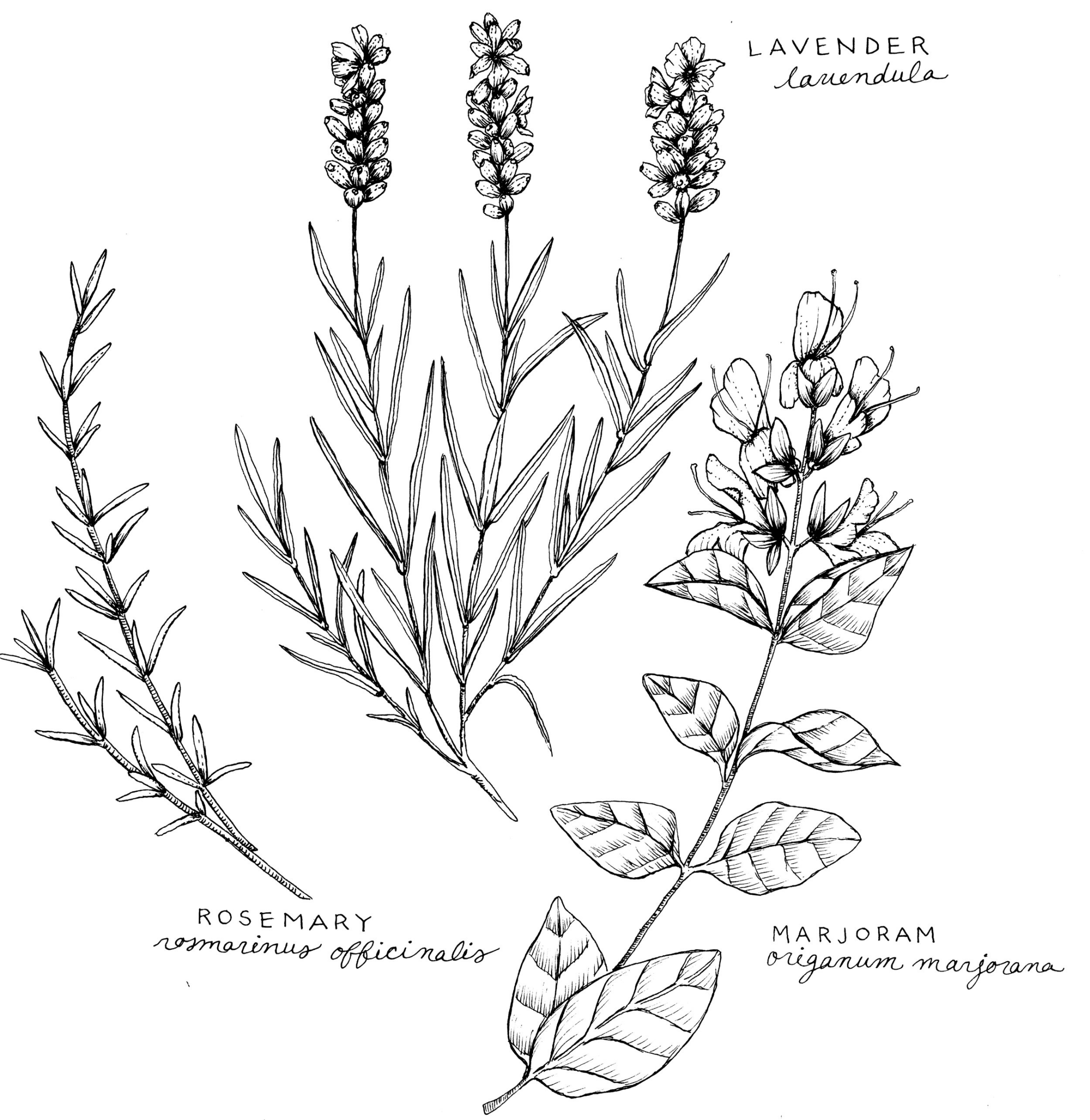
Illustration by Alex Salvi ©2015
Lavender: Lavender is carminative and antiseptic plant native to the Mediterranean. Historically lavender has been used to add a sweet, pleasant flavor to foods and to help relieve bloating and gas. Not to mention, the aroma is sure to calm the senses, offering a relaxed mood to enjoy and digest meals properly.
Thyme: Thyme is an antiseptic plant also native to the Mediterranean. Traditionally used to help kill any bad bacteria in meat prior to cooking, Thyme was often used as a natural preservative and to bring out the flavor of meat. Thymol, the oil in Thyme, is used to help break down fattier foods, aiding in the digestion of heavier meals and meats.
Rosemary: As an antibacterial herb, Rosemary was historically used in the kitchen as a preservative and for its medicinal value. Rosemary has traditionally been used to relax stomach cramps, flatulence, and assist in stimulating the appetite and secretion of gastric juices - which is particularly helpful when consuming meats and rich dishes.
Marjoram: Another plant of the Mediterranean, marjoram offers a soothing action to the digestive tract by stimulating the gastric juices that break down heavy foods, like meat and rich dishes. The herb has also been used traditionally to help stimulate the appetite and soothe the stomach. It is said that the flavor of marjoram is easy to love, inspiring one to use generous pinches of the herb in many dishes.
Spice Blend:
(everything on this list can be found in our bulk section)
Lavender buds: 1 tsp.
Thyme: 2 tsp.
Marjoram: 2 tsp.
Rosemary: 1 tsp.
Himalayan Pink Salt : 1/2 tsp.
Paprika: 1/4 tsp.
Black Pepper: 1/4 tsp.
Roughly crush ingredients in mortar & pestle or if you prefer a finer grind, use a spice grinder. Rub onto meat before grilling or baking. This spice blend could also be used to season vegetables, tofu, or tempeh.
References:
(books we sell)
The Complete Book of Herbs & Spices by Brenda Little
Jekka's Herb Cookbook by Jekka McVicar
Solomon's Seal: A Medicine Cabinet Must-Have
Maribeth, our resident staff "herbalist-in-training" wrote this beautiful blog post on the versatile herb Solomon's Seal, a plant that does not often get the limelight!
True Solomon's Seal has been captivating my attention over the past few years while living in New England. As a plant that is not written about much in the western world, it makes me so happy to see our customers taking a strong interest in such a useful herb.
In 1597, herbalist John Gerard wrote about Polygonatum biflorum, stating "common experience teacheth, that in the world there is not to be found another herbe comparable to it."

Often considered a "miracle plant," many herbalists and healers throughout Asia, Europe, and North America consider True Solomon's Seal to be a must have in one's medicine cabinet. It is well known that Native Americans used the plant as a nutritive food and medicine and that the rhizome is still used as a trail food today. Also known as King Solomon's Seal, the plant has roots in Hebrew folklore. The scar left on the rootstock after the stem dies back resembles the seal that King Solomon used for his magical endeavors.
Magic? Perhaps. But Solomon's Seal is truly a versatile plant.
Known mostly for its action on tendons, joints, ligaments, and the musculoskeletal system, it is said that Solomon's Seal has a kind of intelligence that allows it the "ability to restore proper tension to the ligaments, regardless of whether they need to be loosened or tightened." As a yin tonic, Solomon's Seal is a restorative, nourishing, moisturizing, and lubricating tonic herb. These actions can be seen especially in the tendons, joints, ligaments, bone, connective tissue, cartilage, throat, and mucosa lining of the lungs, gastrointestinal tract, and reproductive system of both men and women. It is said that Native Americans also used the plant to help moderate intestinal inflammation. Galen recommended the herb to "remove freckles, spots, and marks for a fresh, fair, and lovely skin."*
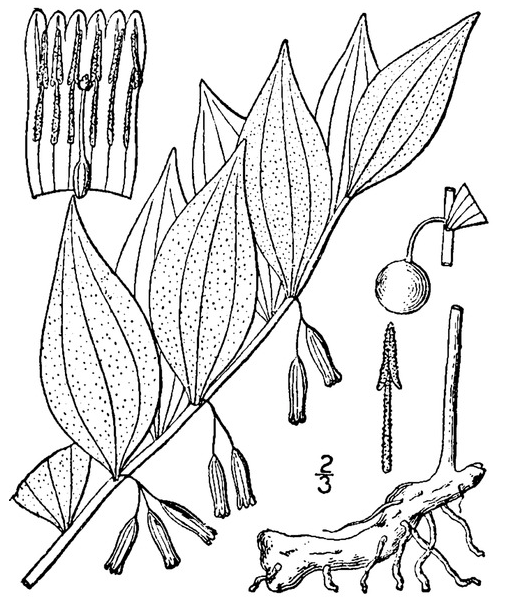

My body seems to crave Solomon's Seal to help restore moisture, lubrication, and proper movement to the many corners of my body after the especially long winters we experience here in the north east. I have also used a few drops of the tincture, or an infused oil, to remedy a chronic bruised tailbone and for the wear my knees experienced from being a ballerina. I imagine anyone who is partaking in intense physical activities would benefit from the protecting and healing qualities of Solomon's Seal.
True Solomon's Seal is found in the U.S. throughout the eastern woodlands and into the Midwest. It's important to learn how to properly identify True Solomon's Seal from False Solomon's Seal as they do grow near each other. As the herb has often been over harvested and is constantly at risk, it's important to be very mindful when wild harvesting! However, Solomon's Seal grows very well in shaded gardens, as I've seen all over Cambridge and Somerville!
Here at the store we carry a 2 oz. tincture by David Winston of Herbalist & Alchemist, who finds it particularly effective for complaints of the respiratory system as well as injuries to the joints, tendons, and cartilage.
REFERENCES:
The Earthwise Herbal by Matthew Wood
Herbcraft.org: Jim McDonald
Solomonsseal.net
*This blog post — Solomon's Seal: A Medicine Cabinet Must-Have — is for general health information only. This blog post is not to be used as a substitute for medical advice, diagnosis or treatment of any health condition or problem. Users of this Web site should not rely on information provided on this Web site for their own health problems. Any questions regarding your own health should be addressed to your own physician or other healthcare provider.
BOOK REVIEW: What Would Buddha Say?
BY BARBARA ANN KIPFER
Really—rather than just blurt out our anger, our annoyances, and our frustrations to those around us, how would it feel to have an understanding of and an arsenal of “1,501 RIGHT SPEECH TEACHINGS” to pull upon as a response?
Acting, thinking and then speaking like the Buddha might be life changing for our relationships with those around us.
OUR WORDS COUNT. Our words are a very powerful reflection of our inner selves; hopefully of our authentic selves, and this book give us the speaking tools to make sure we can express ourselves at the highest levels of “Right Speech.”
1,501 RIGHT-SPEECH TEACHINGS for COMMUNICATING MINDFULLY
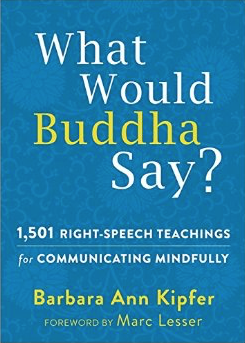
BY BARBARA ANN KIPFER
Really—rather than just blurt out our anger, our annoyances, and our frustrations to those around us, how would it feel to have an understanding of and an arsenal of “1,501 RIGHT SPEECH TEACHINGS” to pull upon as a response?
Acting, thinking and then speaking like the Buddha might be life changing for our relationships with those around us.
OUR WORDS COUNT. Our words are a very powerful reflection of our inner selves; hopefully of our authentic selves, and this book give us the speaking tools to make sure we can express ourselves at the highest levels of “Right Speech.”
After reading this book you will be able to make what you have to say and how you choose to say it an integral part of your daily spiritual practice.
The book speaks of developing patience with your speech, being mindful of first listening deeply, then letting go of the “hot coals” of speech (yours and others), of using your breath to control your thoughts before speaking and …more than fifteen hundred other simple thoughts & techniques for embracing and communicating through out life.
This book was an absolute pleasure to read. A small, chunky book, it is portable and easy to pick up and read for a few meditative moments at a time. I tried reading just a few pages each morning and each evening, hoping to extend and expand the pleasure I found in reading it. It was hard to NOT devour it all in one day.
You’ll find 1,501 short gems like:
Ask yourself before you speak: Is it true? Is it Kind?
Does it harm anyone? Is this the right time to say anything?
If can restrain yourself from responses that impose self-judgment—advice giving, interrogation, and denial—your tendency to prejudge and discriminate may lessen.
Speak according to the mind of the person who listens and the ability of that person to receive what you share.
There is a section of the book devoted to fifty very short “little essays” with titles like: Anger, Relationships, Gratitude & Appreciation, Forgiveness, and Sympathy. These could be read while sitting just before starting a sitting or walking meditation.
The last section of this book is a collection of Meditations for Right Speech. Each meditation is a paragraph long and can be read to yourself silently or even out loud.
BOOK REVIEW: The Homegrown Paleo Cookbook
BY DIANE ROGERS with ANDREW RODGERS

When a book has a preface written by Joel Salatin, of Polyface Farm, a foreword by Robb Wolf, New York Times Best Selling author of The Paleo Solution and endorsed by the likes of Michelle Tam, Allan Savory, Emily Deans, Andrew Gunther, YOU CAN ASSUME that it is a fantastic book!
There are over 100 delicious Farm-to-Table recipes and the book is filled with gorgeous photographs.
The last quarter of this huge book, called “Basic Cooking Methods and Recipes,” contains pages with photos labeled with topics like, KOMBUCHA, KEFIR, FISH & MEAT STOCKS, HOW TO MAKE MAYONAISE, BBQ SAUCE, CRÈME FRAICHE, HOW TO RENDER LARD,, MAKE BUTTER, CAN TOMATOES AND COOK MEAT.
There are “how-to’s” on the preparation of stocks, soups and stews, meats, and the care of cast iron skillets and pots.
The section on LIVING is the capstone to this beautiful and oh-so-useful book.
You’ll come away with useful info for homesteading whether in the city, the country or the burbs!
Info for the whole family includes:
- How the Paleo Diet is not only great for human health but also for the environment.
- Helpful guides like “10 Questions to Ask Your Farmer” so that you can be a better-informed food shopper.
- Skills and knowledge to have your own backyard chickens, goats, bees and more.
- How to build healthy soil and start your own organic vegetable garden.
- 100 seasonal, farm-to-table recipes, all photos shot right at the farm.
- Creative and fun projects like making beeswax candles and goats milk soap
Our (illustrated) Father's Day Gift Guide
In addition to being a wonderful manager and integral part of our grocery department, Alex is also a gifted illustrator! We asked her to put together some of her favorite products for our "Fathers Day Gift Guide" and then put her drawing talent to work! Whether you're celebrating a father, husband, or just an amazing man in your life, we've got gift ideas for everyone on your list!

Illustrated by Alex Salvi © 2015
Simple Facial Oil by Little Barn Apothecary: Made with cold-pressed hemp oil and essential oils of lavender and frankincense, this clean blend is the perfect go-to moisturizer for a man on the go! Little fuss, and it'll keep his beautiful skin nourished throughout the day!
Bee-Sweetened Marshmallow by Apotheker's: Hard-working dudes deserve a (bee-sweetened) treat! Give the father(s) in your life a reason to remember the sweetness of childhood - maybe he'll even remember to share.
Bergamot + Teak Candle by Manready Mercantile: These "man-dles" make the perfect gift for those fathers who deserve some "me time". The deep and manly scent, comprised of clean soy wax and essential oils, will fill the room and inspire relaxation.
Big Trouble by Counter Culture Coffee: This delicious year-round blend is a fantastic gift for the coffee connoisseur (read: snob) father(s) you love. Paired with a burr grinder and a Chemex pour-over, he'll be set to make the perfect cup of coffee every morning before the kiddos wake up.
Chicken Bar by Epic Bars: If the father(s) in your life love the great outdoors, give him a stock of protein bars to take on the next hike! These delicious chicken bars from Epic are as manly as they come - full of good protein and fats to keep you going while chasing after little ones (or mountain lions).
Set of Three Handkerchiefs by Sustainable Threads: Every dude deserves a high-quality, attractive set of pocket squares for the next dress-up occasion. These beautiful handkerchiefs are perfect for the season of weddings, graduations and galas, whether he's shedding tears of joy or mopping up beads of sweat from breaking it down on the dance-floor.
BOOK REVIEW: Darkness Before Dawn: Redefining the Journey through Depression
A collection of the essays of 19 “exceptional and compassionate” authors and teachers of psychotherapy, Buddhism, and spiritual practices this book brings the personal experience of depression to inform these writings.
These are not the usual self-help essays, but rather the wisdom of self-knowledge and the personal experience of depression from these writers/teachers.
Edited by Tami Simon, Founder of Sounds True
Review by Elizabeth, CN co-owner

A collection of the essays of 19 “exceptional and compassionate” authors and teachers of psychotherapy, Buddhism, and spiritual practices this book brings the personal experience of depression to inform these writings.
These are not the usual self-help essays, but rather the wisdom of self-knowledge and the personal experience of depression from these writers/teachers.
They radically re-interpret the way that we perceive the understanding and the experience of depression. While supporting traditional psychotherapy and medication for what they offer in the way of relief, these writers offer us their own experiences, insights and the practices which they have found most valuable in embracing their personal forms of depression.
Included in this collection are:
- Thomas Moore, PhD, on Saturn’s gifts
- Sally Kempton on shifting from suffering and into witnessing awareness
- Mark Nepo, poet, on embracing both emptiness and aliveness
- Mary Pipher, PhD, on how despair can open us to long-hidden joy
- Christina Baldwin on “ineffable sorrow”
- Parker J. Palmer on finding meaning and connection through the experience of depression
… and the writings of 13 others.
Editor Tami Simon says…
"This book is not meant to 'fix' us,
but to befriend, accompany, and inspire us
in our experience of depression."
BOOK REVIEW: Yoga Mind, Peaceful Mind: Simple Meditations for Overcoming Anxiety
Actually doing yoga - practicing the postures - has many well-documented health benefits.
… But sometimes the physical demands of the actual postures, or just the demands of life in general get in the way of a regular physical practice of the postures. If that is true for you… then this book is your perfect answer.
Book by Mary NurrieStearns LCSW RYT and Rick NurrieStearns
Review by Elizabeth, CN co-owner

Actually doing yoga - practicing the postures - has many well-documented health benefits.
… But sometimes the physical demands of the actual postures, or just the demands of life in general get in the way of a regular physical practice of the postures. If that is true for you… then this book is your perfect answer.
In Yoga Mind, Peaceful Mind, two long-time yoga teachers and writers present an approach to anxiety relief that may allow you to overcome your anxieties and life stressors. This book emphases the contemplative aspects of the yoga tradition. Rather than focusing on the physical aspects of yoga, it allows us to access a variety of very useful daily meditations.
The book does not focus on yoga postures or asanas, rather it provides us with the tools to refocus ourselves through the use of targeted mediations, healing affirmations, insights and a series of teachings from the yogic tradition.
This book works well for mental yogic healing and allows those with physical disabilities to access the yoga traditions.
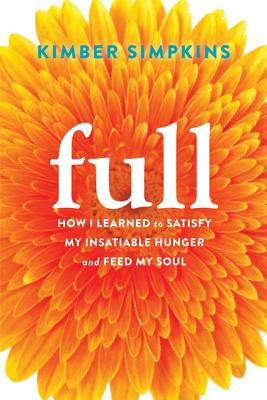
BOOK REVIEW: Full: How I Learned to Satisfy My Insatiable Hunger and Feed My Soul
Burdened by food and self-esteem issues? Then this book is for you!
This author comes to a point in life where she wants OUT from under the burden of an “unhappy relationship” with food. Kimber begins to love her body, feed her soul and transform her life through the practices of yoga and mediation and the cultural understanding of Buddhism.
The first step in her journey was to learn to love herself, accept her body and to let her own heart strivings guide her forward. She worked to include her own body in the “circle of what is beloved.”
Book By Kimber Simpkins
Review by Elizabeth, CN co-owner
Burdened by food and self-esteem issues? Then this book is for you!
This author comes to a point in life where she wants OUT from under the burden of an “unhappy relationship” with food. Kimber begins to love her body, feed her soul and transform her life through the practices of yoga and mediation and the cultural understanding of Buddhism.
The first step in her journey was to learn to love herself, accept her body and to let her own heart strivings guide her forward. She worked to include her own body in the “circle of what is beloved.”
These are 4 important topics she covers:
- You can't tell how someone feels about their body by how attractive they look to you.
- All women carry feelings of unworthiness!
- We all wonder about our worthiness.
- Speaking aloud the voice in our heads helps us feel less alone.
- With a little encouragement, we can find beauty in ourselves.
And she quotes Anne Sexton in saying, “Put your ear down close to your soul and listen hard.”
Read this compelling book and... listen hard!
Sweet Marshmallow Root: Althaea officinalis
By Steph Zabel
Herbalist, Ethnobotanist and Educator
Marshmallow root, as the name implies, was once included as an ingredient in the original sticky-sweet marshmallow candy. Alas, commercial marshmallows no longer contain this herb, but you can still make your own "real" ones at home! Check out the recipe below...
For centuries mallows have been used for food - both the leaves and the roots are edible. Marshmallow is closely related to other beloved plants such as cotton, hibiscus, and okra.
Beyond its food uses, marshmallow is a gentle medicinal plant. The nutritive and sweet root imparts a unique mucilaginous quality when extracted in water. Marshmallow has a high concentration of polysaccharides that impart a viscous and soothing quality to the liquid in which it is extracted.
By Steph Zabel
Herbalist, Ethnobotanist and Educator
Marshmallow root, as the name implies, was once included as an ingredient in the original sticky-sweet marshmallow candy. Alas, commercial marshmallows no longer contain this herb, but you can still make your own "real" ones at home! Check out the recipe below...
For centuries mallows have been used for food - both the leaves and the roots are edible. Marshmallow is closely related to other beloved plants such as cotton, hibiscus, and okra.
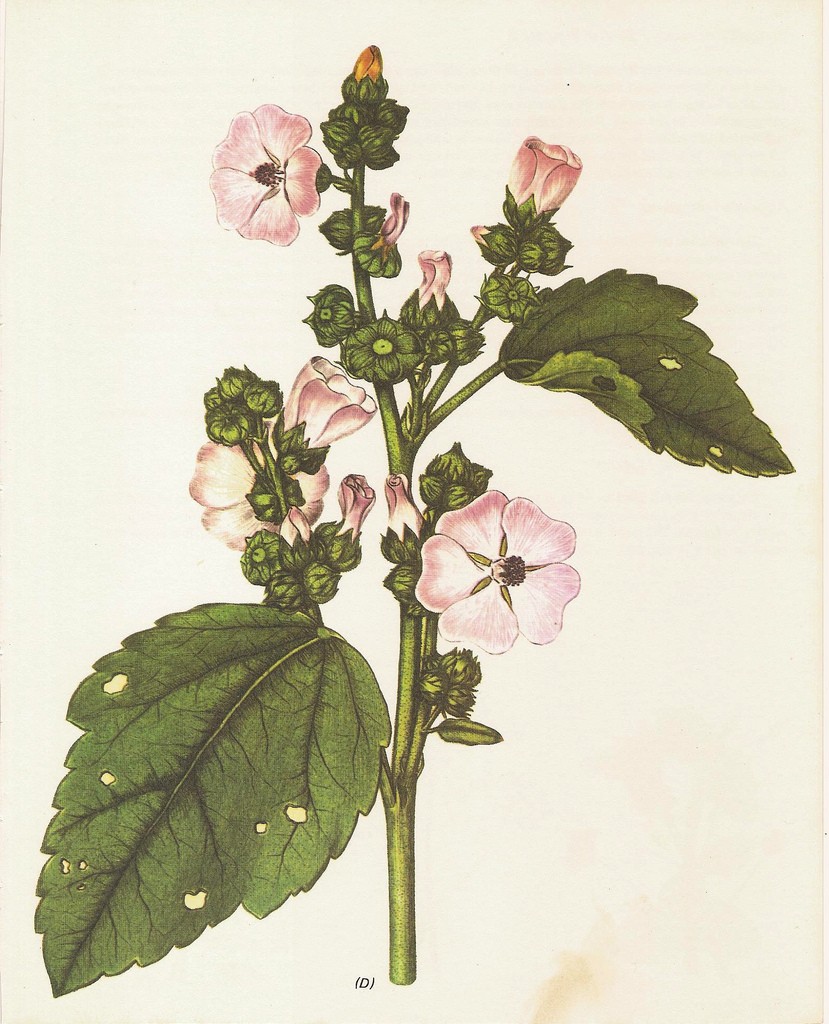
Beyond its food uses, marshmallow is a gentle medicinal plant. The nutritive and sweet root imparts a unique mucilaginous quality when extracted in water. Marshmallow has a high concentration of polysaccharides that impart a viscous and soothing quality to the liquid in which it is extracted.
This marshmallow mucilage has many benefits. Its anti-inflammatory and emollient properties are cooling and soothing to our internal tissues, with a special affinity for the mucous membranes of the gastrointestinal, respiratory and urinary tracts. This comes in handy for inflammatory conditions such as ulcers, heartburn, indigestion and Chrone's disease. Marshmallow root can also be used to address sore throats and dry coughs, and has been traditionally used for urinary issues such as cystitis and UTIs.

Photo credit: Todd Danforth

Photo credit: Todd Danforth
Externally, both the leaves and the roots of marshmallow are used on burns, wounds and all inflammatory skin disorders. It is extremely soothing for any sort of skin irritation.
How to Use Marshmallow
Marshmallow root can be found finely cut up, or as a powder. Either form can be used. To get the most benefit out of the soothing, mucilaginous properties of the root be sure to extract it with cold or lukewarm water, since hot water will break down the beneficial polysaccharides.
Marshmallow Water
Add 2-3 Tblsp. powdered marshmallow root OR 1/4 cup cut marshmallow root to a quart-sized glass jar. Pour cold water to the top of the jar, covering the root and blending well, or just cap the jar and shake vigorously. Allow this to sit at room temperature for at least an hour or two up to 8 hours. Pour through a fine sieve and drink. The final marshmallow water should be viscous, pale yellow colored, slightly sweet tasting, and soothing.
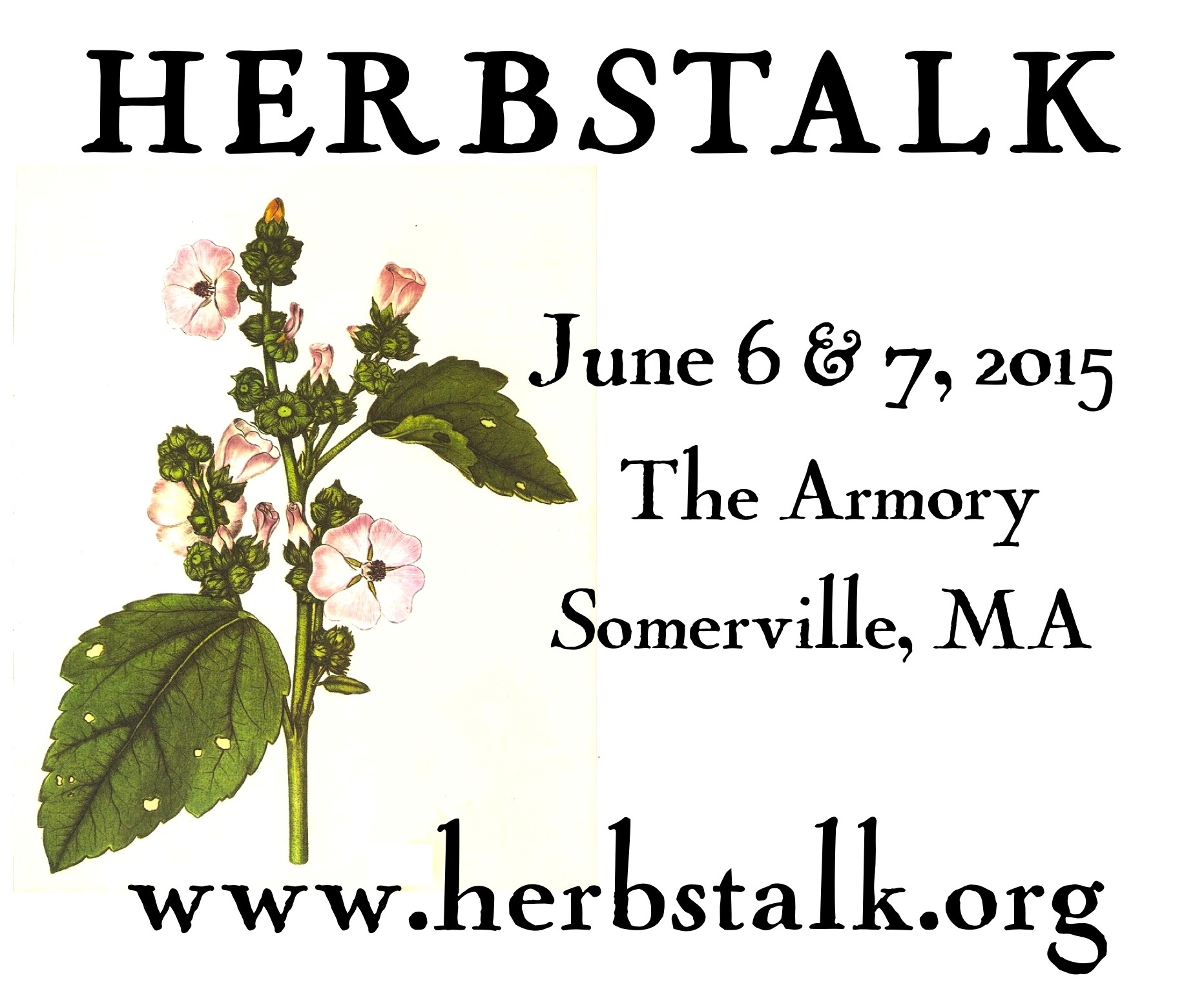
Marshmallow is the "herb of the year" at Herbstalk! Herbstalk creates educational community events that teach people about plants. We host classes on herbal and holistic health topics, offer urban plant walks, and bring together herbal crafters & artisans from across New England. Our next event takes place on June 6 & 7 at the Armory in Somerville. For more details and the full class schedule please visit: www.herbstalk.org
REFERENCES:
by Matthew Wood
by Rosalee de la Foret
by Maude Grieves
Steph Zabel is an herbalist and educator based in Somerville, MA who helps urban dwellers connect with the plant world. She teaches herbal classes, is available for individual wellness sessions, and is also the founder of HERBSTALK, a community herbal conference. Learn more about her work at: www.flowerfolkherbs.com and www.herbstalk.org.
This Web site — Herbs and Botanicals — is for general health information only. This Web site is not to be used as a substitute for medical advice, diagnosis or treatment of any health condition or problem. Users of this Web site should not rely on information provided on this Web site for their own health problems. Any questions regarding your own health should be addressed to your own physician or other healthcare provider.