
The Naturalist Blog
*
The Naturalist Blog *
Partners in Wellness: Interview with Cristina Ciccone from Gaia
Gaia Herbs is one of our top herbal supplements suppliers - and we've worked with them for decades. They manufacture high quality liquid tinctures and liquid phytocaps as well as dried herb extract capsules. Much of the raw material comes from their amazingly gorgeous organic farm in Brevard, NC - as well as organic farms in Italy and Costa Rica. Their "Meet Your Herbs" platform puts transparency right at your finger tips - just use the QR code on the bottle to discover exactly where and how the extracted herbs in your bottle were grown and processed.
Cristina Ciccone, our Gaia representative, is one of our favorite reps to work with! She is incredibly dedicated to her work and a self proclaimed "herbal nerd" - we've come to her with many complex questions about herbal medicine over the years and she always responds with a thoughtful, detailed answer. In honor of Partners in Wellness week, we've asked Cristina to answer a few questions about her work with Gaia:
Gaia Herbs is one of our top herbal supplements suppliers - and we've worked with them for decades. They manufacture high quality liquid tinctures and liquid phytocaps as well as dried herb extract capsules. Much of the raw material comes from their amazingly gorgeous organic farm in Brevard, NC - as well as organic farms in Italy and Costa Rica. Their "Meet Your Herbs" platform puts transparency right at your finger tips - just use the QR code on the bottle to discover exactly where and how the extracted herbs in your bottle were grown and processed.
Cristina Ciccone, our Gaia representative, is one of our favorite reps to work with! She is incredibly dedicated to her work and a self proclaimed "herbal nerd" - we've come to her with many complex questions about herbal medicine over the years and she always responds with a thoughtful, detailed answer. In honor of Partners in Wellness week, we've asked Cristina to answer a few questions about her work with Gaia:
What do you love about working for Gaia?
As an Herbalist, I love working for a company that specializes in just that, herbs. Rather than attempting to produce products in every category like multi-vitamins, fish oils, probiotics etc., I think it’s important to have a company that specializes in a particular category and that does it exceeding well. Herbs vary so much in their chemistry and quality batch to batch, so it’s important to understand all the nuances to make really effective herbal medicine. Gaia is uncompromising in its integrity and manages to find the perfect balance of cutting edge science as well as honoring traditional wisdom and plant intelligence. I think it’s so easy for herbal companies to be pulled too far in one direction. Some herbal companies treat their herbal products like pharmaceuticals in isolating and spiking single plant compounds. This type of herbal product is entirely “missing the point.” Gaia honors whole plant medicine by concentrating, never adulterating or isolating. I believe this makes for the most effective herbal medicine. Gaia is a company I truly believe in and feel honored to work for.

Tulsi growing on Gaia's farm in NC. Photo Credit: Gaia Herbs
What's the best part of your job as an educator and company representative?
Gaia has a full traceability platform called Meet Your Herbs. This is an industry first, and it allows consumers to trace every raw material to where it was grown, how it was grown and all of the testing done on that particular batch of plant material. Showing people that they have the ability to trace a raw material from seed to shelf helps to really bring their medicine to life and helps them to feel confident that it’s a pure and efficacious product. One of my favorite things to do in store aisles is to pull a product off the shelf, plug the lot number into our Meet Your Herbs app and show a staff member or a customer where that batch of herb was grown and all the testing and quality control that took place before that product even reached the shelf. It feels like I’m performing a magic trick.
I also love the opportunity to educate about individual herbs and formulas. It is one of the best parts of my job with Gaia. It’s another way for people to 'meet their herbs'. The herbal category can feel pretty intimidating, confusing and even esoteric. Education helps to demystify herbal medicine, clear up confusion, and make people feel more comfortable in knowing when to use/recommend which plant or formula. It can feel entirely overwhelming when you find multiple different choices in the immune health section, stress section, etc. All herbs have their own specialties and individual properties. Education helps people come to see these patterns and understand an herb’s “personality.” With this knowledge it becomes easier to recommend/choose which product is right for which particular situation and which particular person. When I conduct these trainings, I almost feel like I’m introducing two people at a dinner party!

Echinacea and Bamboo growing on the Gaia farm. Photo Credit: Gaia Herbs
What do you think is enticing more people to start using herbs?
There is a dynamic interplay that takes place between our bodies and plant medicine. We have co-evolved with these plants as long as modern humans have walked this earth. I believe there is an understanding and an awakening that takes place in our bodies when we consume plant medicine. Herbal medicine is literally built into our DNA. Our bodies do not understand isolated synthetic compounds, such as is found in pharmaceuticals. Pharmaceuticals have been used for little more than a hundred years. This is the blink of an eye for human existence and humans beings have no evolutionary frame of reference for this type of medicine and how it operates. I believe this is why we see so many side effects from pharmaceuticals because rather than the dynamic and elegant interplay we see with people and plant, Pharmaceuticals force a process in our bodies. I think many people are longing for the opportunity to re-connect with their medicine and food as well. I think part of our modern “social sickness” is a feeling of disconnect. I think it is a profound thing to feel connected with your medicine and for people to reclaim their power by actively engaging in their own healing process. Of course the lack of side effects, less expensive cost and ability to help prevent disease, also makes herbal medicine more and more appealing.
What's your favorite (or one of your favorite) Gaia products that you use every day?

Adrenal Health! I always feel corny saying it, but this product literally changed my life. It was the first Gaia product I had ever tried and made me a believer. This product is formulated for stress management, but rather than just temporarily masking the symptom of stress, it literally changes your body’s perception of stress through its regulation of stress hormones. It also has the beneficial “side effects” of increasing my energy levels and enhancing my mood memory.
Partners in Wellness: Reliance Vitamins
For our Partners In Wellness Week we are going to be publishing some short interviews and vendor profiles to give more insight into our vendors - because it’s not just what we carry that’s important to us, it’s who we carry as well. We use three top manufacturers for our Cambridge Naturals brand supplements: Reliance, Vitality Works, and Vitamer Labs. All three offer the highest quality sourcing and manufacturing and each one offers something unique for us and our customers. The first in our series of profiles is Reliance, written by Zach, our supplements manager.
For our Partners In Wellness Week we are going to be publishing some short interviews and vendor profiles to give more insight into our vendors - because it’s not just what we carry that’s important to us, it’s who we carry as well. For a list of vendor demos this week, visit our calendar. We use three top manufacturers for our Cambridge Naturals brand supplements: Reliance, Vitality Works, and Vitamer Labs. All three offer the highest quality sourcing and manufacturing and each one offers something unique for us and our customers. The first in our series of profiles is Reliance, written by Zach, our supplements manager.
Established in 1978, Reliance is a privately owned dietary supplements manufacturer making some of the highest quality products we carry. You'll recognize the green ginkgo Cambridge Naturals brand label in our store - many of these supplements are made for us by Reliance. What makes them high quality? For starters, Reliance is NSF Certified for Current Good Manufacturing Practices (CGMP) and is NSF Certified for Sport, meaning that their facilities, processes, etc. have been independently certified to follow the highest standards. On top of that their NSF dual-certifications, Reliance is Certified for CGMPs by the Natural Products Association (NPA), the leading industry body for natural products of all sorts.
These certifications aren’t just for show and they definitely aren’t given to just any company. To get these certifications, companies must go through a rigorous, in-depth evaluation which includes evaluations of ingredient sourcing, product testing (both during manufacturing and of finished products), and even record keeping. The fact that Reliance has these certifications means that their products always contain what’s on the label and never contain any unlabeled adulterants.

From Reliance: "You can observe a Quality team member utilizing advanced HPLC instrumentation to verify the purity and potency of products in our Quality Lab. In addition to our in house lab, we utilize independent labs for the analysis of finished products."
While we definitely choose our companies based on the quality products they can offer us and our customers, we also take into account what each company offers its stakeholders beyond a physical product. Reliance is a partner of Vitamin Angels, an organization that “provides life saving vitamins to mothers and children under five at risk of malnutrition, reducing preventable illness, blindness, and death and creating a healthier world.” Vitamin Angels is active in over 50 countries worldwide and reaches over 48 million children and mothers with their efforts.
We are proud to work with Reliance to make our private label products, and believe they offer some of the highest quality supplements out there. Ask us about our Cambridge Naturals brand and we're happy to show you some of our favorite items!

From Reliance: "You are looking on as one of our Quality Lab technicians prepares a sample."
(For an added bonus, check out this video from Dr. Brent Bauer, MD, the director of the Mayo Clinic Complementary and Integrative Medicine Program on ‘How To Choose The Right Supplements’ where he calls out the NSF CGMP certification as one of the essential certifications to look for in dietary supplements and dispels some of the myths about dietary supplement regulation.)
Passionflower: Passiflora incarnata
By Steph Zabel
Herbalist, Ethnobotanist and Educator
There may not be an herb as striking and gorgeous as passionflower. Its circular, whirling, complex blossom is breathtaking. And although it seems to be an exotic species that comes from a far off place, it is a plant that is native to the southeastern part of our country.
Growing up in South Carolina I have vivid memories of passionflower vines from my childhood. My grandparents grew them outside of their home, and we also found them growing wild along the edges of the streets where we walked. My cousins and I would stop and exclaim if we found a passionflower in bloom. It always seemed like a little piece of magic that we stumbled upon at those times — something intensely beautiful and mysterious that stood out like a spark in the landscape.
By Steph Zabel
Herbalist, Ethnobotanist and Educator
There may not be an herb as striking and gorgeous as passionflower. Its circular, whirling, complex blossom is breathtaking. And although it seems to be an exotic species that comes from a far off place, it is a plant that is native to the southeastern part of our country.
Growing up in South Carolina I have vivid memories of passionflower vines from my childhood. My grandparents grew them outside of their home, and we also found them growing wild along the edges of the streets where we walked. My cousins and I would stop and exclaim if we found a passionflower in bloom. It always seemed like a little piece of magic that we stumbled upon at those times — something intensely beautiful and mysterious that stood out like a spark in the landscape.
Going back south for visits I frequently spy tangly nests of passionflower vines growing in ditches along the roadside. Sometimes they find something else to climb upon; other times they spread out in unruly waves along the ground.

Passionflower Drawing by Steph Zabel
Vining plants are unique in their growing habits, unlike trees and shrubs and flowers that are naturally upright and keep to themselves. Instead, vines are climbers and creepers, stretching out their tendrils and elongated stems in order to seek another form to cling to. Such is the case with passionflower, which has delicate, tightly-wound, grasping tendrils. When given a trellis or other support to grow upon its vining beauty is most fully expressed.
The lovely, complex flower structure of Passiflora make it a sought-after ornamental plant. (See the growing details below if you wish to try your hand at cultivating it.) Its fruit is edible and is sometimes referred to as “maypop” because of the popping sound it makes when pressed. If you open up a ripe fruit you will discover an edible inner flesh that is juicy and sour, and filled with dark seeds.
Passionflower has a long history of traditional use. It is perhaps most well known for its calming influence on the nervous system. Herbalists use the plant for anxiety, tension and nervousness. It is a wonderful remedy for people who get over-stimulated and are tightly wound. (I like to think of its tightly coiled tendrils as a metaphor of this feeling.) How it works its calming magic is not exactly known, but it is believed to increase levels of gamma aminobutyric acid (GABA) in the brain which creates a relaxing feeling in humans.
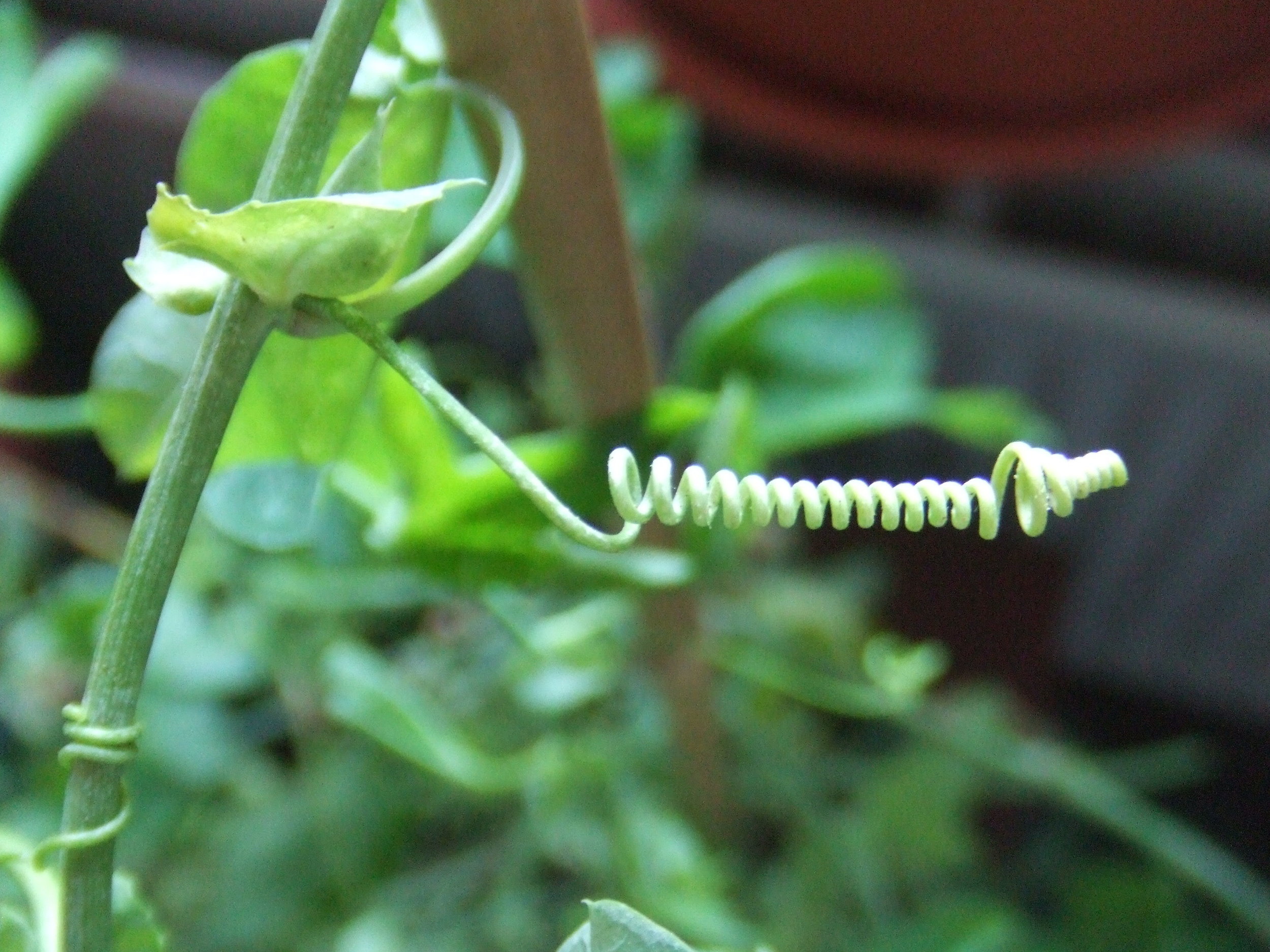
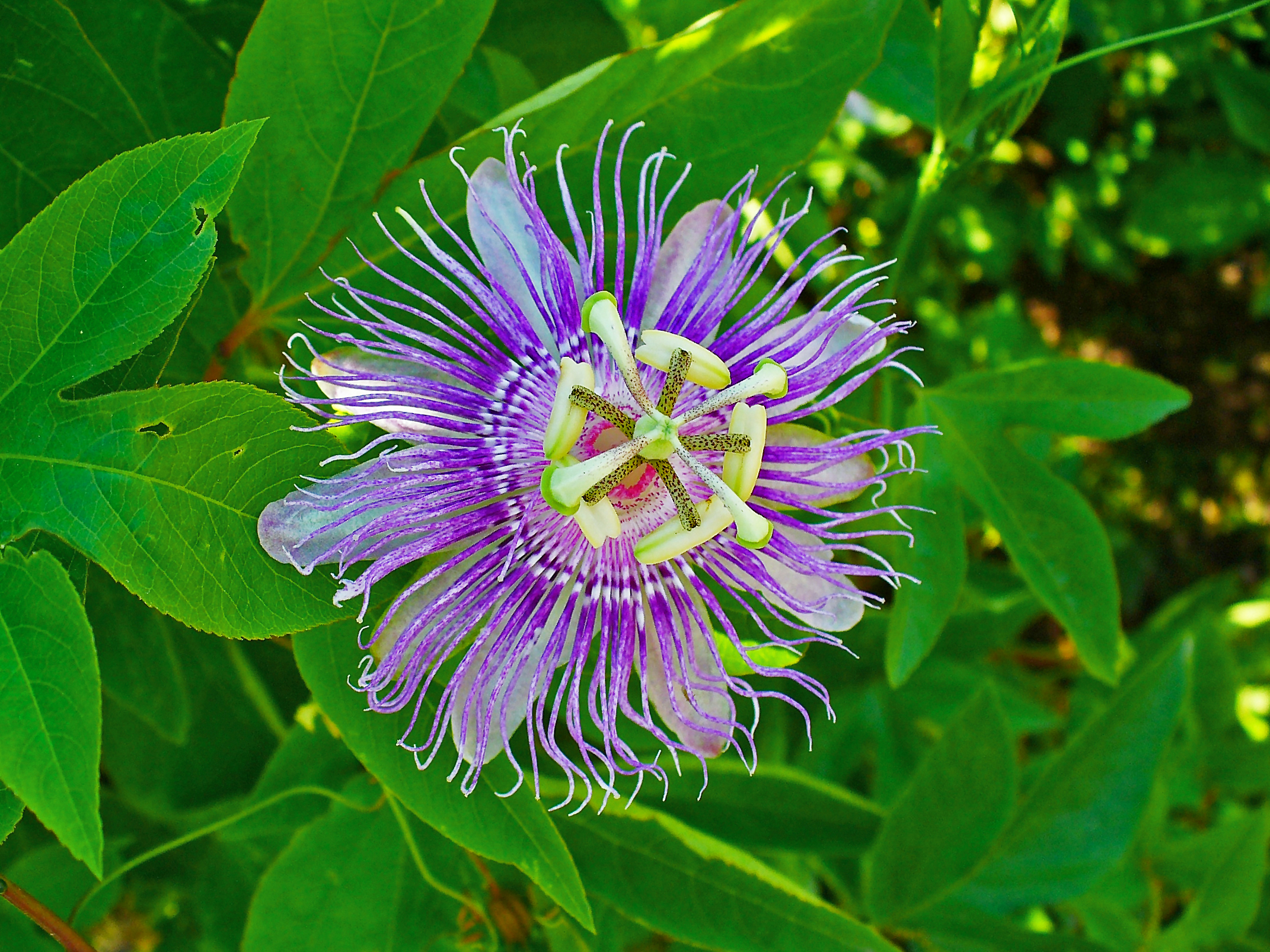
Photo credit: Wikimedia Commons
The upper parts of passionflower — the leaves, stems and flowers — are also a common remedy for insomnia and sleep issues, acting as a mild sedative. Many herbalists like to recommend it for people who cannot let go of their endless thoughts at night, preventing them from getting sound sleep. Passionflower helps the body and mind to wind down a notch, letting go of nervous energy in order to more fully relax. Likewise, because of its calming and anti-spasmodic properties it is often used for tension and pain. It can be particularly useful for menstrual cramping and PMS crankiness. (Again, think of a grasping tendril relaxing its coil just a bit.)
On a personal note, much of my experience of passionflower comes from being around the living plant. Many years ago I worked in a greenhouse that was full of hundreds of different species of plants from all over the world. I remember one particular week when I was feeling stressed and restless because I was wanting to do and be more than what I was currently doing and being! I felt drawn to the potted passionflower vine that we had growing in the greenhouse. At the time I did not know of its herbal uses but I felt compelled to be near its beauty — perhaps because I was reminded of my childhood experiences with the plant — and I even spent some time drawing it. I discovered that to me this beautiful creature represents a balance between seeking/longing/reaching (represented by its outstretched, grasping vines) and exquisite poise and grace (represented by its otherworldly flowers). For me, simply being around the passionflower and spending quiet, still moments with it helped to calm my own longing, anxiety and restlessness, making me feel more at ease with the present moment.
HOW TO USE PASSIONFLOWER:
The aerial parts of Passiflora incarnata are used — leaves, stems and flowers — which can then be made into tea or tincture.
Use 1 - 2 teaspoons of the dried leaf in 8 oz hot water for tea; steep for 10 minutes. Passionflower blends well with other relaxing herbs such as lemon balm, lavender, chamomile, skullcap and California poppy.
The tea is not palatable to every tongue, so the tincture is also a good option, especially for sleep issues. When using the tincture start with 1/2 of a dropper-full 30 minutes before bed and increase the dosage from there if needed.
Cautions: Avoid passionflower in combination with other pharmaceutical sedatives, and do not use if pregnant. Also avoid this herb with low blood pressure. As with all herbs, please remember that every body is unique, and we all respond differently.
HOW TO GROW PASSIONFLOWER:
My friend Jenny Hauf, herb grower extraordinaire and owner of Muddy River Herbals was kind enough to write up some growing instructions for those of us who’d like to grow Passionflower this summer:

This sun-loving semi-succulent vine prefers relatively dry soils and can grow up to eight feet tall, so be sure to provide it with a trellis. While Passiflora incarnata is the hardiest of the passionflowers, New England specimens benefit greatly from a protected space. South-facing walls and stone fences provide ideal habitat, as they trap and conserve heat and create a microclimate warmer than the surrounding area. Passionflower should be heavily mulched to insulate the roots from our often harsh winters. It will struggle and be at risk of winterkill if planted in heavy clay soil, frost pockets, or exposed areas of the garden.
To grow from seed, soak in warm water for two to seven days, scarify by nicking with a knife, and keep in a warm, well-lit place until seeds germinate. (An especially sunny window by a radiator works nicely.) Sow at least double what you hope to plant in your garden, as the seeds have a low rate of viability. It's a finicky germinator, taking between a few weeks and a few months to sprout, so be patient. While passionflower isn’t the simplest of plants to grow, especially here in New England, if you have the right space and enough love to give it you will be rewarded with its powerful, storied, and mesmerizing medicine.
By the way, Jenny’s medicinal herb CSA will start delivering fresh herbs this summer at Cambridge Naturals! This is a wonderful way to get your hands on some lovingly-grown and potent local herbs. More details can be found on her website: http://www.muddyriverherbals.com/csa/
Steph Zabel is an herbalist and educator based in Somerville, MA who helps urban dwellers connect with the plant world. She teaches herbal classes, is available for individual wellness consultations, and is also the founder of HERBSTALK, Boston’s community herbal conference.
Learn more about her work at: www.flowerfolkherbs.com and www.herbstalk.org.
References:
http://chestnutherbs.com/passionflower-ecology-cultivation-botany-and-medicinal-and-edible-uses/
https://umm.edu/health/medical/altmed/herb/passionflower
The Earthwise Herbal: A Complete Guide to New World Medicinal Plants by Matthew Wood
This blog post — Passionflower: Passiflora incarnata — is for general health information only. This blog post is not to be used as a substitute for medical advice, diagnosis or treatment of any health condition or problem. Users of this Web site should not rely on information provided on this Web site for their own health problems. Any questions regarding your own health should be addressed to your own physician or other healthcare provider.
Not Just Skin Deep: Interview with True Moringa's Emily Cunningham & Kwami Williams
We first saw Moringa Connect at Natural Products Expo East, a little over a year and a half ago. Co-Founder Emily Cunningham enticed us over to talk with her beautifully packaged, golden moringa oil, and we were hooked by the efficacy of the product and the story behind the brand. We're relaunching our Not Just Skin Deep blog series with an interview with Emily. Read about their amazing story, after the jump!
We first saw Moringa Connect at Natural Products Expo East, a little over a year and a half ago. Co-Founder Emily Cunningham enticed us over to talk with her beautifully packaged, golden moringa oil, and we were hooked by the efficacy of the product and the story behind the brand. We're relaunching our Not Just Skin Deep blog series with an interview with Emily.
Tell us a bit about how you got started! What were you doing before you founded MoringaConnect?
My co-founder Kwami and I were both undergraduates and met through MIT's D-Lab program, working with small farmers in rural Ghana on a host of affordable technologies. While we were there, we were struck by the enormous potential we saw. As it turns out, there are over 1.5 billion acres of uncultivated land in Africa and 120 million small farmers living on that land earning less than $2/day. Meanwhile, the tools they needed to transform their lives were growing in their own backyards.
It was the farmers we met in rural Ghana who first introduced us to the moringa tree. We worked alongside them to develop technologies to extract the antioxidant rich oil from the moringa seeds and supply chains to connect them to conscious consumers worldwide.
Prior to our love affair with moringa, I had studied development economics and bounced around a number of different sub-fields of development work (including a brief stint as a rickshaw builder), and Kwami had his sights set on being an aerospace engineer (and even worked for NASA!).
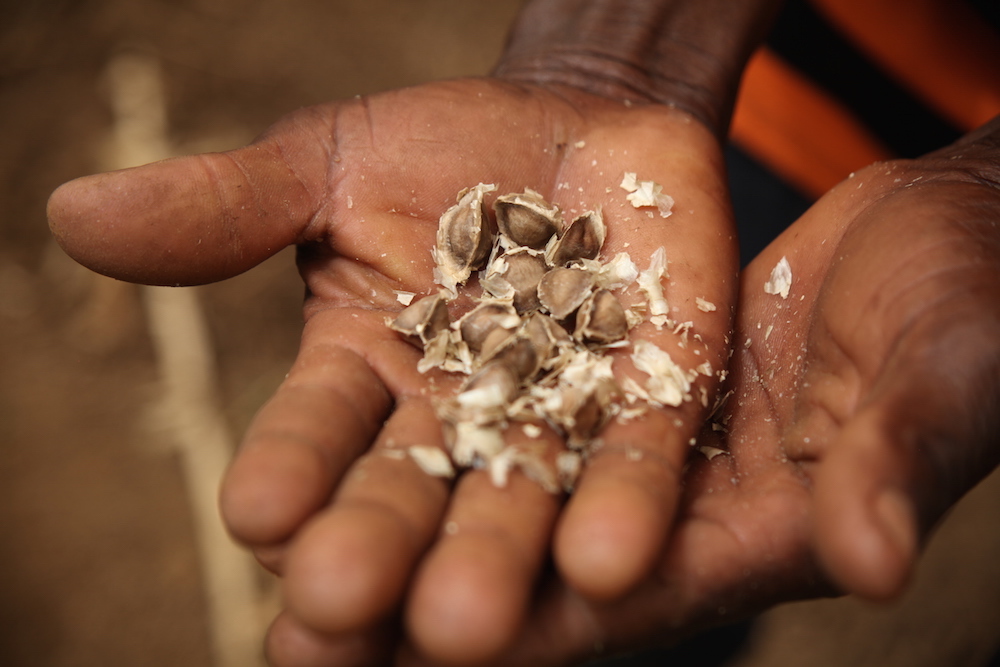
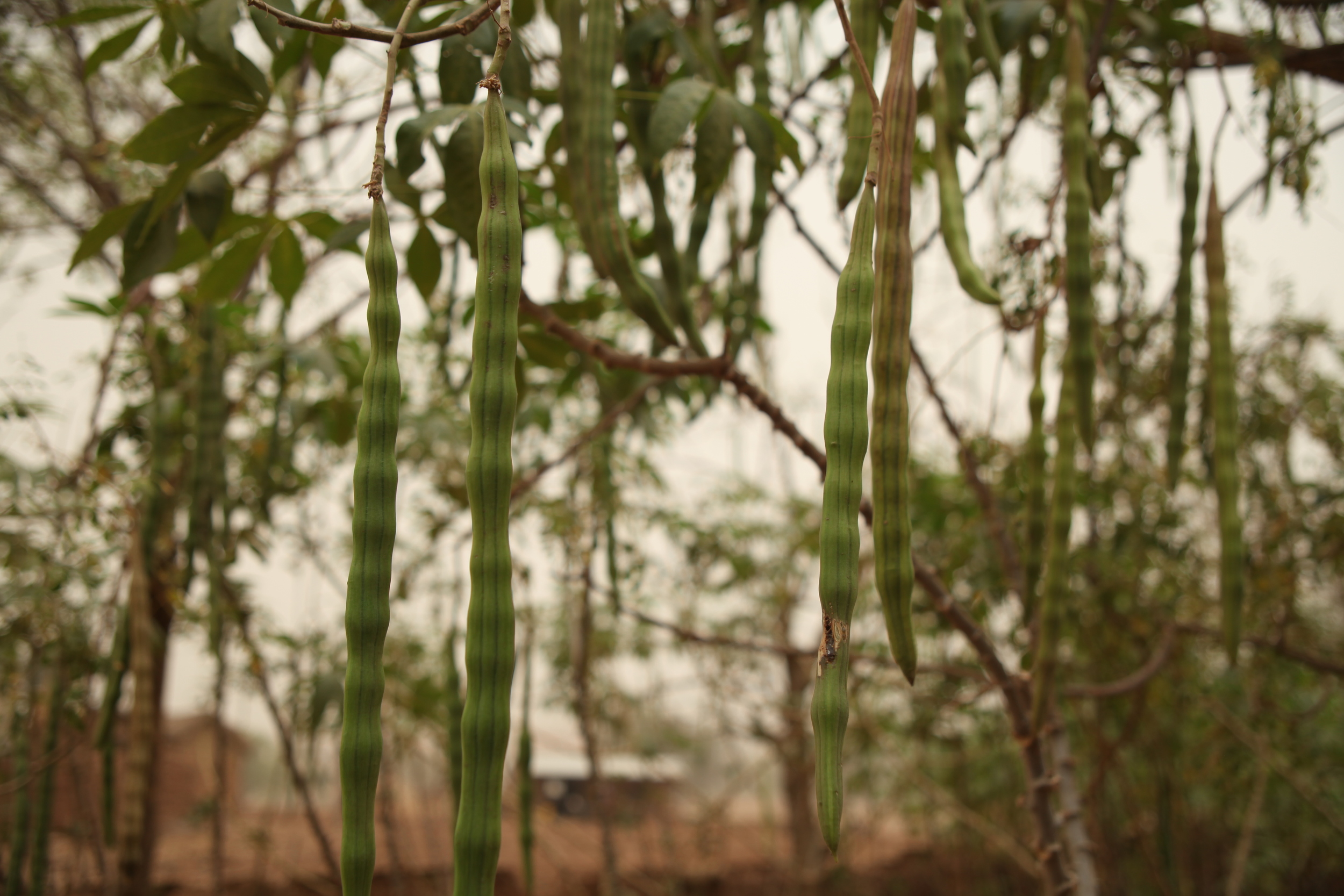
Photo credit: Agritools
Why moringa? What's so special about the moringa leaf and oil?
Moringa is known locally as the "miracle tree" because there really isn't much it can't do. Moringa leaves have more vitamin A than carrots, more calcium than milk, more protein than eggs, and more iron than spinach per serving. Moringa oil is being called "argan on steroids" for its anti-aging, moisturizing, and skin-soothing abilities. It's extremely versatile and makes a wonderful facial oil (replacement for a daily moisturizer or night cream), conditioning hair treatment, or body oil. Even the waste product from oil processing (pressmeal) can be used as a natural fertilizer, protein-rich animal feed, or flocculant to purify water.
The tree itself flourishes in arid climates, requiring little water, and producing seeds in eight months and leaves in two months! It can be intercropped within existing crops to help those crops grow better, and replenishes the soil with essential nutrients. So for farmers, it's a no-risk, high reward source of food security and income all rolled into one.
How do you process the oil? Who is making your product and how are they compensated?
What makes us special is that we manage the entire supply chain. We work with over 1,600 small farming families throughout Ghana, providing the inputs and financing they need (like seeds, organic fertilizer, and plowing services) to kickstart their moringa farms and the training they need to grow product up to the high standards of the global market. We then buy the seeds from them at a fair price, and ship them to our processing facility (that we designed and built from scratch and tailored specifically to moringa processing) where they are cold-pressed into our True Moringa oil. This ensures that we're able to produce both the highest quality oil and have the most social and environmental impact. To date, we've planted over 250,000 moringa trees.

Photo credit: Agritools
What other exciting projects is the company working on?
We launched our Minga Foods brand in Ghana to make nutrition easy on the go. Our first product is an infuser pouch filled with moringa powder to add into smoothies, soups, or stir-fry for an extra boost of nutrition. Word on the street is it may be coming to the US soon!
We're also launching the largest moringa farm in Africa - our nucleus farm - this spring. It will be steady source of organic seeds and leaves, a demonstration site for the latest permaculture and agricultural methods as well as a testing ground for off-grid processing technologies. We're excited to provide income and food security to hundreds of new farmers and ramp up production to meet growing demand!
What products are in your beauty bag?
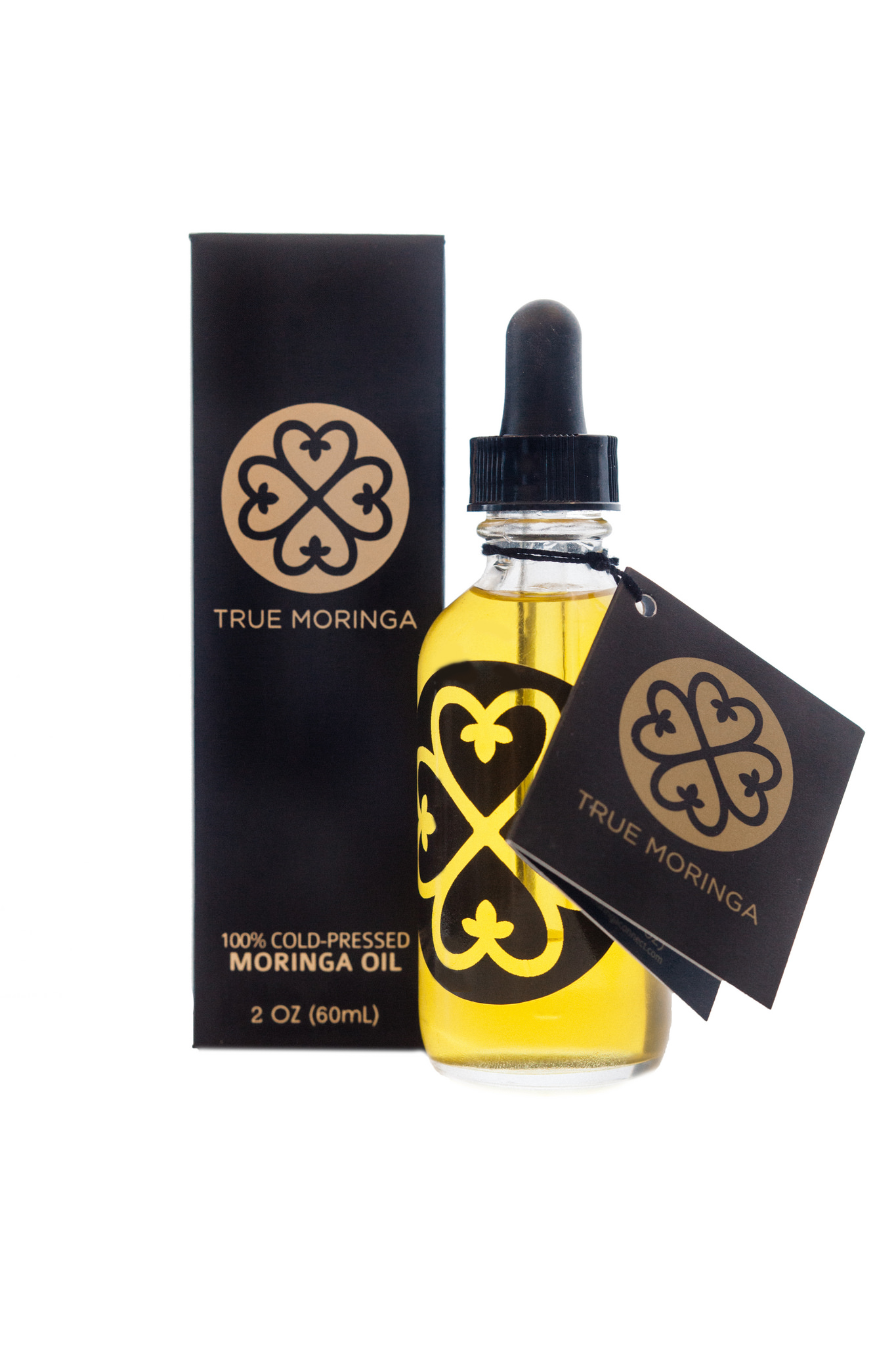
Photo credit: Sasha Pedro Photography
I use True Moringa Unscented Body Oil for literally everything - it's my go-to facial cleanser, moisturizer and hair conditioner while traveling. For those of you afraid to put oil on your face or in your hair - I've been there! Every skeptic I've met who has given moringa oil a try as a replacement for their facial soap or moisturizer hasn't turned back.
For body soap and lotion, I turn to Alaffia (they're doing amazing things with rural communities right next door in Togo) or Dr. Bronners (amazing supply chains around the world and a to-die-for peppermint aroma). For more than just the basics, I love Josh Rosebrook, Ilia, and One Love Organics.
Where do you see the company heading in 5 years? 10 years? What's your vision for the future?
Moringa oil is going to be the next "big" beauty oil - akin to coconut, jojoba, or argan. We're looking forward to replicating our high impact model and processing technologies in partnership with smallholder farmer organizations around the world to ensure that those at the bottom of the supply chain are treated fairly.
We're really excited about Minga Foods too - we believe that true development will happen when products are not only grown and processed in Africa, but also packaged, branded, and sold in Africa - to Africans. We're looking forward to creating a line of healthy snack foods powered by moringa, utilizing all of the wonderful natural resources already grown in Ghana and the surrounding countries, but often exported to the Western world (think pineapple, mango, cashew, cocoa, honey). Over the next few years, we hope to see Minga become a pan-African brand and ultimately a global brand.
THYME: Thymus vulgaris Lamiaceae
By Steph Zabel
Herbalist, Ethnobotanist and Educator
Pungent, aromatic thyme is one of those plants that we all know — and have eaten in one dish or another — but tend to forget about when it comes to herbal uses. It is similar in some regards to sage in that it is an important culinary herb, used for centuries by the home cook. However, there is much more to thyme than meets the eye…
By Steph Zabel
Herbalist, Ethnobotanist and Educator
Pungent, aromatic thyme is one of those plants that we all know — and have eaten in one dish or another — but tend to forget about when it comes to herbal uses. It is similar in some regards to sage in that it is an important culinary herb, used for centuries by the home cook. However, there is much more to thyme than meets the eye…

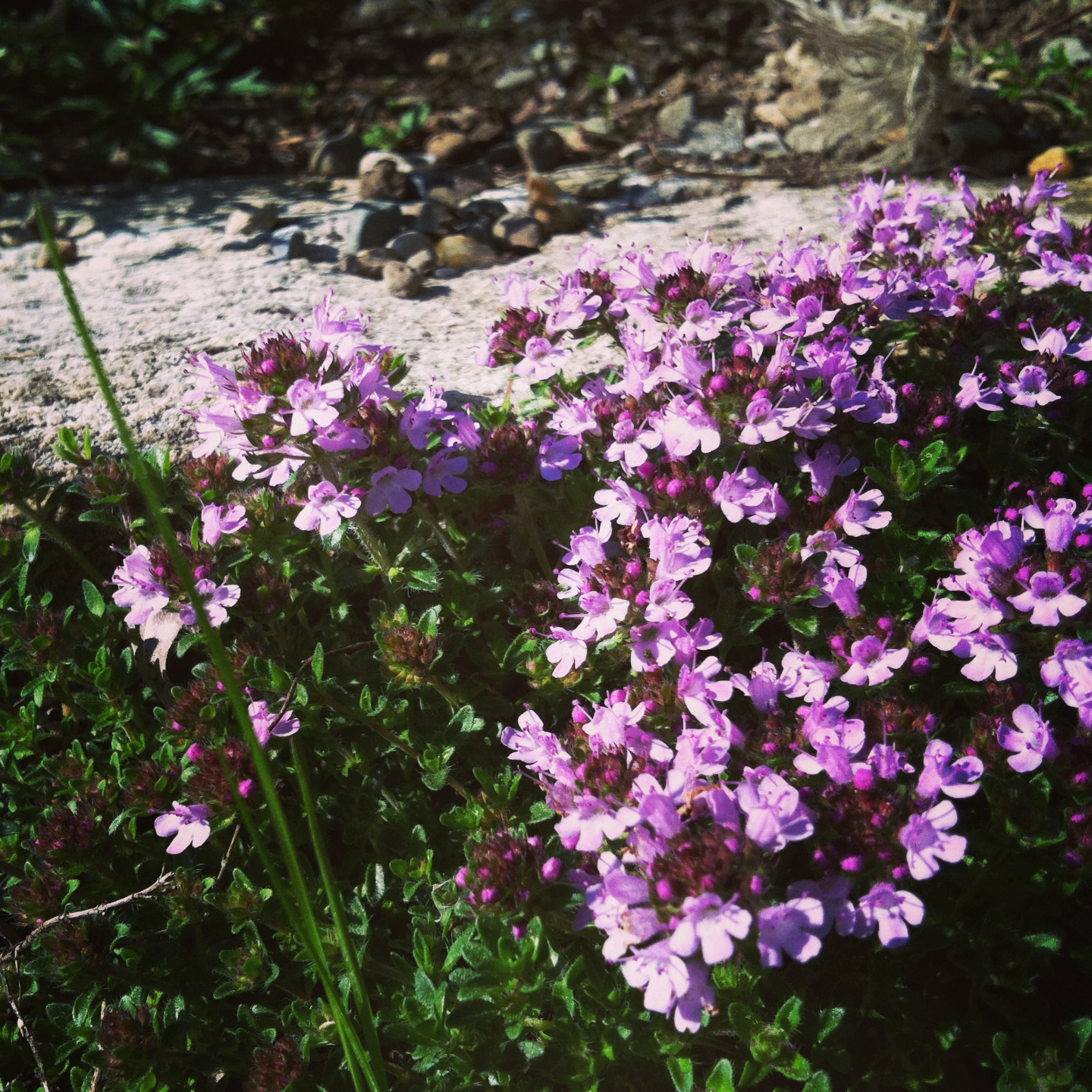
This spritely little plant originated in the Mediterranean and is one of the oldest herbs with documented use. Due to its preservative and antiseptic properties the Egyptians used it for embalming their dead. Greek soldiers bathed in thyme before war to inspire courage. Amongst the Romans it was exchanged as a sign of respect, and burned as an incense to purify sacred spaces. As a powerful natural antiseptic it has been used throughout history to sterilize wounds, preserve meat, and keep away pests and rodents.
And of course we know thyme as an herb of cooking. What would the famous Herbes de Provence be without it? Thyme is a wonderful addition to meat and heavier dishes; it helps support the digestion of rich and fatty foods. I like to add lots of thyme to my chicken broth, which I simmer for hours and hours in the winter months. (see recipe below)
Much of the power of thyme lies in its essential oil content. This oil is detected when you crush the fresh or dried leaves between your fingers, which release a pungent aroma. The oil, called thymol, is responsible for much of the plant’s action on the human body; it possesses very strong antiseptic and antimicrobial properties. In this regard thyme is useful for getting rid of pests, parasites and pathogens that effect our health. It can kill fungus, mold, yeast, viruses and bacteria. It is especially good for helping to clear infections in the digestive tract and throughout the respiratory system. It is a wonderful herb to turn to when you are coming down with the first signs of a cold. Thyme will enhance immune function and help you to overcome an infection more quickly. I love thyme for coughs, sore throat, and clearing up congestion. To get the benefits, you can drink it as a tea or you can do an old-fashioned steam.

Franz Eugen Köhler, Köhler's Medizinal-Pflanzen
Beyond its lovely healing virtues, thyme also has much folklore that surrounds it. In particular, it was believed to be a plant that fairies like to reside in. (I have to admit, if I were a fairy, I would most certainly like to live in a house made of thyme…and wear clothes made with dainty thyme flowers.) Not only was thyme believed to attract fairies, it also was thought to help you see them as well. I recently came across a recipe from the 1600s that involved making an oil infused with thyme and a few other plants. This oil was to be steeped in the sun for three days, after which it would “enable one to see the fairies.” So, you know what I will be making this summer…
If fairies don’t interest you, perhaps bees do? Thyme is beloved by our buzzing friends, so plant lots of thyme wherever you have room. It is a very easy plant to grow and does just fine in a small container if you don’t have a garden. Mine thrives quite happily in a small window box. Just give it plenty of full sun and it will delight you with its uplifting scent and charming flowers all summer long.
HOW TO USE THYME:
To make thyme tea: add 1/2 teaspoon of dried leaves per 1 cup of water; let steep 5 to 10 minutes and add honey if desired.
Infuse fresh thyme leaves into raw honey and eat by the spoonful, or stir into tea.
For colds and upper respiratory congestion use an old fashioned steam: add a small handful of dried thyme leaves to a big pot of water and bring it to a boil. Then turn off the heat, place a towel over the head to catch the steam, and lean over and breathe in the herbal vapors for as long as you can.
Please do not use the essential oil of thyme internally – it is highly concentrated and very powerful. And for external use, all essential oils should be diluted in a carrier oil such as olive oil.
RECIPE: Chicken Broth with Thyme and Black Pepper
In your largest cooking pot combine the following:
The bones, skins and leftover of one whole roasted chicken
1 - 2 chopped onions
2 chopped carrots
2 sticks chopped celery
a small bunch of fresh parsley
a handful of calendula flowers*
1 tablespoon black peppercorn, crushed*
2 tablespoons dried thyme leaves*
2 tablespoons apple cider vinegar (to draw out the minerals from the chicken bones)*
*You can find these ingredients at Cambridge Naturals
Cover everything completely with water. Bring to a boil. Skim off any scum that arises. Lower to a rolling simmer, partially cover and let cook for at least 4 hours, up to 48 hours. Add more water as needed.Strain out all the ingredients and store the broth you will use within the week in a glass storage container. Freeze the rest.
Steph Zabel is an herbalist and educator based in Somerville, MA who helps urban dwellers connect with the plant world. She teaches herbal classes, is available for individual wellness consultations, and is also the founder of HERBSTALK, Boston’s community herbal conference. Learn more about her work at: www.flowerfolkherbs.com and www.herbstalk.org.
References:
https://www.botanical.com/botanical/mgmh/t/thygar16.html
http://cms.herbalgram.org/herbalgram/issue80/article3352.html?ts=1455131460&signature=b2e3e53a5f262eea4d6dbf7b03a422db
http://www.history.com/news/hungry-history/a-brief-history-of-thyme
https://en.wikipedia.org/wiki/Thymol
Alternative Valentines - Love is Expansive
Love is not just about sappy romance and pink hearts. Whether you're in a relationship or not, Valentine's Day can be an excellent opportunity to show your deep appreciation, gratitude and love for those special people in your life - friends, family, and little ones. As the saying goes... love is all around us...
Love is not just about sappy romance and pink hearts. Whether you're in a relationship or not, Valentine's Day can be an excellent opportunity to show your deep appreciation, gratitude and love for those special people in your life - friends, family, and little ones. As the saying goes... love is all around us...

Illustration by Alex Salvi © 2016
For the Chocolate Lover:
Theo Organic Lemon Milk Chocolate Bar Brighten someone's day with this lemon wonder! At first you're like, “milk and lemons? I don’t know about that”, and then you try it and you are like, “YES, this is amazing!”
Rescue Chocolate Wild at Heart Box These delicious vegan heart shaped truffles are filled with a raspberry ganache and are oh so cute. Rescue Chocolate donates almost all of their profits to various animal rescue causes, this particular box supports safe homes and sanctuaries for wild animals once held in captivity with poor living conditions. Win win!
For the Coffee Enthusiast:
Hand Thrown Pour-overs These beautifully crafted porcelain pour-overs are made by Boston based artist, Gustavo Barceloni. They are functional works of art that will make a delicious cup of coffee!
Tandem Coffee Roasters, Time & Temperature this bright and fruity light roast from Portland ME based Tandem makes a delicious cup of joe! Use it for pour-over or espresso - both are sure to satisfy the coffee snob you know and love.
For your Best Fuzzy Friend:
West Paw Designs, Big Sky Mouse These little cat toys are filled with USDA Certified Organic catnip and are made with leftover materials from West Paw’s Pet Beds. A Soft faux fur mouse with a little jingle bell and fresh catnip will make a kitty's day!
Chloe’s Sustainable Dog Treats These little star shaped protein treats are made with natural, wholesome and minimal ingredients. Using Cricket flour as the main protein source along with garbanzo flour will satisfy your pup! They come in a variety of flavors, we are featuring peanut butter banana
For the Child at Heart:
Wild Woolies The most adorable little finger puppets around! Wild Woolies are fair trade and handmade from sustainable materials by artists from all over the world. The production of these items helps support communities of artisans across the globe by providing fair living wages, safe working conditions and economic stability
For Guys and Gals:
Little Seed Barn Herbal Lip Salve in Geranium Rose Beautifully packaged in sliding tins, these herbal infused lip salves smell amazing and can be used anywhere on the body for dry skin! Little Seed operates completely off of solar power, is dedicated to reducing waste, uses only natural ingredients and have a lot of adorable (and very well cared for) goats that help make goat soaps. You can read about each goat’s story on their website.
Juniper Ridge Smudge Sticks (3 pk) Show your love with the gift of smudge! Clear any stuffy, dry winter air at home with the beautiful scents of dried sage, cedar and mugwort.
Ursa Major Willoughby Cologne 14 pure essential oils are blended into this cologne to create a woodsy and upliftying scent, for boys and gals! Bonus - 1% of the profits of this product are donated to the Vermont Land Trust to help keep its rivers, streams and lakes clean!
For the ‘Rents:
Gaia Turmeric Supreme Heart Health Give the gift of health with this Gaia supplement! Turmeric is carefully formulated with herbs that help support the heart and cardiovascular systems and a healthy inflammatory response. Take care of your heart! Also, hearts and Valentine’s.
Bee Natural Botanical Honey Pots These gorgeous, delicate beeswax vessels are the perfect gift to show mom your love! They are decorated with dried flower petals and glow like magic when you place a lit tealight inside.
Beautiful Burdock Root: Arctium lappa
By Steph Zabel
Herbalist, Ethnobotanist and Educator
Burdock is a beautiful, large-leafed plant that pops up in areas where humans live. You’ve seen it growing around Cambridge and Somerville — I’m certain of it!
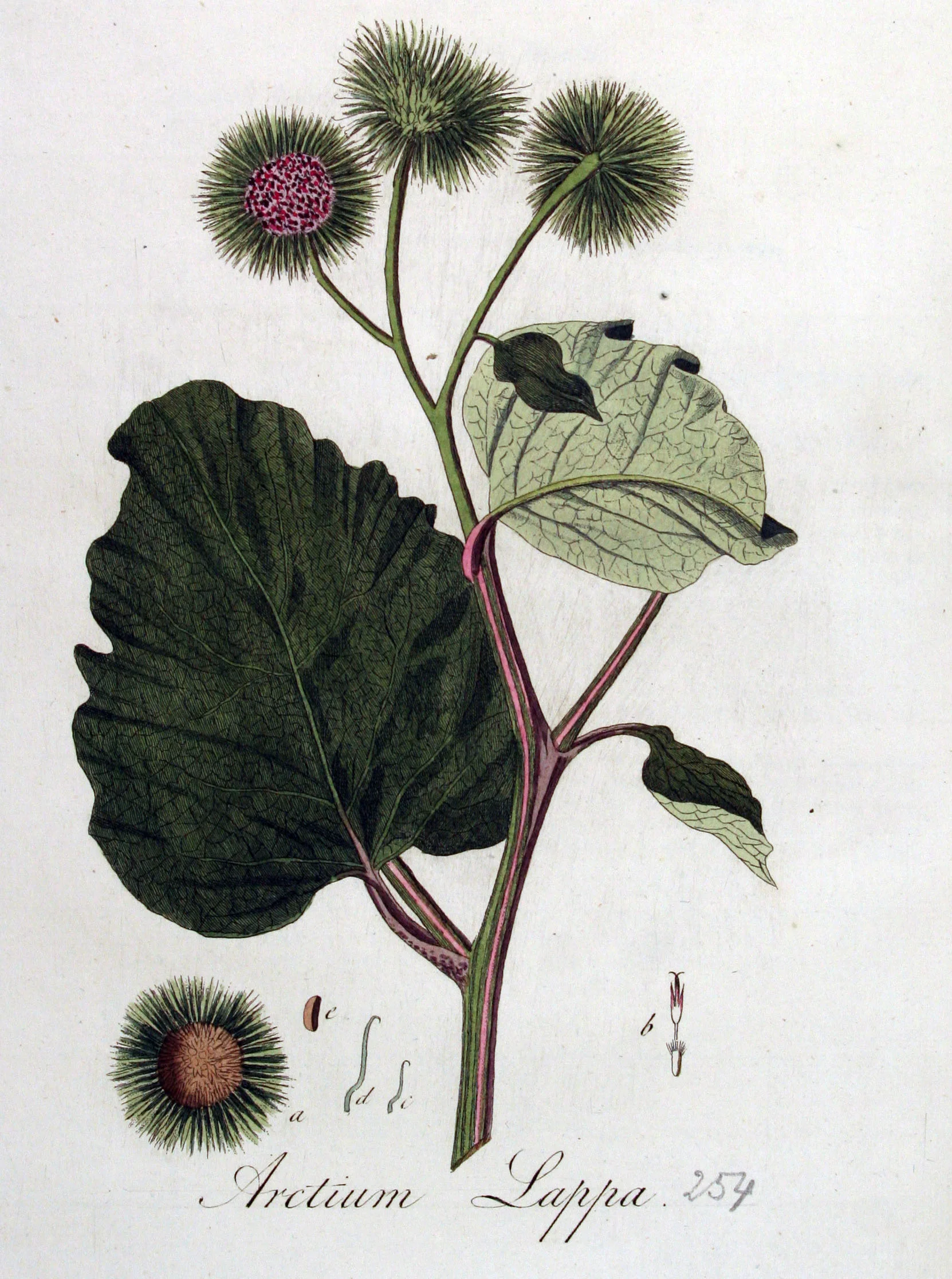
Burdock is generally called a “weed” since it likes to grow in places where it was not planted. Often overlooked, it is actually quite a lovely plant, when you take the time to admire it. The bright magenta flowers could easily be mistaken for a kind of thistle, and burdock is, in fact, closely related to thistles. The flowers are covered with prickly burrs, which interestingly were the inspiration behind the invention of Velcro! Get close to some of these clingy flowers and seed heads and you will see what I mean…
By Steph Zabel
Herbalist, Ethnobotanist and Educator
Burdock is a beautiful, large-leafed plant that pops up in areas where humans live. You’ve seen it growing around Cambridge and Somerville — I’m certain of it!
Burdock is generally called a “weed” since it likes to grow in places where it was not planted. Often overlooked, it is actually quite a lovely plant, when you take the time to admire it. The bright magenta flowers could easily be mistaken for a kind of thistle, and burdock is, in fact, closely related to thistles. The flowers are covered with prickly burrs, which interestingly were the inspiration behind the invention of Velcro! Get close to some of these clingy flowers and seed heads and you will see what I mean…
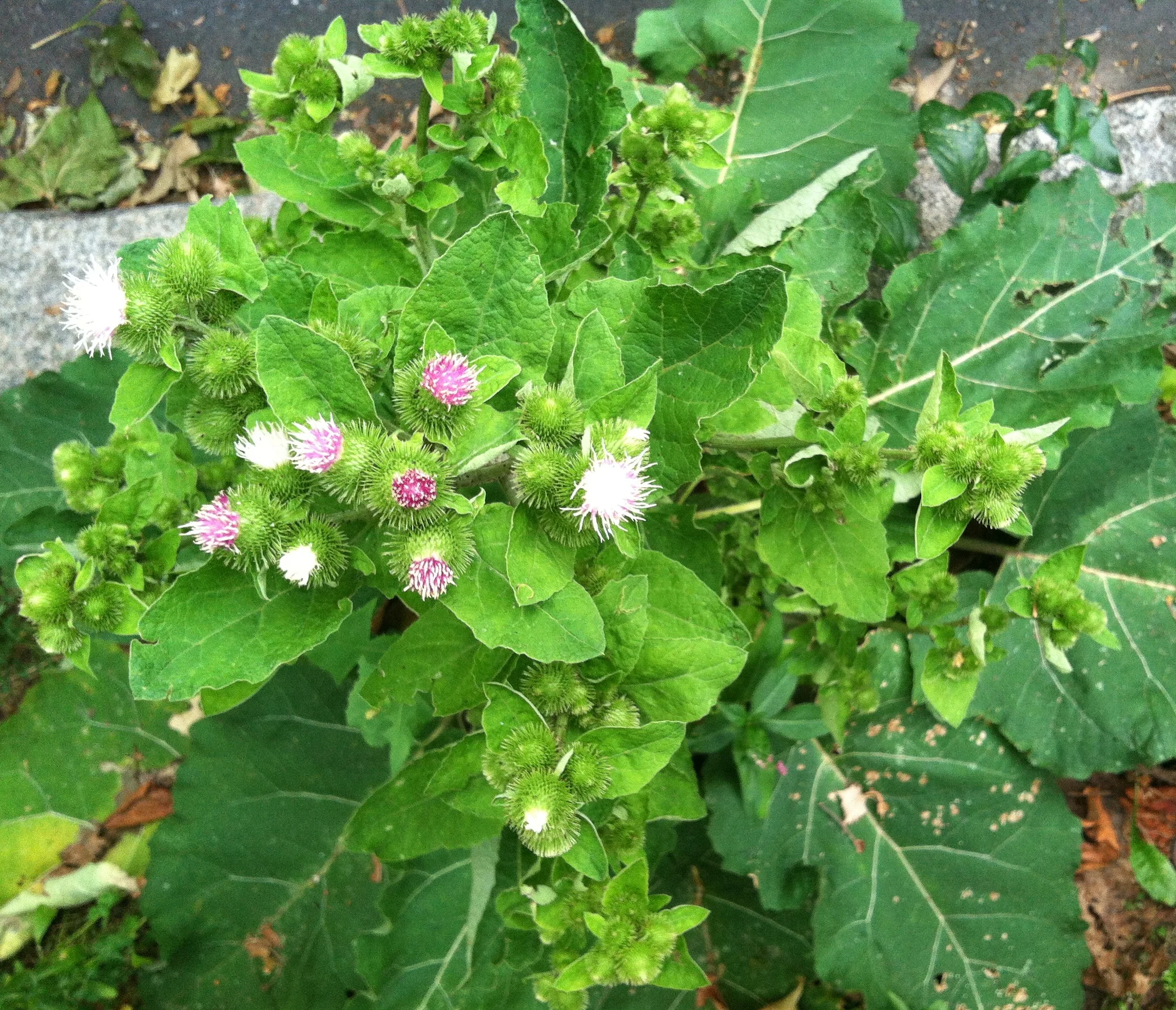
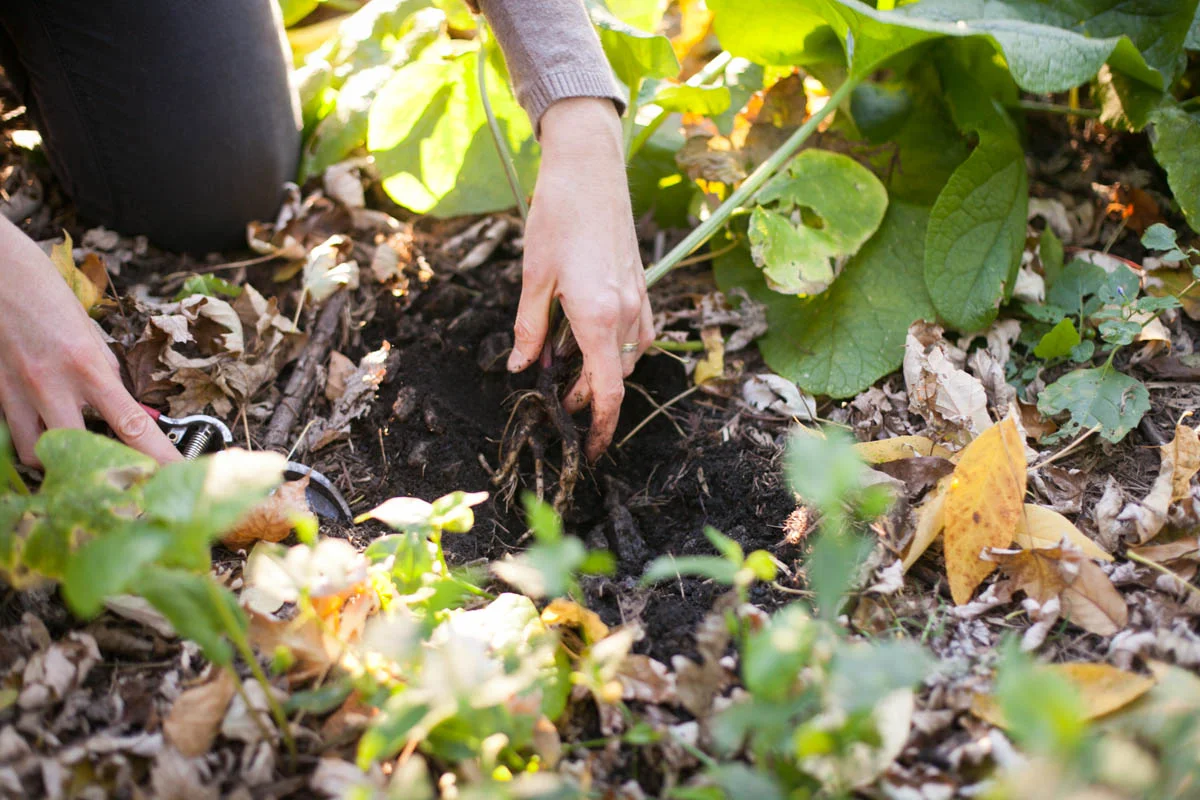
Burdock is a resourceful creature and can thrive in places where many other plants cannot. Part of its tenacity and strength is due to its long taproot, which burrows deeply down into the earth. With this advantage burdock can reach precious micro-nutrients that are often inaccessible to shallow-rooted plants.
Herein lies much of burdock’s goodness: Because of its deep earth diving, the roots contains many nutrients and minerals, as well as inulin, a special kind of storage carbohydrate (prebiotic). Inulin happens to be wonderful for the human digestive tract because it feeds and nourishes our beneficial gut flora. Taking burdock root is a good idea when there is any sort of digestive issue, especially when the good gut flora needs some support.

When taken as food, tea or tincture, burdock (slowly) acts upon the digestion and liver. It helps the system to better digest, and assimilate fats and oils — these are then more easily distributed to the skin, hair and internal tissues. Burdock is often a popular choice for helping resolve any sort of eruptive skin problem such as acne, rashes, or eczema. I will often pair it with red clover to help support the removal of waste products that may be improperly eliminating through the skin instead of through other channels. Traditionally this cleansing action led burdock to be known as a “blood purifier” because it helps to detoxify the body and blood by stimulating the release of waste products from the cells.
Burdock root is a gentle and nutritive tonic that helps to restore one’s natural energy and to overcome states of depletion. Not that long ago it was also used as a natural aphrodisiac! However, one important thing to know about burdock is that although it can have a very deep and profound effect on the body, it works slowly and must be taken with consistency over time. A few doses of burdock will not do the trick — this is an herb that needs to be used with commitment over several months. In exchange it will show you its ability to nourish depleted bodies, provide increased energy, and improve the function of the digestive system. Judith Berger — one of my favorite herbal writers — states, “The root’s style is almost tortoise-like as it patiently wades through tired organs, pulling poisons, chemical residues, and contaminants which slow down the lymphatic, digestive, and urinary organs.”
If you are looking to harvest your own burdock once the growing season returns, keep in mind that it is a biennial. Be sure to gather one-year-old plants in the fall, or two-year-old plants in the spring, i.e., any time before it has flowered. You want the energy of the root to still be underground rather moving upwards into the flowers and seeds.
HOW TO USE:
There are many ways to enjoy the sweet and earthy taste of burdock. You can eat the fresh or cooked roots, take it as a tincture, or drink it as a tea. If taking it as a tea, it will need to be simmered on the stove in order to draw out all of its benefits. Add 1 heaping tablespoon of the dried root to 1.5 cups of water in a small saucepan. Bring to a boil, then reduce to a simmer, cover with a lid, and let this cook for 15 to 20 minutes. Then strain and drink.
Another wonderful way to use nutritive burdock root is to steep it in apple cider vinegar. Vinegar is an excellent medium for drawing out the mineral contents of plants. Place 2 to 3 tablespoons of the dried root (or twice this amount of the chopped fresh root) in an 8 oz. glass jar. Cover with apple cider vinegar and let this mixture steep at room temperature for 2 to 3 weeks. Then strain out the roots, place the remaining liquid in a clean, dark bottle, and use this earthy mixture on vegetables or salads. I like to store my herbal vinegars in the fridge for the longest shelf life. Use up within 6 months.
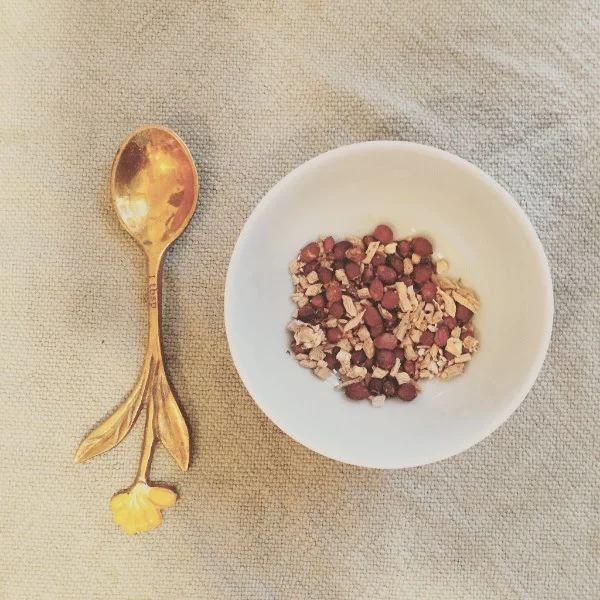
Root & Berry Tea
This is a nourishing, grounding and earthy-sweet tea for chilly days. This simple trio of berries and roots will warm your heart and spirit
Blend together:
4 Tblsp. hawthorn berries*
3 Tblsp. codonopsis root, dandelion root* or astragalus root*
1 Tblsp. burdock root*
*You can find these herbs in the bulk section at Cambridge Naturals!
Place 2 heaping Tablespoons of this mixture in 1.5 cups of water in a small saucepan. Bring to a boil then lower the heat to a simmer, cover, and let cook for 15 to 20 minutes. Strain and drink. This recipe will make enough for 3-4 servings.
Steph Zabel is an herbalist and educator based in Somerville, MA who helps urban dwellers connect with the plant world. She teaches herbal classes, is available for individual wellness consultations, and is also the founder of HERBSTALK, Boston’s community herbal conference. Learn more about her work at: www.flowerfolkherbs.com and www.herbstalk.org.
References:
https://umm.edu/health/medical/altmed/herb/burdock
http://www.botanical.com/botanical/mgmh/b/burdoc87.html
http://www.woodherbs.com/Burdock.html
http://www.herbcraft.org/burdock.html
Herbal Rituals by Judith Berge
The perfect card for the one you love!
Valentine's Day doesn't have to be about Hallmark! Good Paper Cards is a wonderful company with a mission to restore the humanity and beauty within each of us that gets so easily forgotten and tossed aside. They start with their cardmakers - women who have escaped sex trafficking in the Philippines and young adults orphaned by disease in Rwanda.
For her February Staff Pick, Grace chose three delightful handmade cards from Good Paper Cards with the theme of love. Read about her choices below!
Valentine's Day doesn't have to be about Hallmark! Good Paper Cards is a wonderful company with a mission to restore the humanity and beauty within each of us that gets so easily forgotten and tossed aside. They start with their cardmakers - women who have escaped sex trafficking in the Philippines and young adults orphaned by disease in Rwanda.
For her February Staff Pick, Grace chose three delightful handmade cards from Good Paper Cards with the theme of love. Read about her choices below!
She says... These unique pun-ny greeting cards are handmade in Rwanda by young orphans, and your fair trade purchase allows them to support their families. On the back of each card is a signature of the person who made the card for you, which I think makes it really personal and special. I thought it would be fun to accompany a card with one of our grocery items as a little Valentine's Gift this year. Here are some examples:
Give the "You Make Miso Happy" card with a jar of South River miso!


Give the "Perfect pair" card with a pair of Maggie's socks.


Give the "I'm Nuts About You" card with a jar of Wilderness Poets raw almond butter.


There are so many cute possibilities! Browse our awesome card selection to create more of your own endearing pairings.
Ashwagandha (Withania somnifera Solanaceae): The Strength of a Horse
By Steph Zabel
Herbalist, Ethnobotanist and Educator
Ashwagandha is a wonderful plant that comes to us from the Ayurvedic tradition. It is known as an herb that helps to improve one's resiliency, cope with stress, and reestablish healthy sleep patterns. It is a calming and nutritive herb that has been used for thousands of years in Ayurvedic medicine and is considered to be an important rejuvenative and tonic remedy.
Also called Winter Cherry, it is a cultivated plant of Indian origin. The roots are the prized part used in herbal preparations, and after just one growing season they can be harvested. Commonly ashwagandha roots are found in powdered form.
By Steph Zabel
Herbalist, Ethnobotanist and Educator
Ashwagandha is a wonderful plant that comes to us from the Ayurvedic tradition. It is known as an herb that helps to improve one's resiliency, cope with stress, and reestablish healthy sleep patterns. It is a calming and nutritive herb that has been used for thousands of years in Ayurvedic medicine and is considered to be an important rejuvenative and tonic remedy.
Also called Winter Cherry, it is a cultivated plant of Indian origin. The roots are the prized part used in herbal preparations, and after just one growing season they can be harvested. Commonly ashwagandha roots are found in powdered form.


Ashwagandha is a plant that has a range of benefits for the modern human: as a calming adaptogen it has been used for anxiety, stress, nervous exhaustion, adrenal burnout, depression and insomnia. Adaptogens are a class of herbs that help us to cope with daily stressors, increase our strength and resiliency, and support proper immune function. Because of these many positive qualities, in Ayurveda this plant is thought to be an herb of longevity.
When taken over time, ashwagandha is said to impart the “strength of a horse” — and helps one to have increased energy, vitality, and fertility. It was traditionally used during times of debility or to recover from long-standing illness. The root is also very high in iron and has proven useful for anemia. Like many adaptogenic herbs, it generally works best taken over the long term, consistently for many weeks or months.


One of the most interesting properties of this plant is that it has been shown to be very beneficial in restoring normal sleep patterns. Taken regularly ashwagandha may greatly help people that suffer from insomnia.
NOTE: Ashwagandha is a member of the Solanaceae or nightshade family, which is a problematic group of plants for some people. Proceed carefully if you have issues with this group of plants. Also, some people may find that ashwagandha is too warming and strong for their constitution. Remember that everyone is unique and responds differently to herbs.
HOW TO USE:
Ashwagandha is commonly found in powdered form, and can be used as such in a capsule or mixed into liquid. As a powder it is traditionally taken in warm milk or mixed with ghee. The powder also blends nicely in honey as a paste, along with other herbs such as cinnamon or powdered rose petals. Finally, tinctures of ashwagandha are also available in instances when the powder is not convenient to use.
RECIPE: Spiced Ashwagandha & Cocoa Milk
What better way to take your ashwagandha than in hot chocolate?! Make this brew on cold winter nights -- it is lovely to sip on as you are winding down from the day.
2 tablespoons Cocoa powder
1 teaspoon Ashwagandha root powder
1/4 teaspoon Cinnamon
a few sprinkles of freshly grated Nutmeg
8 oz. Coconut milk* (or other milk of choice)
Honey or maple syrup to taste
This recipe makes one serving. Pour the milk into a small saucepan and whisk in the cocoa powder, ashwaganda powder, cinnamon and nutmeg. Heat gently over low heat for a few minutes, stirring occasionally. Pour into a mug and add honey or maple syrup to your taste. Enjoy!
*If using full fat coconut milk from a can I usually dilute it down with water to equal parts, i.e. 4 oz coconut milk plus 4 oz. water
References:
http://bearmedicineherbals.com/the-winter-cherry-restoring-vitality.html
http://www.herbalremediesadvice.org/ashwagandha-benefits.html
http://www.vtherbcenter.org/wp-content/uploads/2012/04/Adaptogens.pdf
https://www.mskcc.org/cancer-care/integrative-medicine/herbs/ashwagandha
http://www.ncbi.nlm.nih.gov/pubmed/10956379
http://www.ncbi.nlm.nih.gov/pubmed/17176166
https://www.planetherbs.com/michaels-blog/the-mighty-ashwagandha-superior-aphrodisiac-and-male-fertility-tonic.html
Steph Zabel is an herbalist and educator based in Somerville, MA who helps urban dwellers connect with the plant world. She teaches herbal classes, is available for individual wellness consultations, and is also the founder of HERBSTALK, Boston’s community herbal conference. Learn more about her work at: www.flowerfolkherbs.com and www.herbstalk.org.
This blog post — Ashwagandha (Withania somnifera Solanaceae): The Strength of a Horse — is for general health information only. This blog post is not to be used as a substitute for medical advice, diagnosis or treatment of any health condition or problem. Users of this Web site should not rely on information provided on this Web site for their own health problems. Any questions regarding your own health should be addressed to your own physician or other healthcare provider.
RegActiv Probiotics: Immune, Heart and Liver Wellness through Antioxidant Support
By Miles Sarill
Supplements Buyer and M.S. Candidate - Experimental Medicine
In the last thirty years, the market for probiotics has evolved and grown greatly. No longer is the sole capsule of Lactobacillus acidophilus the only option; rather, the aisles are populated with a multitude of products each touting “more than 10 bacterial strains” with anywhere between 5 and 150 billion cells per capsule. This boom in the probiotic market is partially fueled by both consumer interest as well as novel research into the microbiome.
It is increasingly understood that our microbiome, our individual collection of bacterial strains, plays a tremendous role in our health at many levels. Although probiotic supplements are often marketed toward balancing good digestive health, novel research indicates a role for a strong gut flora in maintaining healthy immune, skin, lung, and brain health. There are thousands of scientific articles on the effects of probiotic supplementation; although many of these publications center on animal studies, there are an increasing number of human clinical trials.
By Miles Sarill
Supplements Buyer and M.S. Candidate - Experimental Medicine
In the last thirty years, the market for probiotics has evolved and grown greatly. No longer is the sole capsule of Lactobacillus acidophilus the only option; rather, the aisles are populated with a multitude of products each touting “more than 10 bacterial strains” with anywhere between 5 and 150 billion cells per capsule. This boom in the probiotic market is partially fueled by both consumer interest as well as novel research into the microbiome.
It is increasingly understood that our microbiome, our individual collection of bacterial strains, plays a tremendous role in our health at many levels. Although probiotic supplements are often marketed toward balancing good digestive health, novel research indicates a role for a strong gut flora in maintaining healthy immune, skin, lung, and brain health. There are thousands of scientific articles on the effects of probiotic supplementation; although many of these publications center on animal studies, there are an increasing number of human clinical trials.
One such research project involving humans took place at the University of Tartu in Estonia. Dr. Marika Mikelsaar was working to solve the question as to why Estonian children had more resilient immune systems compared to children from Sweden. What they had found was that Estonians grew up with a specific probiotic bacterial strain, Lactobacillus Fermentum ME-3, which the Swedes lacked. Following the isolation and identification of this strain, scientists in Tartu further characterized the biochemical activities of ME-3. What they found was that ME-3 could produce glutathione, the master regulator of antioxidant response.
Glutathione: The Master Antioxidant
Glutathione (GSH) is a tripeptide formed from the amino acids L-glutamic acid, L-cysteine and glycine. GSH is involved in many biochemical processes throughout the body. Through its antioxidant activity, GSH cooperates in transforming dangerous free radicals into water or for detoxifying environmental contaminants in the liver. GSH levels are found to be lower in states of chronic disease and in aging. Although the effects of imbalances between antioxidants and free radicals are still being researched, there is much scientific evidence to suggest that increased concentration of GSH leads to healthier cell division, liver metabolism, heart health and overall vitality.
Free radicals and reactive oxygen species are small molecules with unpaired electrons. Electrons left unpaired become unstable, and can use up electrons from DNA, proteins or molecules within our mitochondria or cell’s plasma membrane. A strong antioxidant system has been shown in research to protect our cells from free radicals and oxidative stress. It is hypothesized that lower antioxidant defenses in aging lead to increased free radical damage. Can boosting glutathione protect our cells?
Supplementing with Glutathione: Does it work?
Unsurprisingly, I’ve heard nutritionists say “glutathione precursors are worth their weight in gold.” The reason for this is that GSH itself is not well absorbed when taken in a capsule. This is partially due to the fact that much of the GSH one takes in a capsule becomes oxidized glutathione (GSSG), therefore requiring our bodies’ cells to recycle GSSG back into reduced, active, GSH.
The ways in which boosted GSH levels can be achieved through supplementation often include fueling our cells with the precursors of GSH. One such supplement precursor is N-acetyl-cysteine (NAC), which boosts GSH levels. NAC is also considered a free radical scavenger.
Supplements containing selenium, especially selenomethionine, are useful as Selenium becomes incorporated into enzymes such as glutathione peroxidase, which uses glutathione to detoxify the reactive oxygen molecule H2O2 into water. Similarly, vitamin B2 is necessary for the conversion of oxidized glutathione back into active, reduced, glutathione. Hence, both selenium and B2 may be an important part of maintaining good antioxidant balance and wellness during the cold season.
Some extracts from plants, such as milk thistle, or green tea, contain antioxidant polyphenols which instruct our cells to produce more glutathione. This effect is mediated through the transcription factor, Nrf2. When Nrf2 is activated, it transcribes for a battery of genes that mediate Phase II detox and antioxidant activity.
Well, what about the RegActiv probiotics? As previously stated, a strong connection between intestinal health and immune health has been established by nutritional research, with probiotics underlying support to this link. Lactobacillus Fermentum ME-3 is a strain that produces glutathione, as well as recycles inactive, oxidized GSSG. Even though ME-3 would reside in the intestines, scientific research indicates that ME-3 raises the blood markers of antioxidant activity.

RegActiv probiotics are also designed to affect three different areas of wellness in the body where antioxidant defense is needed: immune, heart and liver health. In the Immune and Vitality formula, ME-3 is paired with vitamin C and B vitamins for promoting healthy immune activity and function. In the RegActiv Cardio Wellness, the active form of CoQ10 – Ubiquinol – is used in conjunction with pantethine. Pantethine, a derivative of vitamin B5, may help balance healthy cholesterol levels. For those looking for love for their liver, RegActiv Detox & Liver Health provides ME-3 in conjunction with the glutathione precursor N-acetyl-cysteine and silymarin from milk thistle. Silymarin is an extract of compounds that induce Nrf2 activation, transcribing for enzymes that create more GSH.
Taken together, RegActiv probiotic supplements represent a different approach in antioxidant support. An increasing understanding of both the importance of probiotics in whole-body wellness and the role of glutathione in immune, heart and liver health by the scientific community has led to the discovery and development of Lactobacillus Fermentum ME-3 as a supplement for consumers.
REFERENCES
1) Kullisaar T, Songisepp E, Aunapuu M, Kilk K, Arend A, Mikelsaar M, Rehema A, Zilmer M. Complete glutathione system in probiotic Lactobacillus fermentum ME-3. Prikl Biokhim Mikrobiol. 2010 Sep-Oct;46(5):527-31. PubMed PMID: 21058502.
2) Mikelsaar M, Zilmer M. Lactobacillus fermentum ME-3 - an antimicrobial and antioxidative probiotic. Microb Ecol Health Dis. 2009 Apr;21(1):1-27. Epub 2009 Mar 16. PubMed PMID: 19381356; PubMed Central PMCID: PMC2670518.
These statements have not been evaluated by the Food and Drug Administration. This product is not intended to diagnose, treat, cure or prevent any disease. The information presented here is not meant to replace professional advice, diagnosis, or care from a licensed healthcare practitioner.
The author declares no conflicts of interest.