
The Naturalist Blog
*
The Naturalist Blog *
Maribeth's Wholesome Spring Blend Tea
Our herbalist-in-training on staff, Maribeth, created this wonderful tea blend to help us transition physically and mentally into springtime! The perfect beverage for a warm(er) day like today!
Ingredients: Nettle Leaf, Dandelion Root, Oatstraw, Lemon Balm, Red Clover, Raspberry Leaf, Calendula
As the weather warms and the plants stir under melting snow, so do our spirits return after a harsh north east winter. As the earth transitions, so do our bodies emerge to flow with the rhythms of Spring. Our inner fluids begin to move just as the sap runs through the veins of the tree. Our lymph system and organs of elimination are in need of support as we release the stagnation of winter.
Our herbalist-in-training on staff, Maribeth, created this wonderful tea blend to help us transition physically and mentally into springtime! The perfect beverage for a warm(er) day like today!
Ingredients: Nettle Leaf, Dandelion Root, Oatstraw, Lemon Balm, Red Clover, Raspberry Leaf, Calendula
As the weather warms and the plants stir under melting snow, so do our spirits return after a harsh north east winter. As the earth transitions, so do our bodies emerge to flow with the rhythms of Spring. Our inner fluids begin to move just as the sap runs through the veins of the tree. Our lymph system and organs of elimination are in need of support as we release the stagnation of winter.
This gentle herbal blend was formulated to support the release our bodies go through as we shed our winter armor and prepare for the renewal Spring brings. Cleansing and nourishing, these herbs support our body's natural detoxification process while supplying fortifying vitamins and minerals we may be craving after a long winter. I like to drink our Wholesome Spring Blend this time of year to rejuvenate my body, mind, and spirit.
For the most therapeutic results, I like to add a handful of this blend to a quart jar, cover with boiling water, cap tightly, and steep overnight, or at least 6 hours. Reheat as needed or drink at room temperature throughout the day. You may also steep 1 tbsp. to a mug of boiling water for at least 20 minutes. Make sure to cover your mug to preserve all of the nutrients and essential oils!

For the most therapeutic results, I like to add 4-6 tablespoons of this blend to a quart jar, cover with boiling water, cap tightly, and steep overnight, or at least 6 hours. Reheat as needed or drink at room temperature throughout the day. You may also steep 1 tbsp. to a mug of boiling water for at least 20 minutes. Make sure to cover your mug to preserve all of the nutrients and essential oils!
If you'd like to make your own blend, you can find all of these herbs in our bulk herb department. Choose your measurements of choice whether they be cups or teaspoons and blend:
2 parts Red Clover Blossoms
2 parts Nettle Leaf
1 part Oatstraw
1 part Dandelion Root
1/2 part Raspberry Leaf
1/4 part Lemon Balm
1/4 part Calendula
This Web site — Herbs and Botanicals — is for general health information only. This Web site is not to be used as a substitute for medical advice, diagnosis or treatment of any health condition or problem. Users of this Web site should not rely on information provided on this Web site for their own health problems. Any questions regarding your own health should be addressed to your own physician or other healthcare provider.
Visiting Gaia Herbs' Turmeric Farm in Costa Rica
Our General Manager recently went to Costa Rica to visit the organic turmeric farm of Gaia Herbs, one of our largest herbal medicine suppliers. She writes about the experience below:
When I think of Costa Rica, I usually think of rainforests and three-toed sloths lazing about the verdant splendor. I’m adding turmeric to that lush list, having made my first trip to Costa Rica last month to visit one of our favorite herbal companies’ organic turmeric farms.
The company I visited is Gaia Herbs, and we have been carrying their products since they first started doing business in the late 1980s. Their name is synonymous with high quality, and for good reason. Gaia tests all raw source materials and each batch of product for purity, integrity, and potency. They are so transparent in their manufacturing processes that they actually make their test results available to the public via their “Meet Your Herbs” page on their website. That’s right: you can find out which tests were performed on any of their products to guarantee it is what it says it is, and has the potency it claims on the package.

Visiting Gaia's turmeric farm and getting our hands on the freshest product!
Visiting Gaia’s organic turmeric farm on the Nicoya Peninsula was nothing less than spectacular. Gaia founder, Ric Scalzo, guided our group of retailers on the farm while explaining every aspect of growing and harvesting organic turmeric. Scalzo waxed poetic about the plant “microbiome,” or the importance of growing plants that had a symbiotic effect with the turmeric and the soil microorganisms. A burgeoning worm compost pile further ensured Gaia provides its organic turmeric with the richest soil possible.
One of my favorite parts of the farm tour was after we finished watching turmeric being harvested, and we went to where it was being sorted, washed, and dried. Gaia’s local farm operations manager, Luis Iglesias, explained how he had sought to employ local women in an otherwise economically depressed area. News spread by word-of-mouth, and the number of Gaia’s female farm employees grew exponentially.
I feel very fortunate to have had this opportunity to visit Gaia’s organic turmeric farm in Costa Rica. It has further solidified my already quite positive opinion of Gaia Herbs and what they do, not just for raising the bar for herbal medicine manufacturing practices but also for demanding companies improve the lives of people who work for them and the world at large!
VIOLET: Viola odorata and related species
By Steph Zabel
Herbalist, Ethnobotanist and Educator
As I sit down to write this article about one of my favorite spring plants, the snow outside is flying, adding to our record-breaking, epic winter. But despite the piles of snow that remain in our streets and yards, the thaw has begun, the days are warming, and we will soon see the plants re-emerge from their slumber. This is certainly a month full of hope and renewal.
By Steph Zabel
Herbalist, Ethnobotanist and Educator
As I sit down to write this article about one of my favorite spring plants, the snow outside is flying, adding to our record-breaking, epic winter. But despite the piles of snow that remain in our streets and yards, the thaw has begun, the days are warming, and we will soon see the plants re-emerge from their slumber. This is certainly a month full of hope and renewal.
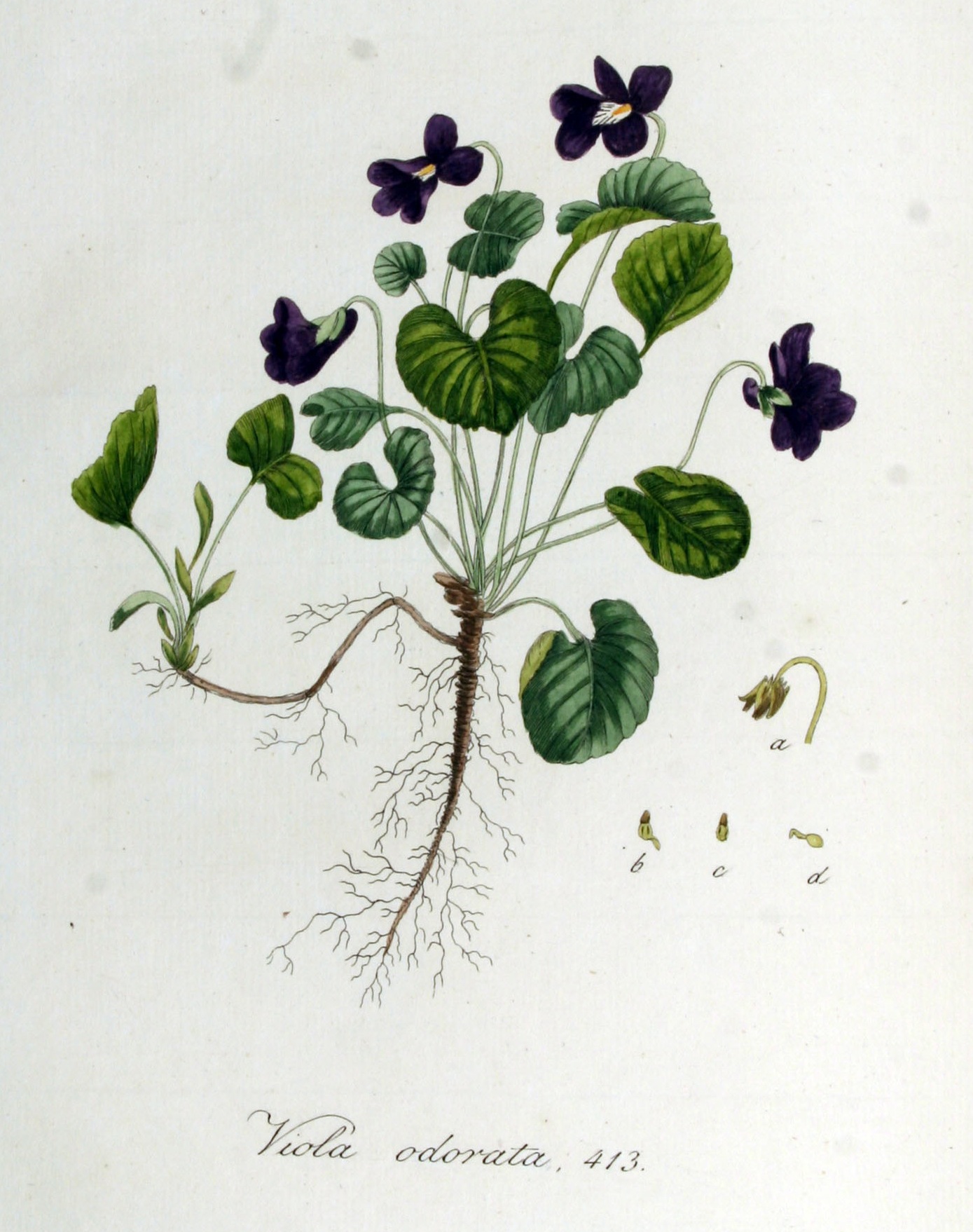
I could not think of a better plant to symbolize spring’s feeling of renewal than the sweet violet flower. With its tender, young, heart-shaped leaves, and its brilliantly colored purple flowers, it is truly a balm to a winter-weary spirit. As the violets bravely emerge in chilly temperatures and before most other plants, I think of them as sweet love letters unfolding from the earth.
One of our best and most nutritious wild spring edibles, violet leaves and flowers are high in Vitamins A & C. You can eat them raw, plucked right from the garden; I like to add them to fresh salads for a beautiful spring touch.
Violet has a slight mucilaginous quality to it, which means it contains a type of polysaccharide that imparts a viscous quality to water when extracted – a quality that is extremely soothing and cooling to mucous membranes. As such, violets can help calm inflammatory conditions, whether it is itchy skin, inflammation in the gut, or a scratchy, sore throat. Use violets on any irritated tissue – they will provide a cooling and soothing relief. Or as the famous English herbalist Culpepper said, “All the Violets are cold and moist, and are used to cool any heat or distemperature of the body, either inwardly or outwardly.”
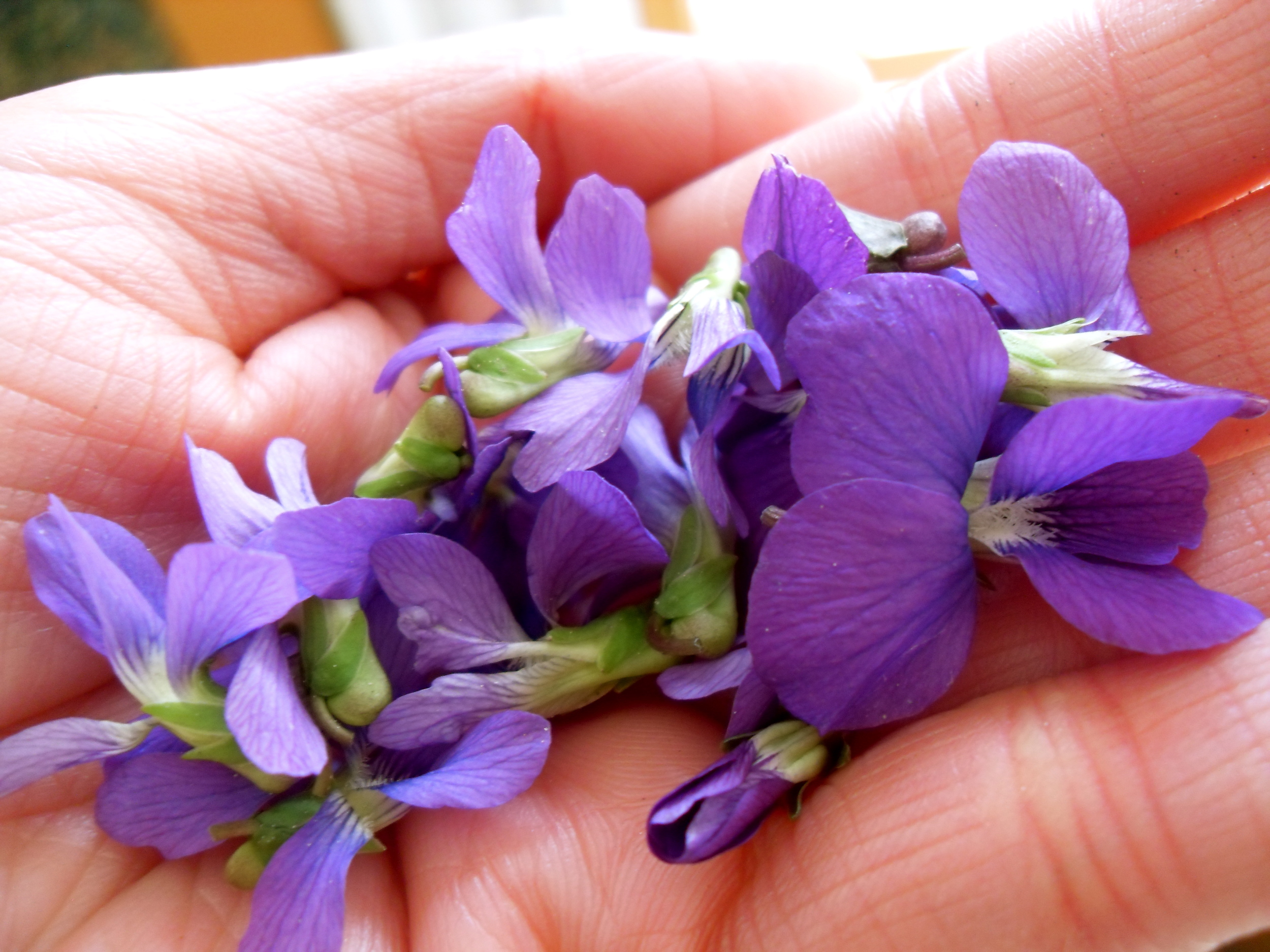
Violet is also known as a traditional “blood purifier” or alterative herb. This makes it a wonderful and gently detoxifying plant for the spring season, helping our bodies to wake up from the winter and move along any stagnation. Just as the sap in the trees starts to move, so must we move the inner fluids of our bodies, especially through the filter of our lymphatic system. Violet is one of our best lymphatic herbs and is often used to support the removal of toxins from the system. Herbalist Matthew Wood especially recommends violet for “lymphatic stagnation and swollen glands, often in the throat or around the ears.”
If you read old herbal texts from a few centuries ago you will discover that violet was also prescribed as a support for emotional upset – it was said to “comfort and strengthen the heart” and to “to moderate anger.” Violet has an amazing ability to bring its soothing comfort to any inflammatory situation, whether physical or emotional.
Botanically speaking, the violet plant is quite unique. Violets actually produce two different kinds of flowers – first the spring-born flowers (which attract both bees and humans alike). Usually, however, these flowers do not produce seed. Later in the season, violets produce a second kind of flower that grows close to the earth, or underground. Called cleistogamous flowers, these hidden blooms do not usually fully open, and are self-pollinated. Try pulling away the leaves of a clump of violet in late summer or early fall to find these unusual, pale flowers. If you happen to find a seed pod, take a peek inside – you will be most amazed to find a capsule full of luminous, iridescent seeds that shimmer in the sunlight. The first time I discovered the hidden secret of the humble violet, it took my breath away with its beauty.
HOW TO FORAGE AND USE:
Violets are abundant in early spring, and may even spontaneously grow in your backyard or garden. As with harvesting any wild plant, be sure that you are collecting plants in an area that is free from contamination. It is always a good idea to test your soil for heavy metals, and to stay away from collecting near busy roadsides.

Once you have determined a suitable place to harvest your violets, you can pluck the young leaves and flowers when they first emerge and eat them raw in fresh salads. Violets are in their prime when the weather is still cool, so take advantage of the flowers while they are available. Once the weather turns warm, only the leaves will remain.
You can also use dried violet leaf and flower when the fresh plant is not available, but the vivid purple-blue color of the flower will fade once dried. To make a violet infusion, steep up to 1 Tblsp. dried leaf in 8 oz. hot water for at least 10-15 minutes. If you would like to extract more of the soothing, mucilaginous qualities mentioned above, steep the dried leaf in cold water instead, which will preserve the beneficial polysaccharides.
Violet blends well with other herbs such as rose, oat tops and linden for a relaxing tea.
Note: The Violet we speak of here (Viola odorata and related species) is NOT the same as the indoor houseplant, the African Violet, which is unrelated and poisonous. Be sure to only use plants you have positively identified.
A Spring Recipe: VIOLET SYRUP adapted from herbalist Susan Weed
Ingredients:
1/2 pound fresh violet flowers
2 cups water
2 cups raw honey
Directions:
Enlist all the help you can to pick violet blossoms. Boil the water and pour over the fresh blossoms; cover. Let steep overnight in nonmetallic container. The next day, strain out the flowers and reserve the bright purple liquid. Combine the violet infusion and honey in a saucepan. Simmer gently, stirring, for ten or fifteen minutes, until it seems like syrup. Fill clean jars. Cool. Keep well chilled to preserve.
Steph Zabel is an herbalist and educator based in Somerville, MA who helps urban dwellers connect with the plant world. She teaches herbal classes, is available for individual wellness sessions, and is also the founder of HERBSTALK, a community herbal conference. Learn more about her work at: www.flowerfolkherbs.com and www.herbstalk.org.
References:
http://blog.chestnutherbs.com/even-violets-need-a-plan-b
This Web site — Herbs and Botanicals — is for general health information only. This Web site is not to be used as a substitute for medical advice, diagnosis or treatment of any health condition or problem. Users of this Web site should not rely on information provided on this Web site for their own health problems. Any questions regarding your own health should be addressed to your own physician or other healthcare provider.
The Minimalist Makeover: Simple, healthy and all YOU, with five beautiful products
This guest post was written by Kristin Jorgenson, one of our favorite customers and sales brokers, who works with Dr. Hauschka skin care. Kristin has gorgeous skin and wears flawless, minimal make up, always looking completely radiant when she pops in the store.
The Minimalist Makeover is for anyone who wants to achieve a healthy, natural look using just a few skin-loving, non-toxic cosmetics. The look is also known as “YOU, on the best day of your life.”
You: hydrated, healthy, rested, and happy, on a gorgeous, breezy summer day, sparkling, in love.
Before applying any make-up, one must care for their skin with a gentle cleanser, toner and the appropriate day cream for their skin’s current condition. I love Dr. Hauschka’s Quince Day Cream for its clean finish and protective antioxidant ingredients.
Here are the top 5 products I use when performing a Minimalist Makeover, all by Dr. Hauschka Skin Care:

| ONE |
Dr. Hauschka Foundation: This is a brand new formula that I’m wild about. It goes on smoothly and evenly on a well-moisturized face. The foundation contains oils of coconut, apricot and macadamia, which sounds like dessert but lends to hydration and smooth, protected skin. The coverage is light to medium, never heavy, allowing the skin’s natural radiance to come through - but effectively concealing any blemishes or colorations that are inconsistent. I’ve found this new foundation to work as well as a concealer when sponged under the eyes - which was a nice surprise, and keeps us on our theme of minimalism.
|TWO|
Translucent Bronzing Tint: This product is well loved by make up artists everywhere for its perfected formula and unbelievable versatility. The liquid mineral tint contains olive oil and beeswax for a hydrating, blendable application, anthyllis (a healing botanical extract present in many Dr. Hauschka products) and witch hazel for a toning effect. The bronzing tint can be mixed with day cream, sunscreen, or foundation to deepen the shade. It can also be applied strategically with fingers, a makeup sponge or a makeup brush to contour areas of the face, which would naturally be touched by the sun.
|THREE|
Rouge: I love rouge. The right rouge brings the face back to life almost instantly. Dr. Hauschka has really accomplished minimalism by providing the only 3 rouge shades one could need- a bright coral, a rosy pink and a soft nude. These mineral rouge powders contain silk powder, lending a slight luminescence in the light, as well as witch hazel and sage to soothe and refresh. Dr. Hauschka’s International Make-up artist Karim Sattar taught us to ad a touch of rouge to the eyelids to give a youthful look. I’m hooked on that technique.
|FOUR|
Mascara: Natural mascara is sometimes the product that brings people to natural cosmetics due to eye sensitivity. Many people, however, transition to natural mascara more slowly because they believe that eyelashes aren’t as affected by chemicals as the skin is. I’d like to challenge this! Dr. Hauschka’s Mascara contains delicious smelling Rose Petal Wax, soothing eyebright and black tea and neem leaf extract the strengthen lashes. For more oomph, the volume mascara is a firmer formula with a great volumizing brush. Ingredients such as candellila wax, beeswax, neem leaf extract and cane sugar result in plump, long and healthy lashes for beautiful, expressive eyes.
|FIVE|
Novum Lipstick: This is my favorite decision to make when finishing a makeover. By this point, the person is relaxed and their skin is looking fresh and dewy. Using hair, eye, skin tone and colors/type of clothing I choose either a pop of color or a shade very close to their natural lip color. Dr. Hauschka’s Lipstick Novum is the most hydrating lip color I have ever used thanks to Vitamin E rich Moroccan Oil, Jojoba Oil and protective Rose Wax. Lipstick Novums come in 4 amazing shades, Sand Dune (a copper nude with hints of lavender), Miraculous Rose (a tawny pink), Laid Back Apricot (a warm peach) and Exhilarating Berry (a gorgeous shade somewhere between raspberry and wine that looks different on every person I’ve ever used it on).
Enjoy!
Tulsi / Holy Basil: Ocimum sanctum
By Steph Zabel
Herbalist, Ethnobotanist and Educator
For thousands of years tulsi has been considered a sacred herb. Also called holy basil and “the elixir of life” it originated in India, where it became an important herb of Ayurvedic medicine, and was sacred to the Hindu god Vishnu. Amongst Ayurvedic practitioners it is known as a rayasana plant, which is a special group of herbs said to promote longevity and perfect health.
Tulsi’s popularity has now spread throughout the world and Western herbalists have also fallen in love with it. Traditionally used for a variety of ills ranging from respiratory problems to exhaustion to digestive issues, it is a remarkable plant for human health.
By Steph Zabel
Herbalist, Ethnobotanist and Educator
For thousands of years tulsi has been considered a sacred herb. Also called holy basil and “the elixir of life” it originated in India, where it became an important herb of Ayurvedic medicine, and was sacred to the Hindu god Vishnu. Amongst Ayurvedic practitioners it is known as a rayasana plant, which is a special group of herbs said to promote longevity and perfect health.
Tulsi’s popularity has now spread throughout the world and Western herbalists have also fallen in love with it. Traditionally used for a variety of ills ranging from respiratory problems to exhaustion to digestive issues, it is a remarkable plant for human health.

Tulsi is incredibly aromatic - both spicy and pungent like culinary basil (its close cousin), but also with hints of sweetness and clove to it. All upper portions of the plant – leaves, stems, flowers, and seed heads – hold this aromatic property. Even a slight touch of the fresh plant will release its beautiful scent into the air.
Modern herbalists use tulsi as an adaptogen, which is a type of herb that helps one to adapt to and overcome everyday stress. It can calm an over-active mind, help one feel more grounded during times of overwhelm, and is said to “gladden the heart.” Used consistently it can also increase energy and endurance.
It is also a lovely relaxing nervine, and a calming, centering herb useful for an anxious mind. Personally I find it to be very comforting and grounding when I feel scattered, or my to-do list seems endless.
In going back to Ayurveda’s use of tulsi as a rayasana (rejuvenative) herb, holy basil can help move an individual towards whole health and vitality, acting on many systems of the body. Due to its stimulating essential oil content it will increase and support digestion. Traditionally it was also used to protect against disease by supporting the immune system. As an antibacterial plant, it is useful herb for colds and respiratory infections and also helps to clear away excess mucous.
You may see a few different varieties of tulsi available, including rama, vana and krishna tulsi. Experiment to see which one you like best as they all have slightly different scents and tastes. Krishna tulsi has the most intense and pungent flavor. My favorite, however, is the mellow rama variety, which also happens to be the one most commonly cultivated and easily found.
HOW TO USE:
To make an aromatic cup of tulsi tea steep up to 1 Tblsp. of the dried leaf in one cup of water for 10 minutes, covered. If you are fortunate enough to have fresh tulsi leaf on hand, use twice this amount per cup of water. Tulsi also makes a wonderful iced tea during the summer months – keep a pitcher in the fridge to drink throughout the day.
Note: Tulsi is not recommended for those trying to conceive due to possible anti-fertility effects with consistent, long-term use.
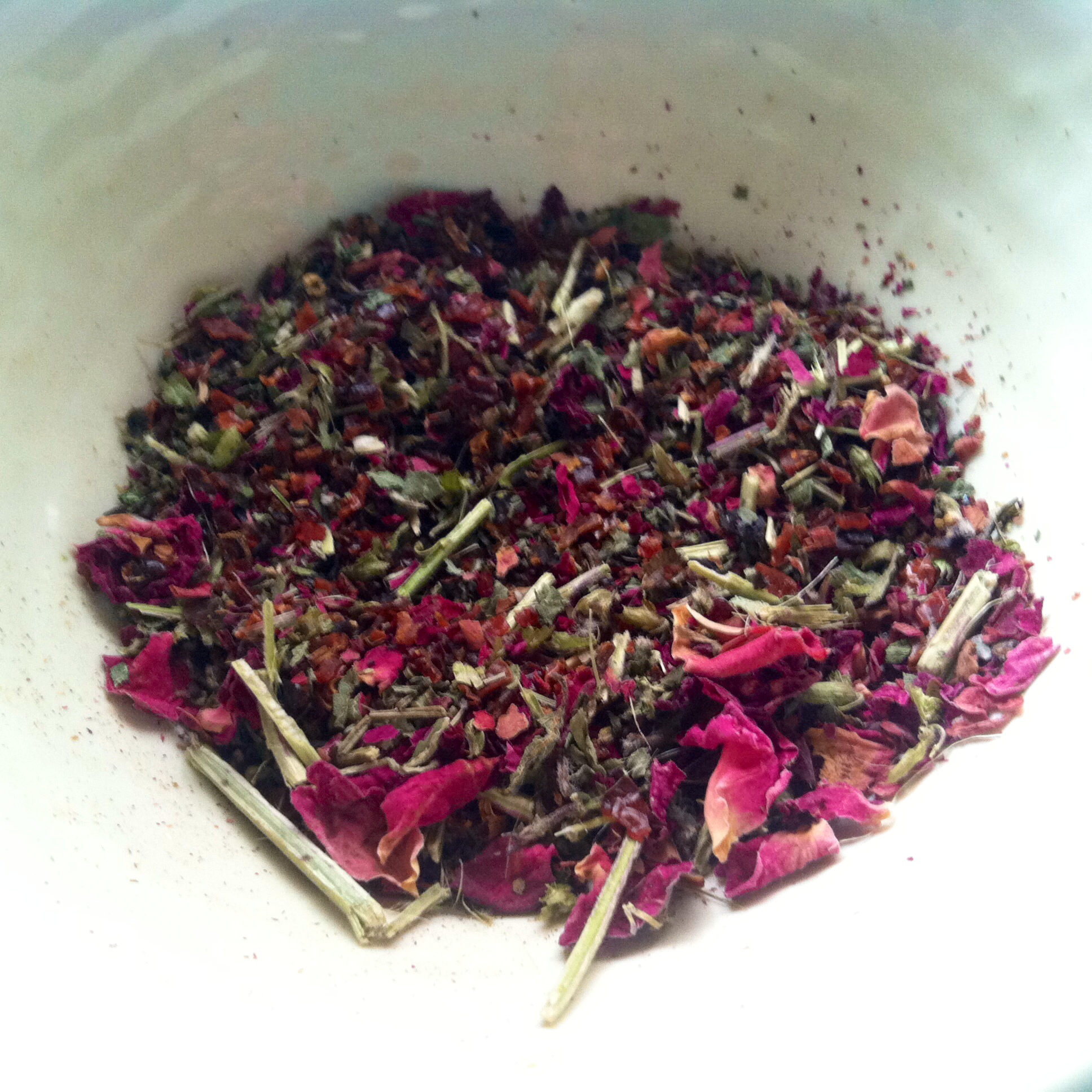
RECIPE: Winter Tulsi-Rose Tea
Tulsi and rose are wonderful companions. Drink this tea when you have the winter blues or need a little pick-me-up.
Mix together:
2 Tblsp. Tulsi
1 Tblsp. Rosehips
½ Tblsp. Rose Petals
Steep up to 1 Tblsp. of the blend in 1 cup of hot water for at least 10 minutes, then strain out the herbs. Add honey if desired.
Steph Zabel is an herbalist and educator based in Somerville, MA who helps urban dwellers connect with the plant world. She teaches herbal classes, is available for individual wellness sessions, and is also the founder of HERBSTALK, a community herbal conference. Learn more about her work at: www.flowerfolkherbs.com and www.herbstalk.org.
References:
Winston, D. and Maimes, S. Adaptogens: Herbs for Strength, Stamina, and Stress Relief. Rochester, VaA Healing Arts Press. 2007.
http://www.gaiaherbs.com/uploads/1596_HPR_HolyBasil_ResearchPaper-1371567034.pdf
http://www.uofmhealth.org/health-library/hn-4597000
http://www.drweil.com/drw/u/QAA346157/holy-basil-to-combat-stress.html
This Web site — Herbs and Botanicals — is for general health information only. This Web site is not to be used as a substitute for medical advice, diagnosis or treatment of any health condition or problem. Users of this Web site should not rely on information provided on this Web site for their own health problems. Any questions regarding your own health should be addressed to your own physician or other healthcare provider.
Maribeth's Peaceful Heart Tea
:: to uplift mood & spirit ::
Maribeth, our herbalist-in-training on staff made up this delicious tea blend to lift the heart and bring light to the spirit during these cold, dark days of our New England winter.
A good mood can often support our immunity, bringing us up out of the dark and helping us to find peace in hibernating. This tea has helped to lighten the weight of this deep winter and remind me of the beauty of slowing down to rest. Also great on the go to calm the anxieties and stressors of traveling through a snow-blanketed city as we soldier the last weeks of winter.
Holy Basil to relax mind and body and bring positivity and warmth.
Hawthorn Leaf & Flower to bring peace to the heart and calm to the nerves
Rose Petals to remind us to love our experiences, each other, and ourselves
Calendula Flowers to remind us of the warm sun, illuminate the darkness, and aid a sluggish system
Rosemary to rejuvenate, clear, and uplift our spirit

I enjoy this tea all day long as winter continues to visit us here in the North East. The ritual of making tea itself has a calming, soothing effect and allows me to slow down as winter intends. This blend of herbs not only works on the emotional body, but supports digestion, our lymphatic system, and strengthens our blood during these more sluggish months.
Grab a pre-made package of Peaceful Heart Tea at Cambridge Naturals - or make your own! Feel free to add any other of your favorite uplifting herbs to this recipe:
1/4 cup Hawthorn Leaf & Flower
1/4 cup Holy Basil
3 Tbsp. Rose Petals,
2 Tbsp. Calendula Flowers
1 Tbsp. Rosemary
Use 1 tsp. to 1 tbsp. of this blend to your mug of hot water. Steep 10 - 15 minutes, covered. Strain, breathe deep, sip, and relax. Add raw, local honey if desired for an added immune and spirit boost.
Cheers to happiness and good health!
Calling all curly girls!!
Sarah, our Body Care Department Lead, has an amazing head of curly red hair! She often gets complimented on her lovely locks, and asked for the details of her hair care regimen. She put together this entertaining and comprehensive guide for all the curly girls out there - tried and true ways to maintain that gorgeous mane!

Sarah's curls on display during the first winter snow!
If you are a fellow curly haired comrade, you can appreciate the woes of curly hair... both loving your curls and learning how to maintain and style them. It took me nearly 20 years to fully embrace my curls and almost 10 more to learn how to perfect the styling and maintenance of them. With the help of an amazing book, called Curly Girl: The Handbook, MopTop Haircare products, and a microfiber towel, I don't think my curls have ever looked so good, in my humble opinion. So if you want to learn to love your curls and establish a successful styling routine, here's what you oughta do...
Read the book Curly Girl: The Handbook to refresh your attitude and hair-outlook. This book is great for that, as well as helping you to understand how curly hair works and the type of curls you have. It's also crucial in learning which hair care products to avoid, and most importantly how to care for and style your curly hair. And after you do this...
MopTop Haircare is "curly girl" friendly, meaning it does not contain sulfates, silicone, and parabens that are harsh and strip your hair of beneficial oils. Curly hair is more delicate and drier than other hair types, so you must treat it tenderly! At the beginning of my new routine, I used the MopTop Haircare Clarifying Rescue Treatment. This is just a once in a while reset/detox for your hair, especially if you were using mainstream hair care products previously. It makes your hair feel fresh and rejuvenated without feeling dry or too squeaky clean.

Then, you shampoo! I use the MopTop Haircare Gentle Shampoo. Since using this shampoo, I've found that I don't need to wash as frequently, as I think it balances my scalp oil production. It's not drying or harsh on my curls either. And it smells very nice! If you're switching from mainstream shampoo, it will feel a little different because it doesn't lather a ton or leave your hair feeling squeaky clean, but that's how it's supposed to be!
Next, I condition with the MopTop Haircare Light Conditioner. It's important to be extra gentle when shampooing and conditioning. The Curly Girl Handbook illustrates how to properly shampoo and condition, but you basically want to comb it through with your fingers, scrunch, and then rinse as you scrunch. The Light Conditioner makes your hair so soft but not heavy and you really can run your fingers through your hair!
I apply the Medium Hold Gel by MopTop while my hair is still damp, smoothing over my hair and scrunching upward. No toweling yet! As per the Curly Girl method, this helps to define your curls and lock in the moisture. I like the MopTop gel because it provides definition and hold to my curls but doesn't make them crunchy or dry.
Finally, the 3rd key player: the Microfiber Towel by Earth Therapeutics. This towel has been miraculous. Cup your hair with the towel, scrunch, and squeeze. The towel soaks so much water and exponentially speeds drying and decreases frizz!
Occasionally in the winter, I will use a hair dryer with diffuser attachment if I don't have time to wait for my hair to dry. The diffuser attachment is important, as it diffuses the harsh heat and helps to maintain hair definition.
And waa-laa!! A head of hair that's supercalifragilisticexpialidocious!
The CN Staff Playlist: Neptune Edition
Our staff are stuck at home today once again as the store is closed due to Winter Storm Neptune. Cabin fever is starting to set in and we're seeking ways to stay connected. So we created a Cambridge Naturals Staff Playlist: Neptune Edition, for our listening pleasure and yours! This is an accumulation of some of our favorite songs to lift our spirits out of the wintertime doldrums. We hope you enjoy!

♫ Listen here.
Valentines Weekend Survival Kit

Looks like we're expecting another foot of snow this holiday weekend, along with gusty winds and other blizzard-esque conditions. Joy!!!
But that's no reason to miss out on celebrating. We put together a Valentines Weekend Survival kit to help you make it through in style.
Fill the bathtub... with this delightful Simple Bathing Milk from Little Barn Apothecary. With essential oils of clove and orange, it'll warm your exhausted snow-shoveling limbs and soothe your mind with thoughts of spring.
There's snow reason to panic... but a delicious mug of Magnesium Calm anti-stress formula can help take the edge off! Mix one serving into lukewarm water. Or, put a few droppers of Urban Moonshine's Chocolate Love Tonic into your drink of choice to encourage a more romantic mood. We recommend it in hot chocolate or a cocktail!
No one can hold a candle to the one you love... unless they're holding a Rose Garden Candle from local company Thesis Beauty. These amber-glass candles glow bright for hours, keeping the flame of passion burning even after your power goes out from the storm. We suggest lighting a few candles, turning up the (battery-operated) stereo, breaking into a bar of My Cherry Baby Chocolate from Theo, and opening a bottle of Plantlife Enhance Romance Massage Oil to fully set the mood.
If the weather is really driving you nuts... fill your bowl with guacamole instead! This tasty guac from local company Chica de Gallo is the perfect healthy-fat food to keep you satiated through the long, wintry night. Pair with Mary's Gone Crackers for a delicious snack, and share it over candle-light with the one you love.
BOOK REVIEW: Broth, Nourishing Broth
Nourishing Broth: an Old-fashioned Remedy for the Modern World
By Sally Fallon Morell and Kaayla T. Daniel
Reviewed by Rosalind Michahelles
This book tells you first why you should drink broth and then how to make it. The “why” occupies parts one and two of the book, starting with the nutrition science on boiling bones, tendons, ligaments and the other remains—whether fowl, fish, or meat -- after we have eaten. There is a good deal of complexity here but we can boil it down to gelatin, collagen, and cartilage. All three are important elements in broth and stock, defined variously as including bits of meat and vegetable or not. Stock, being the strained version, is used as a base for gravy and other sauces, especially after deducing or concentrating it.
Nourishing Broth: an Old-fashioned Remedy for the Modern World
By Sally Fallon Morell and Kaayla T. Daniel
Grand Central Publishing, 2014
Reviewed by Rosalind Michahelles

This book tells you first why you should drink broth and then how to make it. The “why” occupies parts one and two of the book, starting with the nutrition science on boiling bones, tendons, ligaments and the other remains—whether fowl, fish, or meat -- after we have eaten. There is a good deal of complexity here but we can boil it down to gelatin, collagen, and cartilage. All three are important elements in broth and stock, defined variously as including bits of meat and vegetable or not. Stock, being the strained version, is used as a base for gravy and other sauces, especially after deducing or concentrating it.
Gelatin is made from collagen. The commercially available powdered form is a handy additive to make food both more digestible and also higher in protein, gelatin being 85-90% protein. Unfortunately, most of us first met it in the artificially sweetened and colored product Jell-O! Gelatin is what gives Jell-O its wobble. From a medical point of view, gelatin can be important for its “sparing effect” on protein such that the body is less likely to cannibalize protein from its own body tissue – hence the effectiveness of traditional meat broth during illness and convalescence.
To get gelatin from collagen you cook it. In our own bodies, collagen accounts for over a quarter of our protein, being found in skin, bones, membranes, blood vessel walls, organs, and, well, just about everywhere. The authors maintain that, since the body builds collagen as part of the healing process, we should drink broth instead of taking NSAID pain killers which block inflammation. In other words, accept pain from inflammation in the name of healing – don’t thwart your immune system’s defenses.
If you know about cartilage, it may be from experiencing joint injury or osteoarthritis. (Cartilage is what we call gristle when it’s our own joints, but ‘gristle’ when we find it in our dinner.) In any case, it is one of the healing elements in broth. There has been research into the effectiveness of consuming cartilage – via broth – to repair damaged or thinning cartilage. The book goes into some detail about the proteins which are involved in maintaining and repairing cartilage and other tissues and then addresses how various ailments can be alleviated by consuming broth and stock. Specifically, besides osteoarthritis, they are: rheumatoid arthritis, scleroderma, psoriasis, wound healing, infectious diseases, digestive disorders, cancer, and mental illness. If some of the claims seem far-fetched, there is nonetheless no harm in drinking broth, so why not?
Certainly, one reason why not could be not knowing how to prepare broth and stock or not trusting commercial offerings. So the last 150 pages of the book tell you how from the simplest boiling bones in water to more ambitious fare. And here’s a modern twist to an age old practice: think of stock as a gluten-free sauce thickener! You will find lots of recipes for soups and stews and plenty to keep a slow cooker filled and occupied – while keeping you, also, full and occupied. This is both a very interesting and very useful book.