
Beans, beans, they’re good for… everything?
By Amber, CN Buyer & Supplements Education Coordinator
Fiber is trending everywhere these days. Somehow, the internet collectively named this phenomenon 'fibermaxxing', and for a good reason: a 2025 International Food Council survey showed that 64% of Americans are intentionally trying to consume more fiber. But what exactly is fiber, and should you buy into the buzz? Read on to find out.
Dietary fiber is a type of carbohydrate. It comes from the parts of plants that your body can't easily absorb, making it different from other carbs like starches and sugars. There are two types of fiber, soluble and insoluble. Soluble fiber dissolves easily in water to form a gel-like substance. It slows digestion, resolves diarrhea, and improves the regularity of bowel movements. New research has also indicated that it may also help lower LDL (bad) cholesterol levels, regulate blood sugar levels, and decrease your risk of certain cancers, such as colorectal cancer. Insoluble fiber, on the other hand, does not dissolve in water. It helps to add bulk to stool, resolve constipation, and regulate digestion.
Studies show that 9 out of 10 Americans don't consume enough fiber. Generally, males should aim for 38 grams per day, and females for 25 grams. While that may seem like a lot, some simple switches can easily up your fiber intake. Replacing white rice with brown, white bread with whole grain, or adding some nuts and fruit to your morning oatmeal can easily bump up that number.
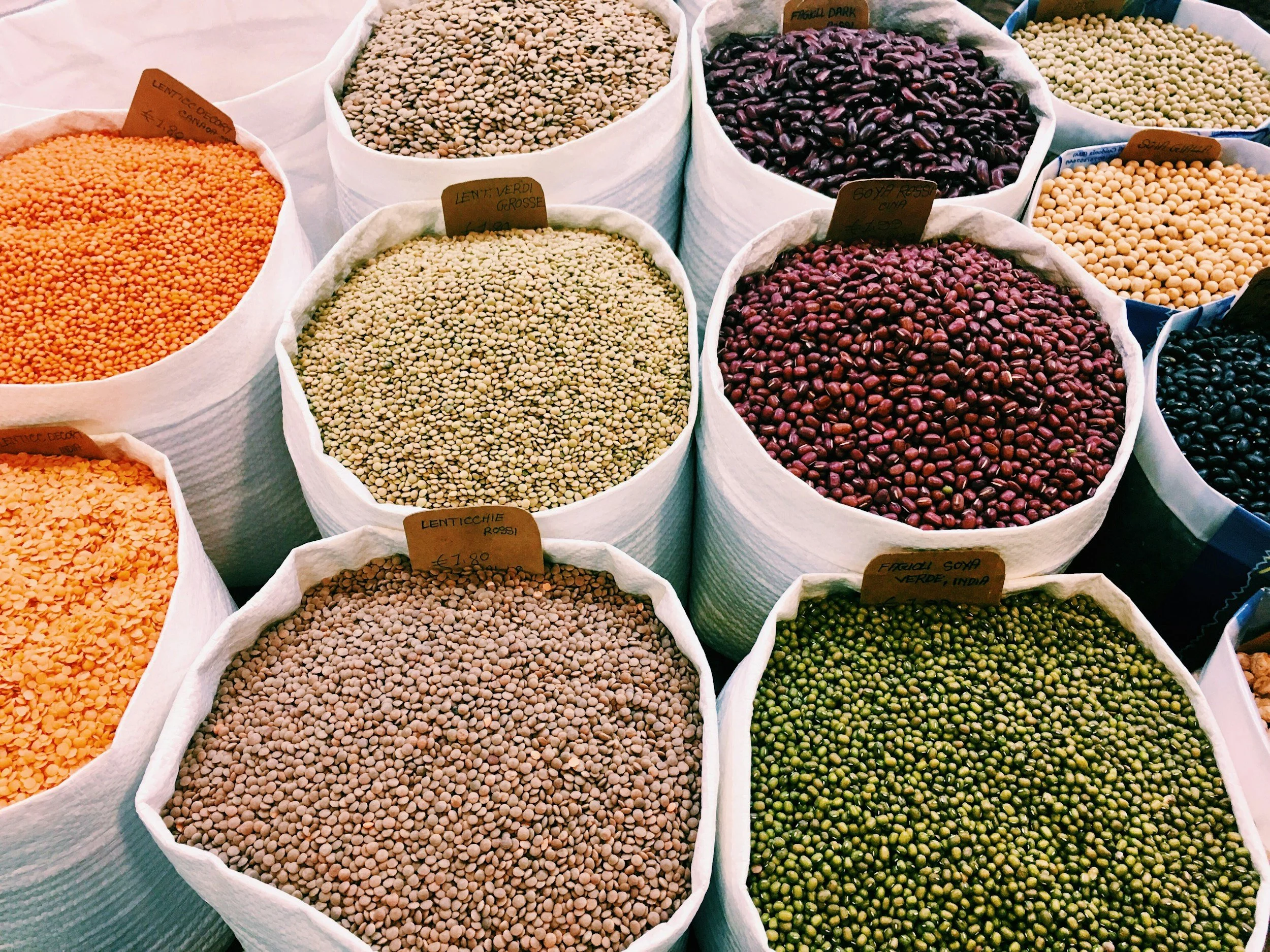
Your body needs both types of fiber, and it's generally best to get as much of it as you can from food. Some great sources of soluble fiber include oats, lentils, peas and beans, citrus fruits, apples, and bananas. On the other side, you can find insoluble fiber in whole grains, leafy greens like kale and spinach, raspberries, broccoli, and quinoa. Leave the peel on your fruits and veggies for an extra boost!
If you're looking to try out a fiber supplement, Cambridge Naturals has you covered! We stock a number of different products to help you out. One of the most common options is psyllium husk (pronounced silly-um), which you'll find in both our Supplements shelves as well as our fabulous Bulk section. Psyllium husk comes from the seeds of plantago ovata, a close relative of the Plantain leaf (plantago major) that we sell in the bulk section. (It's also a very common and easily-recognizable weed!) On a culinary note, psyllium husk has a secret identity as the hero of gluten-free baked goods: one of my friends and a CN regular swears by Katarina Cermelj's recipes.
If psyllium isn't your thing, we also stock fiber from acacia (a tree native to Africa), and inulin. Inulin (pronounced in-yuh-lin), is a common type of soluble fiber. It's named after the plant elecampane (inula helenium), from which it was first discovered by German chemist Valentin Rose in 1904. It can also be sourced from agave, Jerusalem artichoke (also called sunchoke), or chicory root.
With all the hype about fiber, you may be wondering if it's possible to overdo it. Unfortunately, it is: the result will likely be adverse gastrointestinal effects such as constipation and flatulence (farting). Additionally, some folks should be careful with taking fiber supplements, as they may exacerbate conditions like irritable bowel syndrome and Crohn's Disease. Check with your medical practitioner if you're concerned.
On the whole, fiber is one of the most positive trends to hit the supplements industry in recent years, and I for one am excited to see more folks getting interested in it. Check out our online store or stop by in person at our Porter Square shop to chat with a team member about it!