
The Naturalist Blog
*
The Naturalist Blog *
Making the case for wetshaving vs. conventional shaving!
his post was written by Zach, customer service specialist and resident shaving expert! He’s been actively working to improve our Men’s section, bringing in the best natural and effective bodycare products out there!
In my previous post on shaving naturally I mentioned ‘wetshaving’ as a method of shaving that has been gaining a following in recent years amongst those looking for a better grooming experience, to lessen their impact on the environment, and to save money in the process. What follows is a brief explanation of some of the tools and methods involved.
his post was written by Zach, customer service specialist and resident shaving expert! He’s been actively working to improve our Men’s section, bringing in the best natural and effective bodycare products out there!
In my previous post on shaving naturally I mentioned ‘wetshaving’ as a method of shaving that has been gaining a following in recent years amongst those looking for a better grooming experience, to lessen their impact on the environment, and to save money in the process. What follows is a brief explanation of some of the tools and methods involved.
Wetshaving refers to a style of shaving that uses some combination of the following tools and products in conjunction with particular techniques discussed below. The tools used are: double edged safety razor or straight razor, shaving brush, traditional shaving cream or soap, shaving oil, styptic, and aftershave. Up until the invention of disposable cartridge razors, wetshaving methods, products, and techniques were the world standard. And although many advocate using wetshaving products like a shaving brush, shaving oil, or a styptic for the best results, simply by altering technique one can improve the quality of the shaving experience.
Wetshaving vs. Conventional Shaving & Wetshaving Basics
In contrast to the ‘quick’ process of shaving with a disposable cartridge razor like the Gillette Mach 3 or Fusion Proglide, wetshaving is a process of deliberate actions that requires more attention but gives a substantially closer shave and with proper technique, less irritation.
When using a safety razor the entire razor is solid with no pivoting head and there is no ‘bumper guard’, meaning that the blade is in direct contact with the skin and that it is up to the user to maintain a proper blade angle and proper razor pressure. This is vital. With disposable cartridge razors the razor head is designed to pivot so that the user doesn’t have to adjust the blades’ angle against the skin and they are designed with a ‘bumper’ so that the user doesn’t need to control the pressure of the razor against the skin. This is helpful in that the user doesn’t have to exert much control over the razor, however this ‘one size fits all’ approach leaves many with unsatisfactory results.
In general, most wetshave enthusiasts recommend a ‘30 degree’ blade angle for a nick-free, friction-free shave. The easiest way to get this angle is to hold the very top of the razor against the skin and to gradually lower the razor until the blade just touches the skin and shaving strokes are comfortable. As far as pressure is concerned, with a safety razor the user need not apply any pressure early on in their wetshaving career as the weight of the razor will be plenty to give a good shave. As you become more comfortable with the safety razor, you can experiment with increased pressure. New users often find that short, even strokes provide the best shave as they become accustomed to using a safety razor.
That being said, this combination of light-to-no pressure and good ‘blade angle’ is a goal and not a rule. Each persons body, tools, and techniques are different and require a period of experimentation and accustomization. For a more detailed tutorial on wetshaving with pictures, see this link or search Google for “wetshaving tutorial.”
Wetshaving Method/Procedures
This is not written in stone, it is just what I have personally found works best for me. Many wetshave enthusiasts advocate a similar procedure, but be open to trying different things and find what works best for you. This is an adapted form of the ‘method shaving’ technique which features three passes of the razor (with the grain, perpendicular to the grain, and against the grain.) One of the phrases commonly used by wetshave enthusiasts to describe the process is: ‘Wetshaving is a process of hair reduction, not removal.’
Prep
Using a shaving brush and shaving cream/soap, work up a good lather in a bowl. The lather should be thick but not ‘dry’, meaning that it should be almost the consistency of conventional shaving cream and should be plenty slick when dabbed on the back of the hand. This is where the shaving brush can make a huge difference: the many bristles in a shaving brush create a lather that is thicker and denser than almost any conventional shaving cream or gel can provide.
How to create lather with shaving brush and shaving cream/soap:
Run shaving brush under water and saturate well. Shake out excess once or twice leaving the brush still fairly wet.
If using shaving cream or gel, apply a nickel-to-quarter sized dollop in a bowl and using your shaving brush, ‘whip’ in circles until desired lather is reached.
If using shaving soap, rub bristle tips of brush against shaving soap until it is starting to work up a slight lather on its own and then ‘whip’ the brush in a bowl until desired lather is reached.
Wetshaving Procedure:
First Pass (with the grain)
- Splash cold water on face
- Apply shaving oil (nickel sized amount)
- Splash cold water on Face
- Apply shaving cream/soap with shaving brush or hands
- Rinse face with cold water
- Pat dry (don’t rub!)
Second Pass (perpendicular to the grain)
- Splash water on face
- Apply shaving oil (nickel sized amount)
- Splash water on Face
- Apply shaving cream/soap with shaving brush or hands
- Rinse face with water
- Pat dry (don’t rub!)
Third Pass (against the grain, skip if skin is too sensitive)
- Splash cold water on face
- Apply shaving oil(nickel sized amount)
- Splash cold water on face
- Apply shaving cream/soap with shaving brush or hands
- Rinse face with cold water
- Pat dry (don’t rub!)
- Post Shave Care
- Splash cold water on face
- Evenly apply styptic (witch hazel or alum)
- Clean shaving tools (razor, brush, and bowl)
- Rinse face with cold water
- Pat dry (don’t rub!)
- Apply aftershave balm or tonic
Cambridge Naturals is proud to offer a selection of wetshaving products including Merkur safety razors, Vie-Long natural and ethical horse hair shaving brushes, as well as local, artisanal, and imported shaving oils, creams, soaps and aftershaves. Please call the store at (617) 492-4452 for specific product inquires.
Glazed Red Pepper-Fennel Almonds
This delicious recipe was passed along to us by Louise Rasmussen, the incredible cook at Wallowa Llamas in Eastern Oregon. Not only are these almonds incredibly addictive, but they provide a great, healthy energy boost whether you’re hiking the rocky slopes of Eastern Oregon or trekking through the snow to catch the T. We carry most of these ingredients at the store. If you’re avoiding sugar, you can substitute any great, local raw honey or maple sugar.
This delicious recipe was passed along to us by Louise Rasmussen, the incredible cook at Wallowa Llamas in Eastern Oregon. Not only are these almonds incredibly addictive, but they provide a great, healthy energy boost whether you’re hiking the rocky slopes of Eastern Oregon or trekking through the snow to catch the T. We carry most of these ingredients at the store. If you’re avoiding sugar, you can substitute any great, local raw honey or maple sugar.
Ingredients:
1/4 c. sugar (or maple sugar, honey)
2-1/2 T fennel seed
4-t-red pepper flakes
4-t salt
4-c whole raw almonds
1/4 c. hot water
Instructions:
Preheat oven to 325
Line a baking sheet with foil and spray with oil
Combine all ingredients except almonds and stir to dissolve and blend
Add almonds and coat them
Spread in one layer on cooking sheet
bake for 22 minutes stirring 2 or 3 times.
Cool for about 10 minutes then remove from foil
Store in an air tight container and enjoy!
Antibiotic Resistance – and What to Do About It?
How do bacteria manage to overcome antibiotics? And, will herbs rather than pharmaceuticals ultimately help us more?
By Rosalind Michahelles
Penicillin famously killed off some staphylococcus aureus in a petri dish in the lab of Alexander Fleming in the late ‘20’s and by the time we entered WWII, it was available for treating our war wounded. Civilians soon followed and I happened to be an early beneficiary in May of 1947, hospitalized for earache as an infant. The first semi-synthetic antibiotic, methicillin, appeared in 1960. It took only four years for the first resistant bacteria to be identified: methicillin resistant staphylococcus aureas, or MRSA. MRSA and other antibiotic resistant bacteria, like clostridium difficile, have become a scourge not just in hospitals but also occasionally in the population at large.

How do bacteria manage to overcome antibiotics? And, will herbs rather than pharmaceuticals ultimately help us more?
By Rosalind Michahelles
Penicillin famously killed off some staphylococcus aureus in a petri dish in the lab of Alexander Fleming in the late ‘20’s and by the time we entered WWII, it was available for treating our war wounded. Civilians soon followed and I happened to be an early beneficiary in May of 1947, hospitalized for earache as an infant. The first semi-synthetic antibiotic, methicillin, appeared in 1960. It took only four years for the first resistant bacteria to be identified: methicillin resistant staphylococcus aureas, or MRSA. MRSA and other antibiotic resistant bacteria, like clostridium difficile, have become a scourge not just in hospitals but also occasionally in the population at large.
Jessica Snyder Sachs in her book Good Germs, Bad Germs: Health and Survival in a Bacterial World, starts her prologue with the story of a healthy, athletic teenage boy who gets what seems to be flu and is dead within a couple of days – from MRSA. There are such cases. She goes on to describe the history and development of antibiotics and then how the bacteria manage to defend themselves. When you think about it, it makes sense that they should be equipped to do so because, after all, they have been around a long time and have had to adapt to many situations and many hosts – like us – who offer many kinds of challenge.
Some of the ways bacteria have been observed protecting themselves from antibiotics are:
• Hiding “their surface proteins from the immune system inside a capsule made of polysaccharides;”
• Pumping the antibiotic out of the cell faster than it can get in, a system dubbed the efflux pump;
• Producing proteins that chemically render the antibiotic impotent; and
• Self-mutating so as to prevent antibiotics from binding to target enzymes or targets within the ribosome.
To be effective bacteria must respond en masse and they do this by using “a chemical language known as quorum sensing…to count their numbers, develop a critical mass, and then change their behavior in unison to carry out their task.” Beyond their inborn ability to protect themselves, they apparently also have the ability to communicate drug resistance once they have developed it – and not just to their own kind. They can do this across species, e.g., from enterococcus to staphylococcus. Their known methods are:
• Bacterial ‘sex’ via plasmids transmitted from bacterium to bacterium to “teach” antibiotic resistance;
• Transduction or “gene ferrying” from one bacterium to another to confer resistance;
• Transformation, during which the ability to encapsulate is transferred from bacterium to bacterium.
In short, “bacteria have a plethora of ways to pick up new traits. They can scavenge genes, swap them through conjugation …have them spliced into their chromosomes by bacteria-hopping phages, [or] …through the…so-called jumping genes, or transposons.”
We have been profligate with antibiotics and the result is that bacteria – even soil bacteria – show resistance to many antibiotics. Doctors have prescribed antibiotics prophylactically or inappropriately (e.g., against a virus), patients have wasted medicines by not completing their prescribed course, and farmers have dosed livestock in order to spur growth and avoid illness. Furthermore soaps and other cleaning agents have added triclosan, which can “trigger multi-drug resistance in Escherichia-coli (e-coli), salmonella” and others.
GMO’s (genetically modified organisms), so controversial in food may however find more public acceptance in medicines, pain being the persuasive motivator that it is. You may not want to eat a genetically modified tomato, but, if suffering from ulcerative colitis, would you consider a genetically modified probiotic? Ten years ago a Dutch farmer took the leap and followed a course of probiotics (lactococcis lactis) with a human gene spliced into it, a gene for the production of a specific calmative of the immune system because Crohn’s disease is an autoimmune problem in which the immune system attacks the walls of the intestines. This sort of development may interest the pharmaceutical industry which has been finding the search for effective antibiotics less and less profitable.
Definitions: Antibiotics are bacteria employed to kill other bacteria. Probiotics are beneficial bacteria, usually packaged in capsules. Prebiotics come in food that contains beneficial bacteria, e.g., yogurt with live cultures in it. Pre- and pro-biotics are intended to crowd out harmful bacteria, especially after a course of antibiotics. CHECK THIS, especially prebiotics.
As we aren’t defeating harmful bacteria through our own efforts, hope comes from working with nature rather than trying to outsmart her. Stephen Harrod Buhner’s useful and inspiring book, Herbal Antibiotics: Natural Alternatives for Treating Drug-resistant Bacteria, provides such hope. As the author says, “…bacteria are not our enemies…they are our ancestors…”
Buhner is a master herbalist sprung from a family of doctors. He writes comfortably and cogently about medical science, traditional herbalism, and phytotherapy — the use of plants for healing. In chapter 2 he gives what he recommends for cases of MRSA, clostridium difficile, Streptococcus pyrogenes (strep throat), Eschericia coli (e.coli), salmonella, etc. His recommendations are specific as to form and dose and length of treatment so a reader is able to administer to himself, once the problem has been properly diagnosed.
The central sections of the book are given over to three kinds of herbs: those that act systemically, i.e., reaching all parts of the body, and those that act locally in the gastro-intestinal tract or on the skin or in a particular organ, and lastly those he calls the synergists, which “increase the activity of other plants” and “stimulate immune responses to disease and, as well, the body’s own highly elegant repair mechanisms.” (Buhner, pp. 211 & 208) Western medicine has isolated active ingredients from plants; Buhner instead proposes using the plant itself since it evolved to operate efficiently as a whole. However, in recommending herbs he does not eschew Western medicines. For example, he cites the effectiveness of thyme in boosting tetracycline used against MRSA. The “effectiveness threshold” of the antibiotic went from 4.0 to 0.12 mg/L, meaning that a great deal less tetracycline was needed when coupled with thyme.
Buhner’s position is plausible and encouraging. His book is the one I recommend highest in the list below. He summarizes the ways in which bacteria “outwit” antibiotics and argues against what he calls the reductionist approach of Western medicine, while providing concrete information about alternatives in the plant world. The last sections of the book tells those with opportunity and interest how they can grow these herbs themselves. Good luck to you, if you take up that challenge!
Bibliography
The Antibiotic Paradox, Stuart B. Levy, Perseus, 2002 (2nd ed.)
Boost Your Health with Bacteria, Fred Pescatore & Karolyn A. Gazella, Active Interest Media, 2009
Good Germs, Bad Germs: Health and Survival in a Bacterial World, Jessica Snyder Sachs, Hill & Wang, 2007
Herbal Antibiotics: Natural Alternatives for Treating Drug-resistant Bacteria, Stephen Harrod Buhner, Storey Publishing, 2013, (2nd ed.)
Revenge of the Microbes: How Bacterial Resistance is Undermining the Antibiotic Miracle, Abigail A. Salyers & Dixie D. Whitt, ASM Press, 2005.
Rosalind Michahelles is a Certified Holistic Health Counselor in Cambridge. For questions about this essay or related issues please call 617-491-3239 or visit www.nutrition-matters.info
DIY Sugar Lip Scrub
I’m not sure about you, but my lips have it rough in wintertime—pun intended. They crack, they peel, and no matter how much lip balm I use they still end up raw and chapped by the end of the day. Not the most attractive look, and it certainly doesn’t feel that great either. For dry skin in winter time, I always use a salt or sugar scrub in the shower—so I thought, why not for lips too? A little exfoliation goes a long way towards sloughing off that dry skin and keeping your lips soft and moisturized. This recipe is easy to make at home with a few ingredients, many of which we stock at Cambridge Naturals.
You’ll need:
¼ cup granulated raw cane sugar
2 tsp coconut oil
5-6 drops Jojoba or Argan oil
3 drops vitamin E Oil
2-3 drops of your favorite essential oil (I like lavender or peppermint)
Mix ingredients together in a small bowl until sugar is fully coated by the oil. There should be a little residual oil at the bottom of the bowl—add more sugar or oil as needed. Store in small airtight glass container; it should last at least 2 months.
To use:
2-3 times per week. wet lips with a little water. Take a pinch of the sugar scrub and massage onto lips with fingers for 30 seconds. Wipe off with a warm washcloth and apply your favorite lip balm.
Taking Care of Pets!
By Cailla, Customer Service Specialist and Mama of Rico
I became a Mom this summer, a proud Mama of an 80-pound stray Pit Bull mix whom my boyfriend and I affectionately named Rico. Estimated to be about 2-3 years of age, Rico is in his prime teenage years full of endless energy, a tinge of mischief, and so much LOVE.
Not having been a dog owner since I was a child, I spent last spring reading up on animal diets, healthy supplements, local obedience classes, and the newest exciting toys so I could be as prepared as possible. Of course, most of this went out the window as soon as we picked him up from the pound as he came with his own personality, wants, and needs (yes Cailla, it’s not all about you).
What I took away from all my research was the same philosophy I have adopted for myself: The importance of a balanced diet of clean, wholesome foods and a limit of chemicals and synthetic materials as much as possible.
By Cailla, Customer Service Specialist and Mama of Rico
I became a Mom this summer, a proud Mama of an 80-pound stray Pit Bull mix whom my boyfriend and I affectionately named Rico. Estimated to be about 2-3 years of age, Rico is in his prime teenage years full of endless energy, a tinge of mischief, and so much LOVE.

Not having been a dog owner since I was a child, I spent last spring reading up on animal diets, healthy supplements, local obedience classes, and the newest exciting toys so I could be as prepared as possible. Of course, most of this went out the window as soon as we picked him up from the pound as he came with his own personality, wants, and needs (yes Cailla, it’s not all about you).
What I took away from all my research was the same philosophy I have adopted for myself: The importance of a balanced diet of clean, wholesome foods and a limit of chemicals and synthetic materials as much as possible.
The health conscious and eco-friendly consumer market is enormous and growing faster than ever. Fortunately, the same holds true for natural pet products. A recent search on Google came up with approximately 123,000,000 results!
Here at Cambridge Naturals we’ve curated a small selection of treats, vitamins & supplements, toys, and hygiene products that we felt stood out among the rest and surpassed our standards of good clean ingredients, made with the upmost quality and care.
These are a few that we have tried, been happy with, stock at the store and are Rico approved!

• One local dog treat line that is a consistent customer favorite is Chomper’s Chews by Tricky Triskuts. Made in New Hampshire with gluten-free, human grade ingredients such as sweet potatoes, rice, carrots, beans, and protein, these baked treats are specifically made with the canine digestive tract in mind. You won’t find fillers, corn, or other chemicals in the ingredients list, just wholesome food full of high quality fats, protein, and fiber.

• Another popular line of treats is Zuke’s. Owned and run by pet aficionados, this small company offers nutritious snacks for both cats and dogs. Being conscious of the fact that Rico’s breed is susceptible to hip dysplasia, the Hip & Joint treats, with added glucosamine and chondroitin, is a staple in our house (they make one for cats too). Zuke’s offers grain-free options and their flavors range from lamb, salmon, beef, to peanut butter.
• For the active dog, I recommend Power Bones, made with ingredients that provide an extra boost of sustained energy, perfect for long hikes in the woods.
• Another favorite of ours are the Mini Naturals, small blueberry-sized treats that are packed with antioxidants. They are the perfect size for obedience training while still maintaining a healthy calorie intake.
Within a weeks’ time, we quickly learned that Rico is a cuddler, a socialite, a drooler, and a chewer. Oh yes, the infamous chewer. Oh Joy!
We recently brought a line of pet toys, into Cambridge Naturals, made by a small company in Wisconsin called Honest Pet Products. Made from 100% hemp canvas and sheep’s wool, these dog and cat toys are durable, eco-friendly, and support some great causes.
• The Eco Fetcher is our favorite, strong enough for Rico’s big mouth and endless strength, but nontoxic and washable so I feel good about it. And thus far, to my glee, he has opted to nibble on this rather than our record and book collection!
Coming off the street and into the shelter, Rico had quite a bit of dandruff when we took him home. With the guidance of our vet, we started to supplement his diet with omega fatty acids. His dandruff disappeared quickly and his coat has improved tremendously (not to mention the other benefits they provide).
• Another supplement we use is Green Foods’ Barley Dog. Made by the same company that produces Green Magma for us humans, this product is 100% natural barley juice powder. We decided to use this when Rico developed a love for sneaking off to my neighbor’s garden and having a feast whenever my back was turned. Not having to worry about the pesticides and chemical fertilizers as well as my carpet and friendly neighbor relationship, we sprinkle this on his food to ensure he’s getting the sufficient vitamins and minerals he may be lacking.
Our next adventure will be in dental hygiene as lately his breath could peel paint off the wall. Brushing has been our first line of defense, but it’s a constant battle.
• I think we will try some of the Breath-less Toothpaste Chewables by Ark Naturals or their Breath-less Plaque Zapper Powder that you can easily mix into your pet’s water bowl. Highly recommended by my coworker who uses it for his cats, this formula is odorless, tasteless, and helps fight plaque buildup, bad breath, and dental decay.
In addition to the products mentioned above, our pet section at Cambridge Naturals provides multivitamins, anxiety/stress support, digestive enzymes, and skin salves. We also offer a small section of wet and dry food, catnip in our bulk herb section, and shampoo for that lil’ stinky of yours.

I can’t stop Rico from eating “who knows what” off the sidewalk, nor from rolling around in something else just as vile found along the bike path, but I can ensure his nutritional needs are met and he’s provided with safe nontoxic toys, baths, and bedding. There are so many options today in the land of pet ownership and really what you choose should resonate with you and your pets’ needs.
I encourage you to try something new, so that kitty cat purr is endless and that doggy tail keeps wagging until everything in your house is knocked onto the floor!
Shaving Naturally for Healthy Skin (Part 1)
This post is the first in a series on men’s bodycare by our Customer Service Specialist, Zach.
For many people shaving is a frustrating chore that results in nicked cheeks and legs, irritated skin, and thinner wallets from all those expensive blades. Not to mention all of the chemical exposure from conventional creams, gels, and balms. An alternative shaving technique called wetshaving has been gaining a following in recent years and for good reason: most people have drastically better shaving experiences as well as results using wetshaving methods and products. What’s more, with double-edged razor blades costing on average under $1.00 each and properly cared for safety razors and shaving brushes lasting decades, the savings add up quick. And many people experience far less irritation simply by choosing shaving products free of harsh synthetics.
This post is the first in a series on men’s bodycare by our Customer Service Specialist, Zach.
For many people shaving is a frustrating chore that results in nicked cheeks and legs, irritated skin, and thinner wallets from all those expensive blades. Not to mention all of the chemical exposure from conventional creams, gels, and balms. An alternative shaving technique called wetshaving has been gaining a following in recent years and for good reason: most people have drastically better shaving experiences as well as results using wetshaving methods and products. What’s more, with double-edged razor blades costing on average under $1.00 each and properly cared for safety razors and shaving brushes lasting decades, the savings add up quick. And many people experience far less irritation simply by choosing shaving products free of harsh synthetics.
Making the conscious choice to rid your environment of chemicals and synthetics can have a dramatic positive effect in one’s daily life and shaving is no different. What we put on our bodies is as important as what we put in our bodies.
Cambridge Naturals is proud to offer a wide selection of natural shaving products for both men and women including natural and artisanal shaving creams, soaps, and oils, aftershave balms and tonics, as well as ethically made shaving brushes and double-edged safety razors. See below for a partial list of shaving products available at Cambridge Naturals (not complete list, please call 617-492-4452 for specific product inquires.)
Aubrey ‘Men’s Stock’ aftershaves • Alba Botanica shaving creams • Bulldog shaving creams, gels, and aftershaves • Burts Bees aftershaves • Dr. Bronner shaving gels • Everyone Soap shaving soaps • Fieldworks Supply Company shaving soaps, gels, and aftershaves • GoToob travel liquid containers • Herban Cowboy shaving soaps, creams, and aftershaves • John Masters shaving soaps, creams, and aftershaves • Kiss My Face shavings creams • Lagona shaving creams and aftershaves • Leap Organics shaving creams, oils, and aftershaves • Merkur safety razors • Perma Brands shaving accessories • Preserve razor handles and cartridge razors • Provence Sante shaving soaps • Radius razor cases • Somersets shaving oils • Vie-Long shaving brushes
Book Review: Good Calories, Bad Calories & Why We Get Fat
Good Calories, Bad Calories & Why We Get Fat and What To Do About It
By Gary Taubes, Correspondent for Science magazine
Reviewed by Rosalind Michahelles
July 26, 2013
Gary Taubes, science writer for Science magazine and other publications, including the New York Times Magazine, has written two books that cover the same subject.
The first one, Good Calories, Bad Calories is more compendious and more technical in following the relevant scientific research into what makes people fat. After enough readers had asked Taubes for a simpler, more condensed version for equally motivated but less scientifically trained readers he wrote Why We Get Fat.
Good Calories, Bad Calories & Why We Get Fat and What To Do About It
By Gary Taubes, Correspondent for Science magazine
Reviewed by Rosalind Michahelles
July 26, 2013
Gary Taubes, science writer for Science magazine and other publications, including the New York Times Magazine, has written two books that cover the same subject.
The first one, Good Calories, Bad Calories is more compendious and more technical in following the relevant scientific research into what makes people fat. After enough readers had asked Taubes for a simpler, more condensed version for equally motivated but less scientifically trained readers he wrote Why We Get Fat.

The author was surprised by some of what he uncovered in his search. The biggest surprise was that some calories are more fattening than other calories – surprising because we have been hearing statements like “a calorie is a calorie” as if all were treated equally in the body. Taubes explains clearly how carbohydrates are “uniquely fattening.” Why? Because of insulin, that enzyme made famous by diabetes. Among insulin’s several roles are those that contribute to adiposity: the regulation of blood sugar and the storage of fat. He quotes one Harvard professor this way:
Carbohydrates → insulin → fat storage
What is a carbohydrate? Before going further, it’s important to remember what a carbohydrate is. Scientists call them saccharides because they are essentially sugars. These sugars in our diets come mostly from plants in the form of sugar, starch, and fiber. Milk also provides sugar in the form of lactose. The universe of ‘carbs’ therefore includes more than starchy vegetables (potatoes) and grains (wheat, rice). It also includes our everyday fruit and vegetables. An apple, though, is only about 10-12% carbohydrate by weight, most of it being water. Bread, on the other hand, is nearly 50% carbohydrate by weight.
Now back to the all-important insulin, which the pancreas produces primarily in response to carbohydrates. “The more carbohydrates we eat, and the easier they are to digest and the sweeter they are, the more insulin we will secrete, meaning that the level of it in our bloodstream is greater and so is the fat we retain in our fat cells.” (WWGF, p.10) The kicker in this situation is that the more insulin in our veins, the hungrier we feel and the more likely we then are to go back for a second piece of cake, or to want lunch early, or to suffer a snack attack. Just as blood sugar requires insulin, so does insulin require blood sugar. Without it, the insulin signals hunger in its search for more glucose.

Taubes makes much of the fact that some people – probably for reasons of genetics – tend to fatten more easily than others, even if they eat the same meals. Once fatter, they must eat more to maintain energy levels. They eat because they are fat; they are not fat because they “over” eat. The way for them to lose weight is to provoke an insulin deficiency and the way to do that is to eliminate carbohydrates from the diet. Consider the Eskimos – caribou, seal, cold-water fish, blubber. That diet, devoid of fruit and vegetables, consisted of about 25% protein and 75% fat. Before the arrival of Western food, Eskimos did not apparently suffer from either obesity or diabetes. Perhaps you don’t see yourself as an Eskimo; perhaps a DuPont executive seems closer to home. In the 1940s twenty overweight DuPont employees went on a diet averaging 3,000 calories a day with no more than 80 calories of carbohydrate. They lost an average of two pounds a week. (WWGF, p. 157)
Currently, standard advice for weight loss in the U.S. is (a) to eat less and (b) to exercise. Taubes’s research maintains that, healthy though exercise may be, it won’t lead to weight loss but rather to increased hunger and even possibly weight gain between exertions. “The belief in physical activity as a method of weight control is relatively new…and it has long been contradicted by the evidence.” (GCBC, p.259) As for eating less, starvation diets lead to lower energy levels, stress-related fat storage, and poor morale. They tend not to work.
What does, however, work for weight loss, according to Taubes, is an insulin deficiency because “when insulin levels go up, we store fat. When they come down, we mobilize the fat and use it for fuel.” By now, you may well be thinking of Dr. Atkins or the trendier paleo-diet, both of which severely restrict carbohydrates. A diet with no or almost no carbohydrates is called a ketogenic diet in which “the liver increases it synthesis of molecules called ketone bodies, and these supply the necessary fuel for the brain and the nervous system.” (GCBC, p.319) (N.B. Ketosis is healthy and happens every night when we’re asleep and fasting; keto-acidosis, by contrast, poses a health crisis for diabetics.)
If you were to follow such a diet and strictly reduce carbohydrates, what would you replace them with? As protein is not to be more than a quarter or maybe a third of the diet, that means, as with the Eskimos, the rest will be fat — and what will your doctor say to that?! We have been in low-fat mode for decades now (albeit with questionable results) but that being the prevailing belief, it is very hard to eat the cream cheese and skip the bagel, instead of the other way around. However, here are some sobering observations. One is that the serum fats that correlate most strongly with heart disease are triglycerides – which are made in the liver from dietary carbohydrates. Oh, yes, and do you want your HDL cholesterol to go up, as the doctor recommends? Then reduce your carbohydrate intake as HDL goes up when carbs come down. “If you’re currently eating cereal, skim milk, and bananas and switch instead to eggs and bacon, your HDL cholesterol will go up, and your heart attack risk will go down.” (WWGF, pp. 187-8)
Besides making the case for weight loss and diabetic treatment by reducing carbohydrates, Taubes also reviews the case for similarly reducing the risk of both Alzheimer’s and cancer. Good Calories, Bad Calories dedicates all of chapter 13 to these issues. High insulin levels tend to produce amyloid proteins in the brain and they are implicated in Alzheimer’s (GCBC, p. 208). As for cancer, since “tumors will burn perhaps thirty times as much blood sugar as normal cells,” depriving them of glucose should have an inhibiting and salutary effect. (GCBC, p. 213).
Given the proposed change in diet, let us not forget about vitamins, especially vitamin C. If the meat and fish and eggs we eat come from free ranging animals, they will provide the vitamins at second hand, so to speak. The vitamin deficiency diseases that have bedeviled sections of the human population resulted from cereal-based diets – pellagra from northern Italian and southern U.S. populations primarily subsisting on corn, for instance.
Vitamin C, in turns out, must fight with sugar for entry into cells. “Glucose and vitamin C compete in the cellular uptake process…[but] glucose is greatly favored in the contest.” (GCBC, p325) Your choice – carbs or vitamin C?
Taubes’s two books are both very convincing in their conclusions. Although we can make allowances for individual differences, the accumulation of evidence presented here shows that:
• Dietary fat is not especially fattening;
• Carbohydrates, particularly refined sugar and starch, are more fattening;
• Carbohydrates provoke insulin;
• Insulin leads to fat storage, obesity, and diabetes, and perhaps dementia and cancer; and, furthermore,
• Carbohydrates increase hunger.
Whether you want to change your diet or not, these books fully reward the reading of them. You will be better informed about what you are eating and how it is affecting you.
Rosalind Michahelles is a Certified Holistic Health Counselor
in Cambridge. For questions about this essay or related issues please call 617-491-3239 or visit www.nutrition-matters.info
Health Article: Tart Cherries Relieve Osteoarthritis Pain
HIGHEST ANTI-INFLAMATORY CONTENT OF ANY FOOD
By Margie King, Health Coach
Tart Cherries Relieve Osteoarthritis Pain
If you are among the millions of Americans suffering from joint pain and arthritis, there’s good news about a favorite summer treat. According to research from Oregon Health & Science University, tart cherries help reduce the chronic inflammation that leads to pain.[1]
In fact, the Oregon researchers declared that tart cherries have the “highest anti-inflammatory content of any food” and can help osteoarthritis patients manage their condition.
HIGHEST ANTI-INFLAMATORY CONTENT OF ANY FOOD
By Margie King, Health Coach
Tart Cherries Relieve Osteoarthritis Pain
If you are among the millions of Americans suffering from joint pain and arthritis, there’s good news about a favorite summer treat. According to research from Oregon Health & Science University, tart cherries help reduce the chronic inflammation that leads to pain.[1]
In fact, the Oregon researchers declared that tart cherries have the “highest anti-inflammatory content of any food” and can help osteoarthritis patients manage their condition.
The study specifically dealt with tart cherries (e.g., Montmorency and Balaton) and not sweet cherries (e.g., Bing, Lambert, Rainier), although both varieties have healing benefits. Tart cherries are grown mostly in Michigan while the sweet varieties are found mostly in Washington, Oregon and Idaho.
Both types have traditionally been used to combat gout by reducing the body’s levels of uric acid. Tart cherries, however, have higher concentrations of phenolics and anthocyanins. These compounds have been specifically linked to high antioxidant capacity and reduced inflammation.
Read more here.
Summer salt scrub
Ahhh, summer. Beach weekends and mid-day picnics at the park. Perfect time to catch the rays and get that mega-dose of vitamin D our bodies so desperately crave all winter. Too much sun, however, can come at a cost and lead to peeling skin and dry patches. While sunscreen or a big floppy hat should be your first line of defense, what to do once the damage is done?
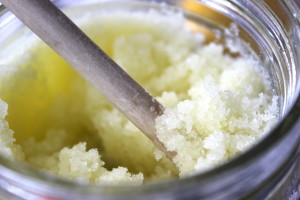
Photo credit: http://besskincare.com
Ahhh, summer. Beach weekends and mid-day picnics at the park. Perfect time to catch the rays and get that mega-dose of vitamin D our bodies so desperately crave all winter. Too much sun, however, can come at a cost and lead to peeling skin and dry patches. While sunscreen or a big floppy hat should be your first line of defense, what to do once the damage is done?
Well, first, apply copious amounts of aloe vera. We sell several great natural brands of 100% pure aloe gel– minus the creepy added fragrance and color dye (Yellow 5 and Blue 1 anyone?) of conventional brands.
Second, once the burn has faded, slough off that dead skin and leave your skin feeling clean and smooth, and freshly scented with a homemade salt scrub. So easy to make and can be a great gift for family and friends (hello, wedding season!)
Ingredients:
1 cup sea salt
1 cup almond or jojoba oil
20-30 drops of your favorite essential oil(s) (optional)
Dried lavender or rose buds (optional)
Mason jar or similar container
Instructions
1. Blend salt and your choice of oil in a mixing bowl.
2. Add the essential oil and lavender buds (optional). Stir and place mixture in a clean container and secure lid.
3. Use the scrub in the shower on damp skin, concentrating on rough areas and gently rinsing after use.
Book Review: Wheat Belly
By William Davis, MD (Rodale, 2011)
Reviewed by Rosalind Michahelles, Certified Holistic Health Counselor
Dr Davis has it in for wheat. He claims it provokes more insulin and does that faster than even table sugar. He and others are reporting disturbing news about that important hormone, insulin. Insulin is like an army’s quartermaster, making sure that the supplies (blood sugar) get to the right destination to be used for energy now or stored as fat for later. So one problem with wheat – bread, crackers, cake, cookies, and pasta, too – lies in its high glycemic load, even when not sweetened with added sugars.

By William Davis, MD (Rodale, 2011)
Reviewed by Rosalind Michahelles, Certified Holistic Health Counselor
Dr Davis has it in for wheat. He claims it provokes more insulin and does that faster than even table sugar. He and others are reporting disturbing news about that important hormone, insulin. Insulin is like an army’s quartermaster, making sure that the supplies (blood sugar) get to the right destination to be used for energy now or stored as fat for later. So one problem with wheat – bread, crackers, cake, cookies, and pasta, too – lies in its high glycemic load, even when not sweetened with added sugars.