
The Naturalist Blog
*
The Naturalist Blog *
Milk Thistle: Food for the Liver
By Steph Zabel
Herbalist, Ethnobotanist and Educator
This year I grew glorious Milk Thistle for the first time in my garden. With its sharp, prickly leaves it is not usually the first choice for gardeners, but for an herbalist, it is an exciting plant to grow. All summer long I observed as it spread out its milky-splotched leaves and unfurled its purple-flowers.
And now I have been rewarded with a harvest of fresh milk thistle seeds — the most prized and potent part of the plant. (Well, my favorite part, at least!)
By Steph Zabel
Herbalist, Ethnobotanist and Educator
This year I grew glorious Milk Thistle for the first time in my garden. With its sharp, prickly leaves it is not usually the first choice for gardeners, but for an herbalist, it is an exciting plant to grow. All summer long I observed as it spread out its milky-splotched leaves and unfurled its purple-flowers.
And now I have been rewarded with a harvest of fresh milk thistle seeds — the most prized and potent part of the plant. (Well, my favorite part, at least!)
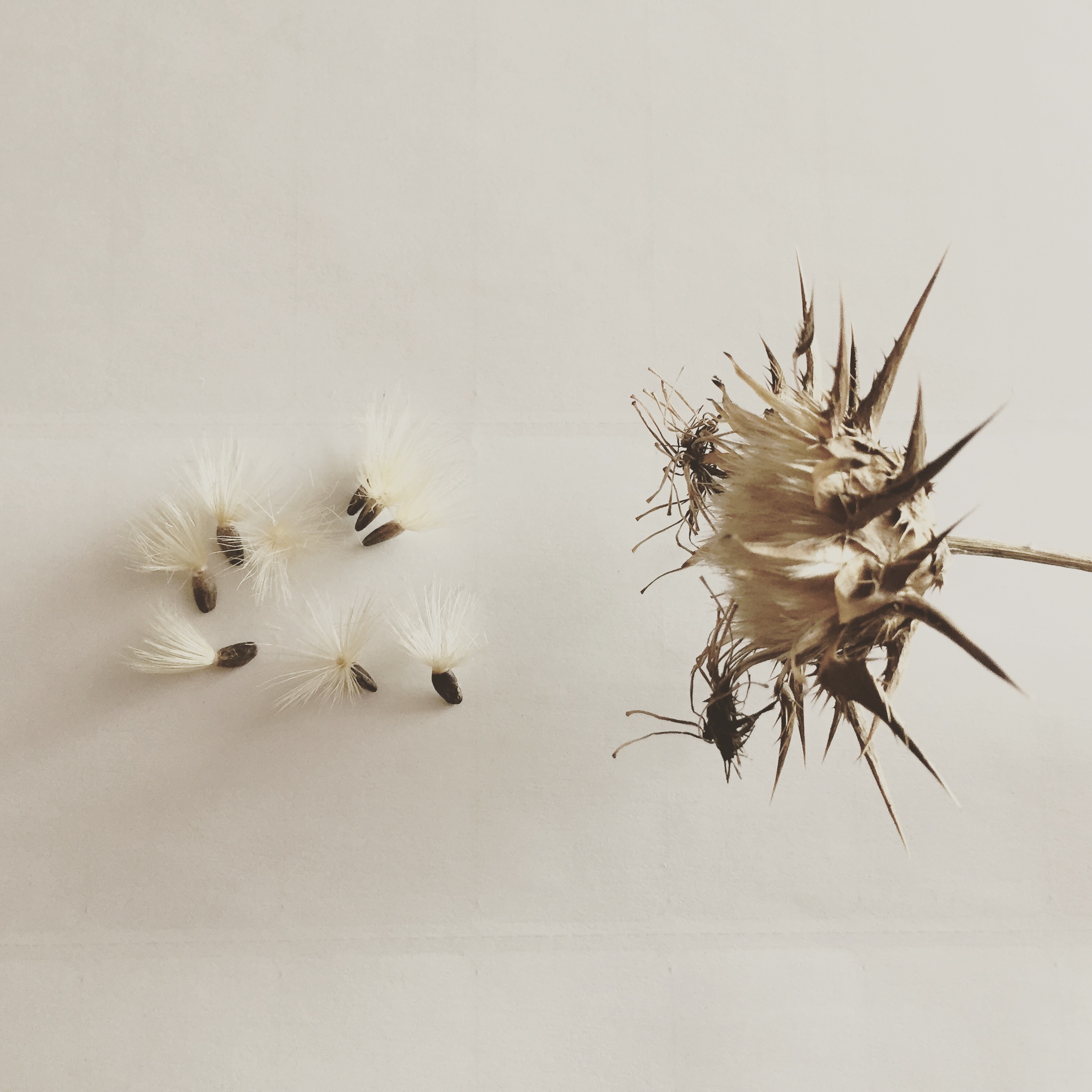

Milk thistle (Silybum marianum) is not widely known outside of the herbal world. And that’s a shame, because it is an incredibly healthful herb that can easily be incorporated into anyone’s daily routine. My favorite way to use milk thistle seeds is simply to grind them up and sprinkle them on anything and everything I’m eating. I keep a small jar of the freshly ground seeds on my kitchen table so that I remember to add them to my meals — they are equally great on breakfast eggs, lunchtime salads, or savory dishes at dinner.

So, why would you want to eat these unusual seeds?
Well, quite simply, milk thistle is one of our best plants for supporting overall liver health. The seeds impart a protective effect on the liver, and help to prevent the absorption of substances that are damaging. In a world filled with environmental toxins, chemicals, alcohol and drugs, milk thistle is very beneficial indeed.
It is a very practical herb to have on hand for any indulgent occasion… Too much rich food? Too much alcohol? Milk Thistle! Just eat some seeds (ideally before and) after to help keep your liver moving along happily.
With an affinity for the liver, milk thistle really is like a food, helping to build and rejuvenate this vital organ. By increasing protein synthesis, milk thistle’s effects also lead to the growth of healthy new liver cells. Herbalists of past and present have used the seeds for cirrhosis of the liver, hepatitis, alcohol damage, and for an overall congested or sluggish liver.
I hold a special place in my heart for this dear plant and its supportive effects. I have a family member with hepatitis who has taken milk thistle seeds regularly for the past several years. I am grateful to report that her liver is going strong, her blood tests are normal, and she is healthy and happy!
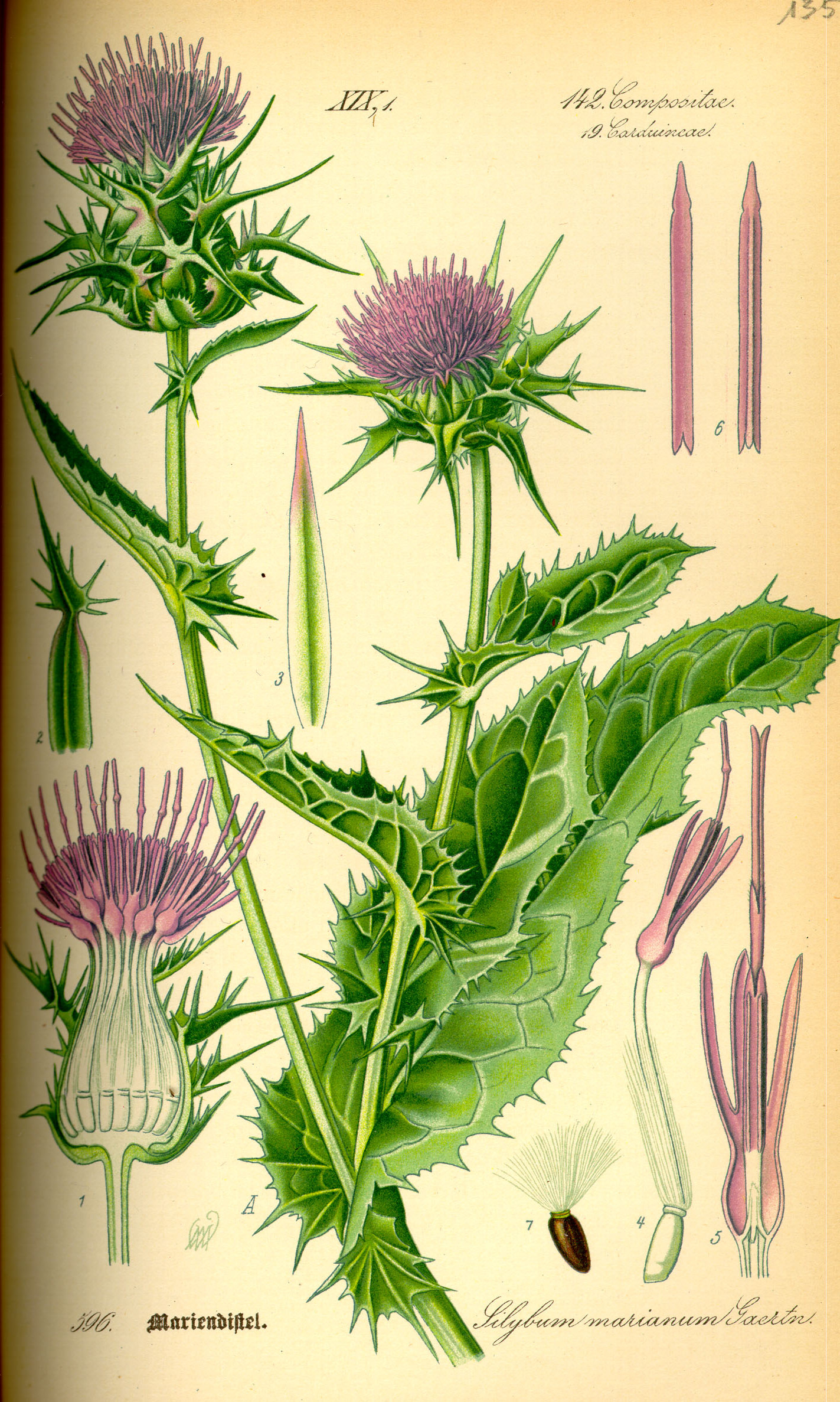
Milk thistle also contains wonderful anti-inflammatory properties; as such it is often used in inflamed skin conditions that correspond to liver stagnation. Furthermore, the seeds can improve the break-down and removal of fats from the system by stimulating bile production; this action also helps address constipation and keeps the body regular.
As a supportive ally for both the liver and the digestive system, milk thistle is truly a valuable addition to any home apothecary.
HOW TO USE:
Unlike most herbs, milk thistle seeds do not very extract well in water so don’t try to make a cup of tea out of them! Instead eat the fresh ground seeds, or get a good quality capsule. If using the seeds buy them whole and then grind them as needed (I use a coffee grinder to make them into a coarse powder). The seeds taste oily, sweet and bitter all at once — perhaps they are an acquired taste, but they are not unpleasant at all. Start with taking 1/2 to 1 tablespoon per day sprinkled on your food and see how it feels to you, adjusting the amount as you need.
If you like, you can also try mixing the ground seeds into honey, and take a spoonful of this mixture at a time.
Steph Zabel is an herbalist and educator based in Somerville, MA who helps urban dwellers connect with the plant world. She teaches herbal classes, is available for individual wellness consultations, and is also the founder of HERBSTALK, Boston’s community herbal conference. Learn more about her work at: www.flowerfolkherbs.com and www.herbstalk.org.
REFERENCES:
https://umm.edu/health/medical/altmed/herb/milk-thistle
http://whisperingearth.co.uk/2011/06/13/the-marvellous-milk-thistle/
https://www.botanical.com/botanical/mgmh/t/thistl11.html#mil
Wood, Matthew: The Book of Herbal Wisdom: Using Plants as Medicine
This blog post — Milk Thistle: Food for the Liver — is for general health information only. This blog post is not to be used as a substitute for medical advice, diagnosis or treatment of any health condition or problem. Users of this Web site should not rely on information provided on this Web site for their own health problems. Any questions regarding your own health should be addressed to your own physician or other healthcare provider.
Lemon Balm: The Gateway Herb / Melissa officinalis
By Steph Zabel
Herbalist, Ethnobotanist and Educator
Lemon Balm is a delightful and cheerful little plant. With uplifting, lemon-scented leaves and tiny sweet white flowers, it is a pleasant addition to any garden or kitchen apothecary. I have never found anyone who does not enjoy lemon balm tea, so I call it a “gateway herb.” Even the most wary newcomers to herbs fall in love with its scent and taste, and then become open to trying many more new and unusual herbs…!
Both bees and humans find this plant irresistibly attractive. In fact its Latin name Melissa refers to “bees” — these insects will flock to it whenever it is in bloom.
Lemon balm is originally from southern Europe but is now widely cultivated around the world. Like many mint family plants it is a very prolific grower. If you have limited garden space, you may want to place it in a container so that it does not take over the whole garden. (However, I don’t think that that would be such a terrible thing if it did happen...)
By Steph Zabel
Herbalist, Ethnobotanist and Educator
Lemon Balm is a delightful and cheerful little plant. With uplifting, lemon-scented leaves and tiny sweet white flowers, it is a pleasant addition to any garden or kitchen apothecary. I have never found anyone who does not enjoy lemon balm tea, so I call it a “gateway herb.” Even the most wary newcomers to herbs fall in love with its scent and taste, and then become open to trying many more new and unusual herbs…!
Both bees and humans find this plant irresistibly attractive. In fact its Latin name Melissa refers to “bees” — these insects will flock to it whenever it is in bloom.
Lemon balm is originally from southern Europe but is now widely cultivated around the world. Like many mint family plants it is a very prolific grower. If you have limited garden space, you may want to place it in a container so that it does not take over the whole garden. (However, I don’t think that that would be such a terrible thing if it did happen...)


For centuries this aromatic plant has been used to raise the spirits, comfort the heart, and banish depression and irritability. Its sweet, citrusy leaves yield a delicious tea that is equally good as a cold tea on a hot summer day, or as a warm tea on a cold winter day.
It was once believed that if taken regularly lemon balm would promote longevity — perhaps due in part to its calming effect on the central nervous system. Lemon balm is a wonderfully relaxing, and soothing herb, useful before bedtime to help fall into a peaceful sleep. It is also a fantastically supportive herb during times of stress and anxiety. Personally, I have found lemon balm to be a true “balm” whenever I have felt nervous or stressed about something. I once had a big event that involved public speaking and being filmed, which caused me to feel quite nervous. But, beforehand I took a few sips of my lemon balm cordial (recipe below) and within minutes my nerves quieted down, and the butterflies in my stomach disappeared. I was able to relax and just be myself. What a gift during anxious times!
Beyond its wonderful effect on the nerves, lemon balm contains anti-viral properties – this can prove useful for people who suffer from cold sore outbreaks, shingles, colds or flu. It’s definitely one I like to keep handy during the winter months not only for its ability to contain and weaken viruses, but also for its uplifting effect which is beneficial for mild depression and seasonal affective disorder.
Lemon balm is a very gentle herb that can be used by nearly anyone — children love it, stressed-out people love it, and anyone in the midst of wintertime loves it!
HOW TO USE:
To make tea of lemon balm use up to 1/2 Tblsp. of the dried herb per cup of hot water. Let that steep, covered, for 10-15 minutes.
If you have fresh lemon balm on hand an extremely delicious way to use it is to chop up a small handful of the aromatic leaves. Put these leaves in a small jar then cover them completely with local honey. Let this mixture steep for at least a week or two, and then use it as is (or strain out the herbs.) This is a delight in teas, on toast, or on top of desserts.
Finally, one of my favorite and most recommended ways to use lemon balm is below — gather your fresh lemon balm leaves now to make this cordial and you will be thanking your summer self all winter long!..


Lemon Balm Cordial
Harvest a large bunch of fresh and aromatic lemon balm stems. Look for stems that are healthy and vibrant looking. If they are in flower, that is OK, but if they have already finished flowering skip those stems. You are searching for lemon balm in its peak and at its most aromatic phase.
Strip the leaves from the stalks and chop them up as finely as possible. Place your fresh leaves in a glass jar of any size - I usually use a pint-sized or quart-sized jar. Fill the jar almost to the top with the lemon balm, leaving a little bit of room at the top.
Cover completely with brandy (any good tasting brandy will do). Stir to remove any air bubbles and make sure all the leaves are completely submerged. Then cap tightly and place a label on the jar with its contents and date.
Place the jar somewhere where you will see it so you can give it a shake every so often. Shaking helps the plant material from settling too much and makes sure that the brandy is touching (and extracting) as much surface area of the leaves as possible.
After 4-6 weeks strain out the lemon balm through a fine sieve (using cheesecloth is also a good idea). The resulting liquid should be aromatic and lemon-y. Measure this liquid. To this amount add 1/4 the amount of raw honey. (If you have 1 cup of lemon balm infused brandy, add 1/4 cup honey). Stir together well. Pour into a dark bottle. At this point I usually let the honey and brandy infuse together for another week or so, but if you have trouble waiting this long, go ahead and start using it!
Take this lemon balm cordial by the spoonful as a winter pick-me-up, or sip on it as an after dinner drink. It is divine!
Steph Zabel is an herbalist and educator based in Somerville, MA who helps urban dwellers connect with the plant world. She teaches herbal classes, is available for individual consultations, and is also the founder of HERBSTALK, a community herbal conference. Learn more about her work at: www.flowerfolkherbs.com and www.herbstalk.org.
References:
http://www.woodherbs.com/LemonBalm.html
https://umm.edu/health/medical/altmed/herb/lemon-balm
http://www.herbwisdom.com/herb-lemon-balm.html
http://www.botanical.com/botanical/mgmh/b/balm--02.html
This blog post — Lemon Balm: The Gateway Herb / Melissa officinalis — is for general health information only. This blog post is not to be used as a substitute for medical advice, diagnosis or treatment of any health condition or problem. Users of this Web site should not rely on information provided on this Web site for their own health problems. Any questions regarding your own health should be addressed to your own physician or other healthcare provider.
Sage: The Wise One / Salvia officinalis
By Steph Zabel
Herbalist, Ethnobotanist and Educator
Most of us know sage as a culinary herb — one that we grow in our gardens and use to flavor our dishes. For centuries sage has been valued as one of the best kitchen herbs and was traditionally cooked with rich, heavy foods. It is still a popular flavoring herb for meat dishes and stuffings. As an aromatic spice, it improves digestion, breaks down fats, relieves indigestion and nausea, and stimulates the gall bladder to produce more bile.
The plant originates in the Mediterranean — like many of our common culinary spices — and belongs to the Mint family of plants (a group that also holds many wonderful and aromatic plants such as basil, lavender, oregano, rosemary, thyme, peppermint, etc…)
Sage’s history goes far back in time: it was known to the ancient Greeks as an herb of immortality and to hold great healing properties. Its Latin name, Salvia, comes from the root “salvare” which translates as “to save” or “to cure.” There’s an old rhyme: “He that would live for aye should eat sage in May.” To our modern eyes sage is a humble garden herb, but for centuries healers have recognized this plant as one of the greatest herbal remedies. And for good reason…

Salvia officinalis has a deep affinity for the brain and nervous system and can be considered a tonic herb for both. It has a rejuvenating effect on the nerves, and can help to strengthen the mind and memory. Sage has been used by herbalists to address depression, anxiety and nervousness. It is especially good for the frazzled feeling we sometimes get when life is too busy or hectic — sage is one of my top herbs for what I call “city-dweller syndrome.” From my own personal experience with sage I have found it has a unique action that seems to feed and nourish the nervous system. When using sage during stressful times it helps me to feel less anxious and more grounded. It helps me feel more at peace with how things are, and to feel more connected with day-to-day reality, i.e. appreciating what is rather than what I want things to be. Many traditions have noted that sage has the ability to enhance one’s inner wisdom… and so the word “sage” is applied to a person who is wise. The flower essence is especially beautiful and illuminating for enhancing inner knowingness.
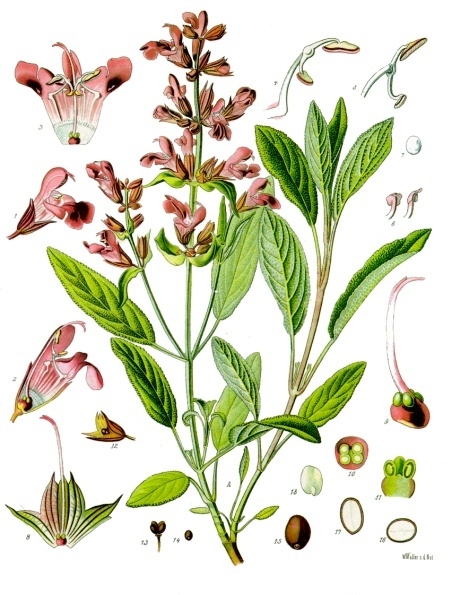
Sage is cleansing, clearing and purifying. White sage is often burned as an incense to clear the air and make a space feel new and refreshed. The essential oils contained within the leaf make sage highly antiseptic, giving it many applications. I like to use strong sage tea at the onset of a cold, or for any respiratory infections or sore throats. It also makes a fantastic mouthwash which supports healthy gums and leaves a clean, aromatic feeling.
HOW TO USE
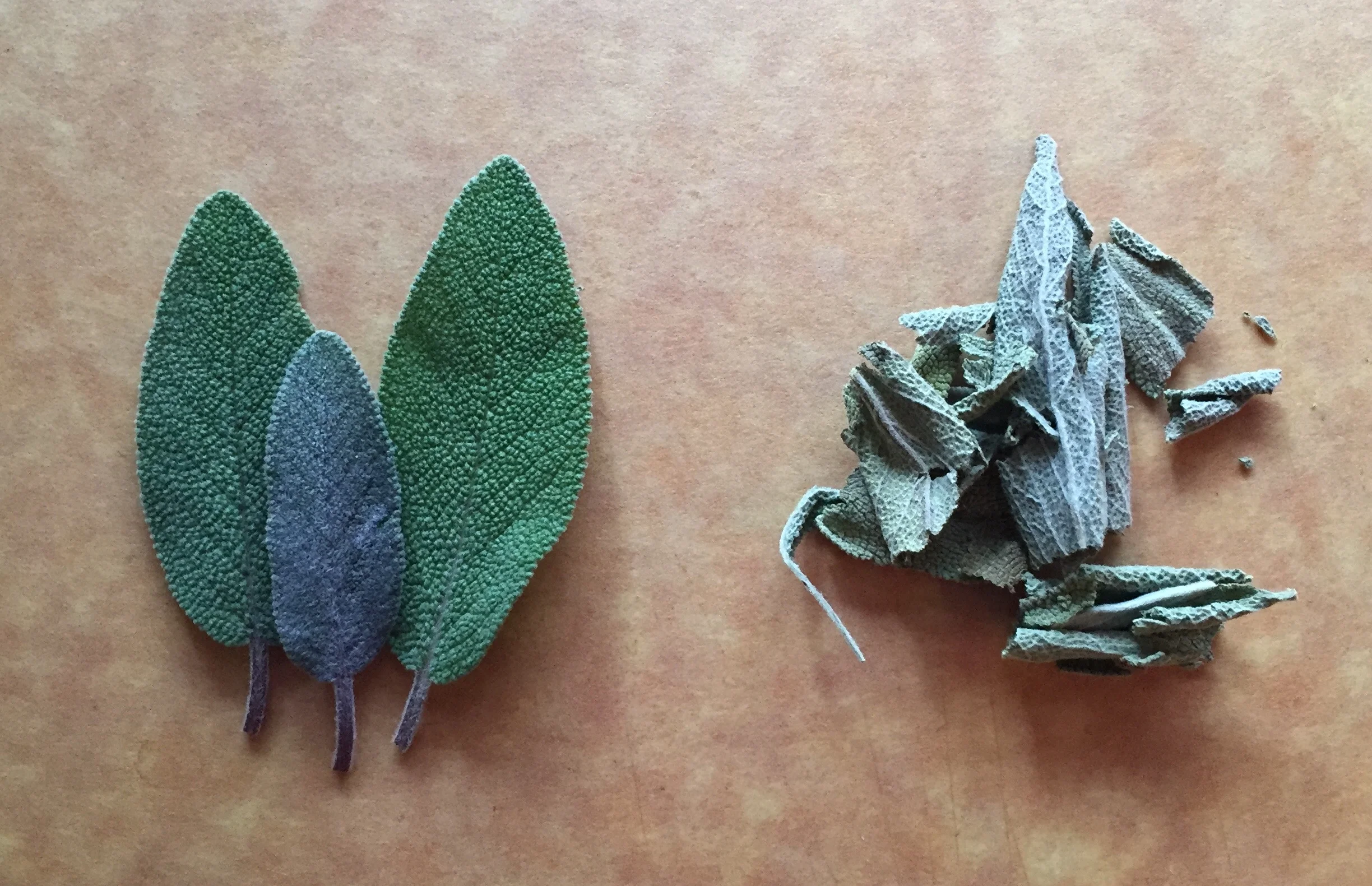
There are many ways to obtain the benefits of sage. Use the dried leaf as a spice in meat or stuffings (especially for Thanksgiving!) I like to drink sage tea with honey — just steep 1-2 teaspoons of the dried leaf in 8 oz. hot water for at least 10 minutes. Then add a spoonful of local honey and sip whenever you are feeling anxious or stressed, or if you are starting to feel a bit under the weather.
Sage Flower Essence can be used as well, and is one of my favorite essences. It helps one to distill wisdom from experience, and is especially recommended for people who find it hard to find purpose and meaning in their life.
RECIPE: Fresh Sage Infused Honey
Herbal honeys are a delicious way to enjoy the benefits of herbs, especially highly aromatic plants like sage. This honey can be enjoyed by the spoonful, added to hot cups of tea, spread onto toast, or made into sauces and salad dressings.
Fill a small 8 oz. glass jar with finely chopped fresh sage leaves. When using fresh herbs I generally fill the jar about 3/4 full.
Cover with local honey, stirring well to ensure that any trapped air bubbles come to the surface.
Label the jar with the date and ingredients.
Let steep for at least 1 week (if you can bear to wait!) up to 4 weeks before using.
If you wish you can strain out the sage leaves through a course strainer (you may have to gently heat up the honey to make it more runny). Or, you can just use the honey as is, sage leaves and all.
Use up within 4-5 months.
Notes:
Sage should be avoided during pregnancy since it can be stimulating to the uterus. It may also reduce the flow of milk during breast feeding and should be avoided by nursing mothers.
REFERENCES:
The Practice of Traditional Western Herbalism by Matthew Wood
The Floral Healer by Anne McIntyre
http://www.botanical.com/botanical/mgmh/s/sages-05.html
http://www.methowvalleyherbs.com/2010/12/why-should-man-die-while-sage-grows-in.html
Steph Zabel is an herbalist and educator based in Somerville, MA who helps urban dwellers connect with the plant world. She teaches herbal classes, is available for individual wellness sessions, and is also the founder of HERBSTALK, a community herbal conference. Learn more about her work at: www.flowerfolkherbs.com and www.herbstalk.org.
This blog post — Sage: The Wise One / Salvia officinalis — is for general health information only. This blog post is not to be used as a substitute for medical advice, diagnosis or treatment of any health condition or problem. Users of this Web site should not rely on information provided on this Web site for their own health problems. Any questions regarding your own health should be addressed to your own physician or other healthcare provider.
Our Graceful Linden Tree: Tilia americana
By Steph Zabel
Herbalist, Ethnobotanist and Educator
This time of year as you walk around our city streets, you’re very likely to come across a beautiful tree filled with creamy white, fragrant flowers. Its aroma is so gorgeous that it makes both bees and hurried city folk slow down their pace.
This tree, which tends to go unnoticed when it's not in flower, is our graceful linden (Tilia americana). We are fortunate to have many lindens in our neighborhood — there are even a few streets named after this beauty. Linden makes for an excellent city tree due to its ability to tolerate pollution and harsh urban environments. In addition, it is also an important food source for bees, a wonderful shade tree, and — with its heart-shaped leaves and delightful flowers — brings beauty wherever it grows.
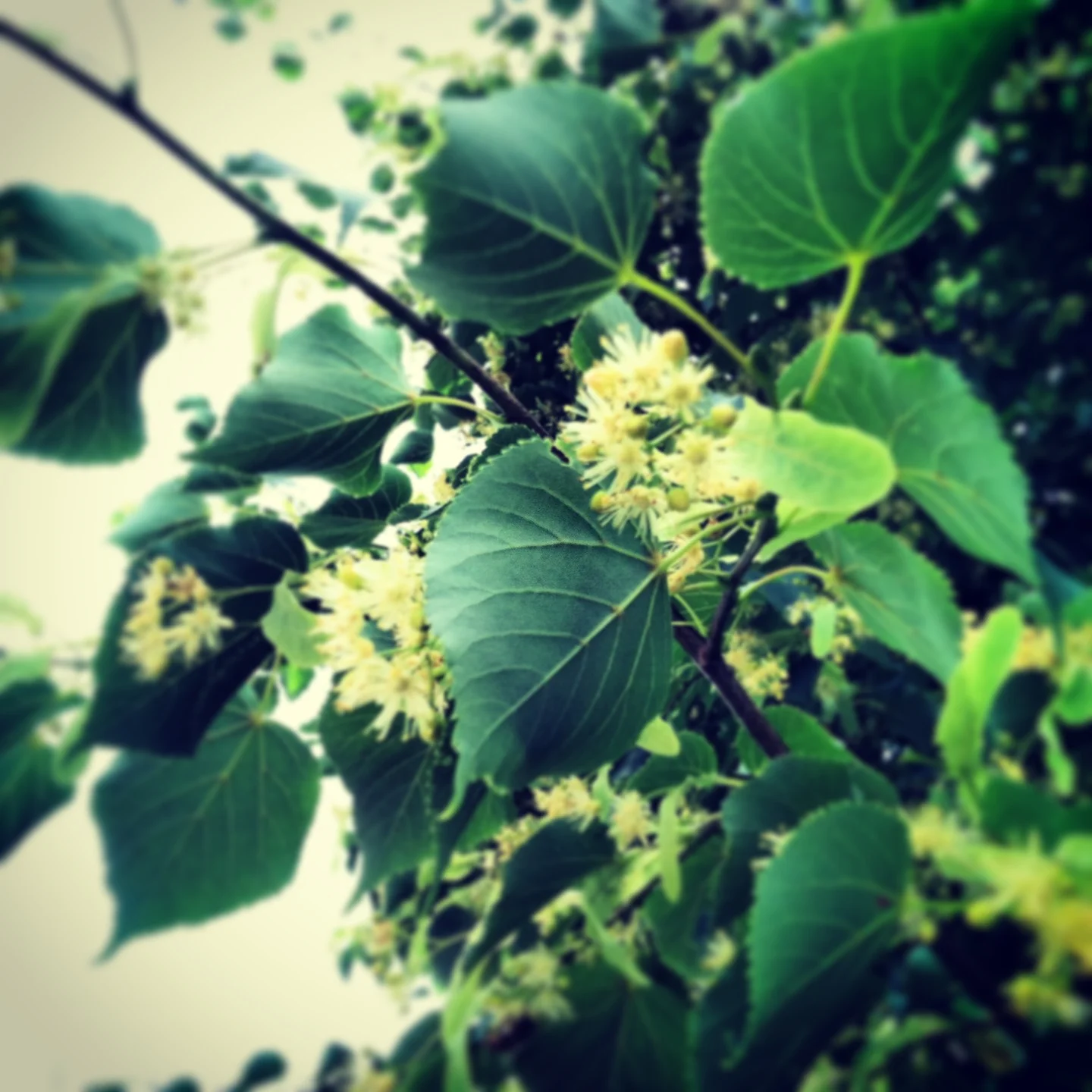
Not surprisingly, linden is one of my favorite herbs to give to people. It has many healing virtues and is also a very safe and gentle remedy for people of all ages and constitutions. In Europe, it was traditionally used in baths for young children before bed to help them have a sound night’s sleep. Stressed-out adults can also benefit immensely from a linden bath.
But if a bath is not for you, a cup of linden tea will do the trick. Well-loved for its soothing properties, it is one of the herbalist’s favorite relaxing nervines, meaning that it helps to soothe and calm the nervous system. It truly is useful for any kind of anxiety or tension, whether it manifests as headaches, nervous tension, restlessness, tense muscles, or poor sleep. I mix it into bed-time blends to help people unwind after a long day and prepare for a deep night’s sleep. Even though linden is so gentle, I have personally found it to be a profound herb for anyone needing better sleep. It mixes beautifully with other relaxing herbs such as oats, skullcap or lavender. Linden seems to have an ability to help you feel how tired you truly are, so that you can finally get the sleep you need.

Beyond its wonderful soothing qualities, linden is a plant that supports a healthy heart. As noted above, linden helps to relax us when we are feeling tense, so it has traditionally been used for the emotional causes behind hypertension and heart palpitations. With its supportive, opening and calming properties linden can help to address emotional issues and stress that may manifest as physical imbalances.
Linden is also a demulcent herb: high in mucilage it imparts a cooling and soothing quality on dry and irritated tissues. This soothing, anti-inflammatory action works on both our internal tissues and our external skin - you use it as a wash or a compress on itchy or inflamed skin.
This beautiful, gentle tree has so much to offer us: from anxiety and stress, to tense hearts and minds, to troubled sleep - it is is a beautiful balm that grows right on our city streets.


HOW TO USE:
Linden Sun Tea
Linden makes for a delicious cold-brewed tea. This method is perfect in the summer time when it is too hot to boil water.
To Brew:
Place 1 heaping handful of dried linden leaves and flowers in a glass quart-sized jar. Cover with cold water and stir. Place on the cap then set in a sunny windowsill for 3-4 hours. Strain out the herb. Chill in the refrigerator if desired or drink at room temperature. The longer it steeps the more the mucilaginous quality (which makes the liquid viscous) will be drawn out.
Soothing Linden Sleep Blend:
2 Tblsp. linden
2 Tblsp. oat tops or oat straw
1 Tblsp. skullcap
1/2 Tblsp. chamomile
pinch of lavender
Blend all herbs together, then use 1 heaping spoonful per mug of hot water. Let steep at least 10 minutes, then strain. Best enjoyed at dusk.
Steph Zabel is an herbalist and educator based in Somerville, MA who helps urban dwellers connect with the plant world. She teaches herbal classes, is available for individual wellness sessions, and is also the founder of HERBSTALK, a community herbal conference. Learn more about her work at: www.flowerfolkherbs.com and www.herbstalk.org.
REFERENCES:
http://umm.edu/health/medical/altmed/herb/linden
http://www.herbalremediesadvice.org/linden-flower-tea-benefits.html
http://www.healthy.net/Materia_Medica/Linden_Herbal_Materia_Medica/240
This blog post — Our Graceful Linden Tree — is for general health information only. This blog post is not to be used as a substitute for medical advice, diagnosis or treatment of any health condition or problem. Users of this Web site should not rely on information provided on this Web site for their own health problems. Any questions regarding your own health should be addressed to your own physician or other healthcare provider.
Solomon's Seal: A Medicine Cabinet Must-Have
Maribeth, our resident staff "herbalist-in-training" wrote this beautiful blog post on the versatile herb Solomon's Seal, a plant that does not often get the limelight!
True Solomon's Seal has been captivating my attention over the past few years while living in New England. As a plant that is not written about much in the western world, it makes me so happy to see our customers taking a strong interest in such a useful herb.
In 1597, herbalist John Gerard wrote about Polygonatum biflorum, stating "common experience teacheth, that in the world there is not to be found another herbe comparable to it."

Often considered a "miracle plant," many herbalists and healers throughout Asia, Europe, and North America consider True Solomon's Seal to be a must have in one's medicine cabinet. It is well known that Native Americans used the plant as a nutritive food and medicine and that the rhizome is still used as a trail food today. Also known as King Solomon's Seal, the plant has roots in Hebrew folklore. The scar left on the rootstock after the stem dies back resembles the seal that King Solomon used for his magical endeavors.
Magic? Perhaps. But Solomon's Seal is truly a versatile plant.
Known mostly for its action on tendons, joints, ligaments, and the musculoskeletal system, it is said that Solomon's Seal has a kind of intelligence that allows it the "ability to restore proper tension to the ligaments, regardless of whether they need to be loosened or tightened." As a yin tonic, Solomon's Seal is a restorative, nourishing, moisturizing, and lubricating tonic herb. These actions can be seen especially in the tendons, joints, ligaments, bone, connective tissue, cartilage, throat, and mucosa lining of the lungs, gastrointestinal tract, and reproductive system of both men and women. It is said that Native Americans also used the plant to help moderate intestinal inflammation. Galen recommended the herb to "remove freckles, spots, and marks for a fresh, fair, and lovely skin."*
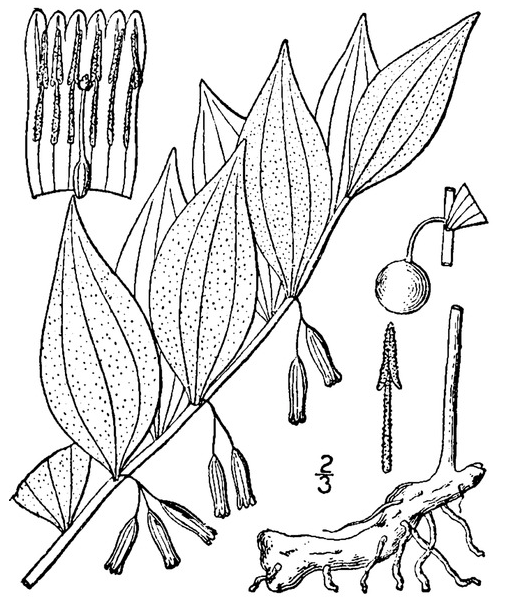

My body seems to crave Solomon's Seal to help restore moisture, lubrication, and proper movement to the many corners of my body after the especially long winters we experience here in the north east. I have also used a few drops of the tincture, or an infused oil, to remedy a chronic bruised tailbone and for the wear my knees experienced from being a ballerina. I imagine anyone who is partaking in intense physical activities would benefit from the protecting and healing qualities of Solomon's Seal.
True Solomon's Seal is found in the U.S. throughout the eastern woodlands and into the Midwest. It's important to learn how to properly identify True Solomon's Seal from False Solomon's Seal as they do grow near each other. As the herb has often been over harvested and is constantly at risk, it's important to be very mindful when wild harvesting! However, Solomon's Seal grows very well in shaded gardens, as I've seen all over Cambridge and Somerville!
Here at the store we carry a 2 oz. tincture by David Winston of Herbalist & Alchemist, who finds it particularly effective for complaints of the respiratory system as well as injuries to the joints, tendons, and cartilage.
REFERENCES:
The Earthwise Herbal by Matthew Wood
Herbcraft.org: Jim McDonald
Solomonsseal.net
*This blog post — Solomon's Seal: A Medicine Cabinet Must-Have — is for general health information only. This blog post is not to be used as a substitute for medical advice, diagnosis or treatment of any health condition or problem. Users of this Web site should not rely on information provided on this Web site for their own health problems. Any questions regarding your own health should be addressed to your own physician or other healthcare provider.
Sweet Marshmallow Root: Althaea officinalis
By Steph Zabel
Herbalist, Ethnobotanist and Educator
Marshmallow root, as the name implies, was once included as an ingredient in the original sticky-sweet marshmallow candy. Alas, commercial marshmallows no longer contain this herb, but you can still make your own "real" ones at home! Check out the recipe below...
For centuries mallows have been used for food - both the leaves and the roots are edible. Marshmallow is closely related to other beloved plants such as cotton, hibiscus, and okra.
Beyond its food uses, marshmallow is a gentle medicinal plant. The nutritive and sweet root imparts a unique mucilaginous quality when extracted in water. Marshmallow has a high concentration of polysaccharides that impart a viscous and soothing quality to the liquid in which it is extracted.
By Steph Zabel
Herbalist, Ethnobotanist and Educator
Marshmallow root, as the name implies, was once included as an ingredient in the original sticky-sweet marshmallow candy. Alas, commercial marshmallows no longer contain this herb, but you can still make your own "real" ones at home! Check out the recipe below...
For centuries mallows have been used for food - both the leaves and the roots are edible. Marshmallow is closely related to other beloved plants such as cotton, hibiscus, and okra.
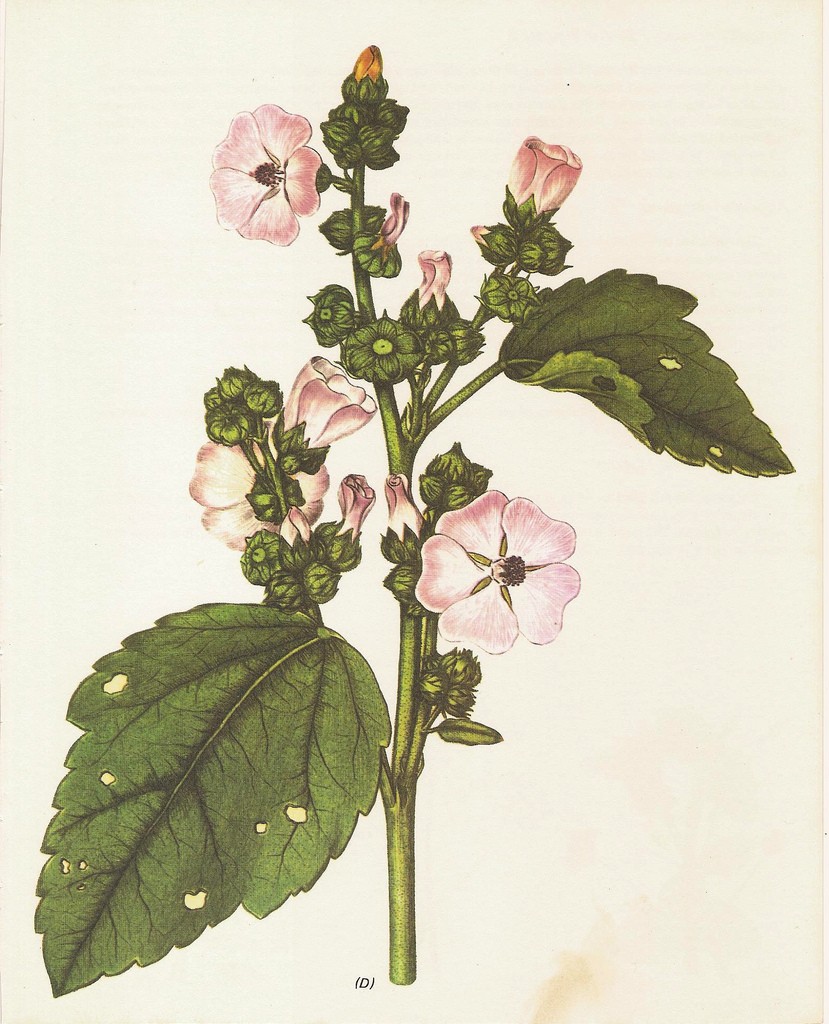
Beyond its food uses, marshmallow is a gentle medicinal plant. The nutritive and sweet root imparts a unique mucilaginous quality when extracted in water. Marshmallow has a high concentration of polysaccharides that impart a viscous and soothing quality to the liquid in which it is extracted.
This marshmallow mucilage has many benefits. Its anti-inflammatory and emollient properties are cooling and soothing to our internal tissues, with a special affinity for the mucous membranes of the gastrointestinal, respiratory and urinary tracts. This comes in handy for inflammatory conditions such as ulcers, heartburn, indigestion and Chrone's disease. Marshmallow root can also be used to address sore throats and dry coughs, and has been traditionally used for urinary issues such as cystitis and UTIs.

Photo credit: Todd Danforth

Photo credit: Todd Danforth
Externally, both the leaves and the roots of marshmallow are used on burns, wounds and all inflammatory skin disorders. It is extremely soothing for any sort of skin irritation.
How to Use Marshmallow
Marshmallow root can be found finely cut up, or as a powder. Either form can be used. To get the most benefit out of the soothing, mucilaginous properties of the root be sure to extract it with cold or lukewarm water, since hot water will break down the beneficial polysaccharides.
Marshmallow Water
Add 2-3 Tblsp. powdered marshmallow root OR 1/4 cup cut marshmallow root to a quart-sized glass jar. Pour cold water to the top of the jar, covering the root and blending well, or just cap the jar and shake vigorously. Allow this to sit at room temperature for at least an hour or two up to 8 hours. Pour through a fine sieve and drink. The final marshmallow water should be viscous, pale yellow colored, slightly sweet tasting, and soothing.
Marshmallow is the "herb of the year" at Herbstalk! Herbstalk creates educational community events that teach people about plants. We host classes on herbal and holistic health topics, offer urban plant walks, and bring together herbal crafters & artisans from across New England. Our next event takes place on June 6 & 7 at the Armory in Somerville. For more details and the full class schedule please visit: www.herbstalk.org
REFERENCES:
by Matthew Wood
by Rosalee de la Foret
by Maude Grieves
Steph Zabel is an herbalist and educator based in Somerville, MA who helps urban dwellers connect with the plant world. She teaches herbal classes, is available for individual wellness sessions, and is also the founder of HERBSTALK, a community herbal conference. Learn more about her work at: www.flowerfolkherbs.com and www.herbstalk.org.
This Web site — Herbs and Botanicals — is for general health information only. This Web site is not to be used as a substitute for medical advice, diagnosis or treatment of any health condition or problem. Users of this Web site should not rely on information provided on this Web site for their own health problems. Any questions regarding your own health should be addressed to your own physician or other healthcare provider.
Oats / Avena Sativa: A Tonic Herb That Nourishes & Calms
By Steph Zabel
Herbalist, Ethnobotanist and Educator
Oats are incredibly nourishing, especially for the nervous system. When used in the “milky” stage they feed nervous tissue and help to restore normal nerve function and vitality. This is one of my absolute favorite herbs since it is so gentle but so powerful, and makes a noticeable difference for anyone who is stressed, overly sensitive, depleted or worn out. To me, they are a prime remedy for most city-dwellers
By Steph Zabel
Herbalist, Ethnobotanist and Educator
Oats are incredibly nourishing, especially for the nervous system. When used in the “milky” stage they feed nervous tissue and help to restore normal nerve function and vitality. This is one of my absolute favorite herbs since it is so gentle but so powerful, and makes a noticeable difference for anyone who is stressed, overly sensitive, depleted or worn out. To me, they are a prime remedy for most city-dwellers.
Oats are amazing for helping people to overcome nervous exhaustion, shattered nerves, or emotional instability. They help people who are over-worked or burnt out, providing much needed food and minerals for a depleted system, including magnesium, calcium and silica. As a very calming and soothing herb oats are also useful for sleep issues and insomnia, or any kind of mental or physical agitation.
In addition to its nutritive value, oat tea is a gentle way to restore emotional balance. Drinking daily oat infusions is a great practice for anyone who is constantly stressed or upset, and is especially good for driven types who work, work, work! I find oats to also be a lovely, soothing and supportive herb to use during times of loss or sorrow. Blended with other heart-healing herbs it feels like a sweet and comforting friend.

Oats come in a variety of forms. Everyone knows of rolled oats or steel-cut oats as a breakfast food. However, oat tops (the seed of the plant) or oat straw (the stems/leaves of the plant) are what I recommend for making nourishing teas. You can also take the tincture, but just be sure to look for milky oat tincture – this means that the oats were harvested at a time when the seed yields a milky substance when crushed. This is where much of its nutritional and medicinal value lies.
HOW TO USE:
Use the dried oat tops or straw to make a nourishing tea blend. Add one big handful (½ – ¾ cup) to a glass quart jar. Pour boiled water over the herb, cover, and let steep overnight to extract as much of the medicinal and nutritive qualities as possible. Oats are a food-grade herb that can be taken consistently over long periods of time. Drink 1 – 2 quarts of overnight-steeped oat infusion per day.
Note: While they are one of the safest and gentlest of herbs, oats may not be suitable for people who have severe gluten intolerance due to possible cross-contamination from gluten-containing grains.
RECIPE: City-Dweller’s Tonic Tea
Oats are my go-to herb for feeling more calm and nourished. They blend beautifully with other gentle, soothing herbs to support the nervous system. Use the recipe below as a starting point, and switch out the linden for other herbs such as lemon balm, violet and/or chamomile as you wish.


Ingredients:
1 cup Oat Tops
½ cup Linden
1-2 Tblsp. Lavender
Mix together all the herbs. Add ¼ cup of this blend to a glass quart jar. Cover with boiled water, cap, and let steep overnight, or at least 6 hours. Strain and drink at room temperature, or gently re-heat.
Steph Zabel is an herbalist and educator based in Somerville, MA who helps urban dwellers connect with the plant world. She teaches herbal classes, is available for individual wellness sessions, and is also the founder of HERBSTALK, a community herbal conference. Learn more about her work at: www.flowerfolkherbs.com and www.herbstalk.org.
REFERENCES:
http://www.cshs.com/herbsOfMonth/oats.html
http://www.blessedmaineherbs.com/mioaavsa.html
http://www.gaiaherbs.com/products/ingredient/349/Wild-Oats
http://bearmedicineherbals.com/sweet-cream-the-medicine-of-milky-oats.html
This Web site — Herbs and Botanicals — is for general health information only. This Web site is not to be used as a substitute for medical advice, diagnosis or treatment of any health condition or problem. Users of this Web site should not rely on information provided on this Web site for their own health problems. Any questions regarding your own health should be addressed to your own physician or other healthcare provider.
Maribeth's Wholesome Spring Blend Tea
Our herbalist-in-training on staff, Maribeth, created this wonderful tea blend to help us transition physically and mentally into springtime! The perfect beverage for a warm(er) day like today!
Ingredients: Nettle Leaf, Dandelion Root, Oatstraw, Lemon Balm, Red Clover, Raspberry Leaf, Calendula
As the weather warms and the plants stir under melting snow, so do our spirits return after a harsh north east winter. As the earth transitions, so do our bodies emerge to flow with the rhythms of Spring. Our inner fluids begin to move just as the sap runs through the veins of the tree. Our lymph system and organs of elimination are in need of support as we release the stagnation of winter.
Our herbalist-in-training on staff, Maribeth, created this wonderful tea blend to help us transition physically and mentally into springtime! The perfect beverage for a warm(er) day like today!
Ingredients: Nettle Leaf, Dandelion Root, Oatstraw, Lemon Balm, Red Clover, Raspberry Leaf, Calendula
As the weather warms and the plants stir under melting snow, so do our spirits return after a harsh north east winter. As the earth transitions, so do our bodies emerge to flow with the rhythms of Spring. Our inner fluids begin to move just as the sap runs through the veins of the tree. Our lymph system and organs of elimination are in need of support as we release the stagnation of winter.
This gentle herbal blend was formulated to support the release our bodies go through as we shed our winter armor and prepare for the renewal Spring brings. Cleansing and nourishing, these herbs support our body's natural detoxification process while supplying fortifying vitamins and minerals we may be craving after a long winter. I like to drink our Wholesome Spring Blend this time of year to rejuvenate my body, mind, and spirit.
For the most therapeutic results, I like to add a handful of this blend to a quart jar, cover with boiling water, cap tightly, and steep overnight, or at least 6 hours. Reheat as needed or drink at room temperature throughout the day. You may also steep 1 tbsp. to a mug of boiling water for at least 20 minutes. Make sure to cover your mug to preserve all of the nutrients and essential oils!

For the most therapeutic results, I like to add 4-6 tablespoons of this blend to a quart jar, cover with boiling water, cap tightly, and steep overnight, or at least 6 hours. Reheat as needed or drink at room temperature throughout the day. You may also steep 1 tbsp. to a mug of boiling water for at least 20 minutes. Make sure to cover your mug to preserve all of the nutrients and essential oils!
If you'd like to make your own blend, you can find all of these herbs in our bulk herb department. Choose your measurements of choice whether they be cups or teaspoons and blend:
2 parts Red Clover Blossoms
2 parts Nettle Leaf
1 part Oatstraw
1 part Dandelion Root
1/2 part Raspberry Leaf
1/4 part Lemon Balm
1/4 part Calendula
This Web site — Herbs and Botanicals — is for general health information only. This Web site is not to be used as a substitute for medical advice, diagnosis or treatment of any health condition or problem. Users of this Web site should not rely on information provided on this Web site for their own health problems. Any questions regarding your own health should be addressed to your own physician or other healthcare provider.
VIOLET: Viola odorata and related species
By Steph Zabel
Herbalist, Ethnobotanist and Educator
As I sit down to write this article about one of my favorite spring plants, the snow outside is flying, adding to our record-breaking, epic winter. But despite the piles of snow that remain in our streets and yards, the thaw has begun, the days are warming, and we will soon see the plants re-emerge from their slumber. This is certainly a month full of hope and renewal.
By Steph Zabel
Herbalist, Ethnobotanist and Educator
As I sit down to write this article about one of my favorite spring plants, the snow outside is flying, adding to our record-breaking, epic winter. But despite the piles of snow that remain in our streets and yards, the thaw has begun, the days are warming, and we will soon see the plants re-emerge from their slumber. This is certainly a month full of hope and renewal.
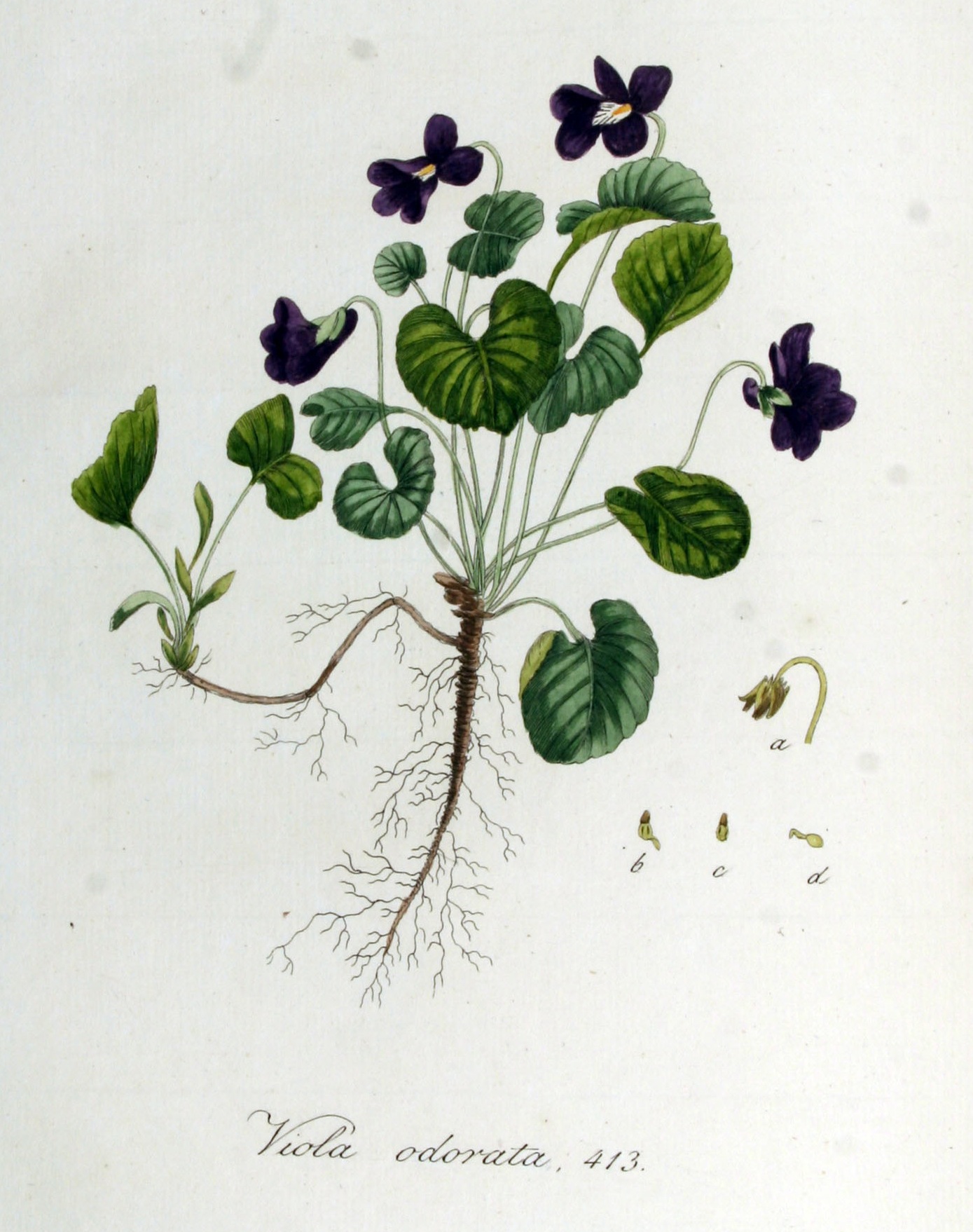
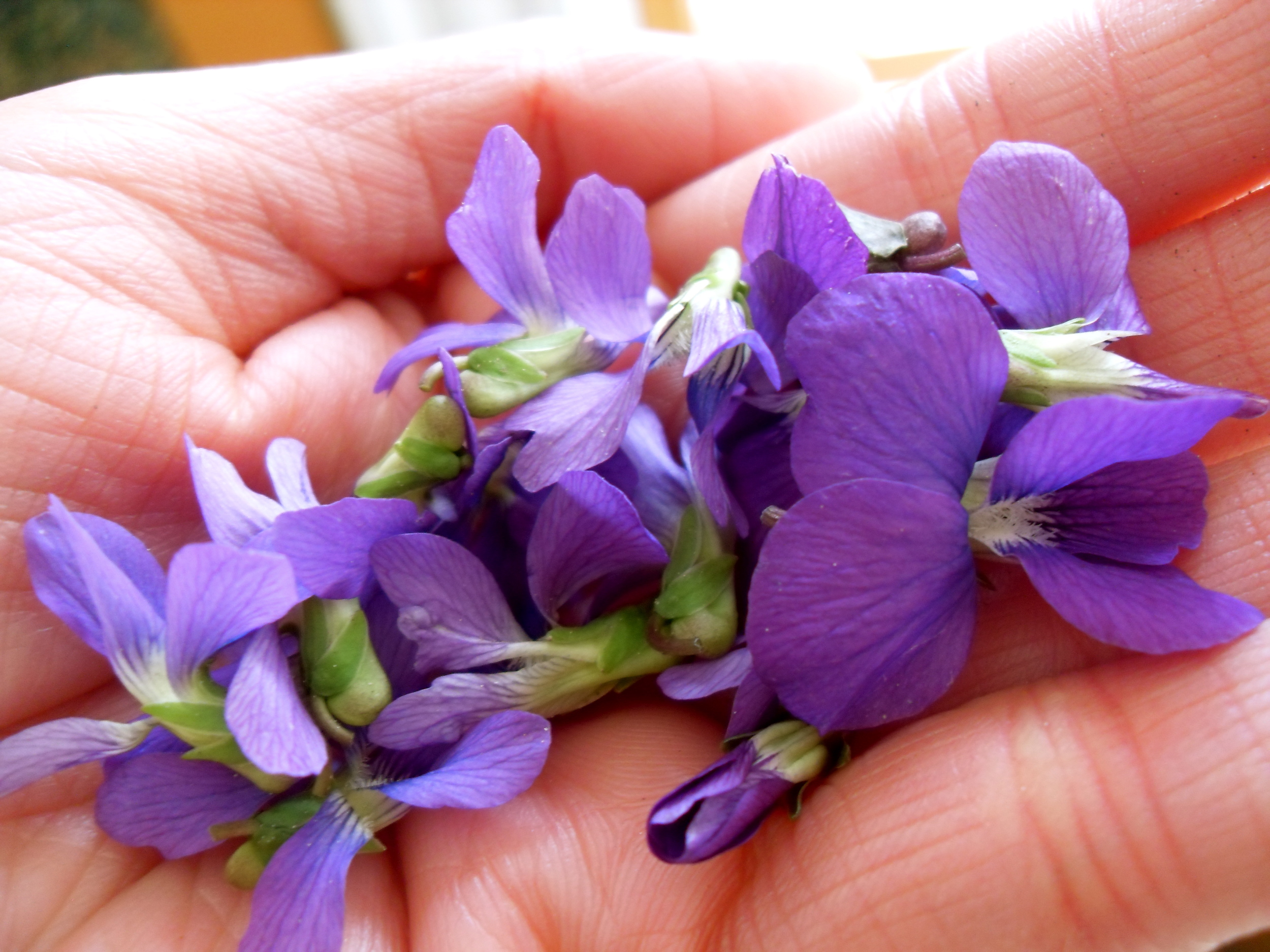
I could not think of a better plant to symbolize spring’s feeling of renewal than the sweet violet flower. With its tender, young, heart-shaped leaves, and its brilliantly colored purple flowers, it is truly a balm to a winter-weary spirit. As the violets bravely emerge in chilly temperatures and before most other plants, I think of them as sweet love letters unfolding from the earth.
One of our best and most nutritious wild spring edibles, violet leaves and flowers are high in Vitamins A & C. You can eat them raw, plucked right from the garden; I like to add them to fresh salads for a beautiful spring touch.
Violet has a slight mucilaginous quality to it, which means it contains a type of polysaccharide that imparts a viscous quality to water when extracted – a quality that is extremely soothing and cooling to mucous membranes. As such, violets can help calm inflammatory conditions, whether it is itchy skin, inflammation in the gut, or a scratchy, sore throat. Use violets on any irritated tissue – they will provide a cooling and soothing relief. Or as the famous English herbalist Culpepper said, “All the Violets are cold and moist, and are used to cool any heat or distemperature of the body, either inwardly or outwardly.”
Violet is also known as a traditional “blood purifier” or alterative herb. This makes it a wonderful and gently detoxifying plant for the spring season, helping our bodies to wake up from the winter and move along any stagnation. Just as the sap in the trees starts to move, so must we move the inner fluids of our bodies, especially through the filter of our lymphatic system. Violet is one of our best lymphatic herbs and is often used to support the removal of toxins from the system. Herbalist Matthew Wood especially recommends violet for “lymphatic stagnation and swollen glands, often in the throat or around the ears.”
If you read old herbal texts from a few centuries ago you will discover that violet was also prescribed as a support for emotional upset – it was said to “comfort and strengthen the heart” and to “to moderate anger.” Violet has an amazing ability to bring its soothing comfort to any inflammatory situation, whether physical or emotional.
Botanically speaking, the violet plant is quite unique. Violets actually produce two different kinds of flowers – first the spring-born flowers (which attract both bees and humans alike). Usually, however, these flowers do not produce seed. Later in the season, violets produce a second kind of flower that grows close to the earth, or underground. Called cleistogamous flowers, these hidden blooms do not usually fully open, and are self-pollinated. Try pulling away the leaves of a clump of violet in late summer or early fall to find these unusual, pale flowers. If you happen to find a seed pod, take a peek inside – you will be most amazed to find a capsule full of luminous, iridescent seeds that shimmer in the sunlight. The first time I discovered the hidden secret of the humble violet, it took my breath away with its beauty.
HOW TO FORAGE AND USE:
Violets are abundant in early spring, and may even spontaneously grow in your backyard or garden. As with harvesting any wild plant, be sure that you are collecting plants in an area that is free from contamination. It is always a good idea to test your soil for heavy metals, and to stay away from collecting near busy roadsides.

Once you have determined a suitable place to harvest your violets, you can pluck the young leaves and flowers when they first emerge and eat them raw in fresh salads. Violets are in their prime when the weather is still cool, so take advantage of the flowers while they are available. Once the weather turns warm, only the leaves will remain.
You can also use dried violet leaf and flower when the fresh plant is not available, but the vivid purple-blue color of the flower will fade once dried. To make a violet infusion, steep up to 1 Tblsp. dried leaf in 8 oz. hot water for at least 10-15 minutes. If you would like to extract more of the soothing, mucilaginous qualities mentioned above, steep the dried leaf in cold water instead, which will preserve the beneficial polysaccharides.
Violet blends well with other herbs such as rose, oat tops and linden for a relaxing tea.
Note: The Violet we speak of here (Viola odorata and related species) is NOT the same as the indoor houseplant, the African Violet, which is unrelated and poisonous. Be sure to only use plants you have positively identified.
A Spring Recipe: VIOLET SYRUP adapted from herbalist Susan Weed
Ingredients:
1/2 pound fresh violet flowers
2 cups water
2 cups raw honey
Directions:
Enlist all the help you can to pick violet blossoms. Boil the water and pour over the fresh blossoms; cover. Let steep overnight in nonmetallic container. The next day, strain out the flowers and reserve the bright purple liquid. Combine the violet infusion and honey in a saucepan. Simmer gently, stirring, for ten or fifteen minutes, until it seems like syrup. Fill clean jars. Cool. Keep well chilled to preserve.
Steph Zabel is an herbalist and educator based in Somerville, MA who helps urban dwellers connect with the plant world. She teaches herbal classes, is available for individual wellness sessions, and is also the founder of HERBSTALK, a community herbal conference. Learn more about her work at: www.flowerfolkherbs.com and www.herbstalk.org.
References:
http://blog.chestnutherbs.com/even-violets-need-a-plan-b
This Web site — Herbs and Botanicals — is for general health information only. This Web site is not to be used as a substitute for medical advice, diagnosis or treatment of any health condition or problem. Users of this Web site should not rely on information provided on this Web site for their own health problems. Any questions regarding your own health should be addressed to your own physician or other healthcare provider.
Tulsi / Holy Basil: Ocimum sanctum
By Steph Zabel
Herbalist, Ethnobotanist and Educator
For thousands of years tulsi has been considered a sacred herb. Also called holy basil and “the elixir of life” it originated in India, where it became an important herb of Ayurvedic medicine, and was sacred to the Hindu god Vishnu. Amongst Ayurvedic practitioners it is known as a rayasana plant, which is a special group of herbs said to promote longevity and perfect health.
Tulsi’s popularity has now spread throughout the world and Western herbalists have also fallen in love with it. Traditionally used for a variety of ills ranging from respiratory problems to exhaustion to digestive issues, it is a remarkable plant for human health.
By Steph Zabel
Herbalist, Ethnobotanist and Educator
For thousands of years tulsi has been considered a sacred herb. Also called holy basil and “the elixir of life” it originated in India, where it became an important herb of Ayurvedic medicine, and was sacred to the Hindu god Vishnu. Amongst Ayurvedic practitioners it is known as a rayasana plant, which is a special group of herbs said to promote longevity and perfect health.
Tulsi’s popularity has now spread throughout the world and Western herbalists have also fallen in love with it. Traditionally used for a variety of ills ranging from respiratory problems to exhaustion to digestive issues, it is a remarkable plant for human health.

Tulsi is incredibly aromatic - both spicy and pungent like culinary basil (its close cousin), but also with hints of sweetness and clove to it. All upper portions of the plant – leaves, stems, flowers, and seed heads – hold this aromatic property. Even a slight touch of the fresh plant will release its beautiful scent into the air.
Modern herbalists use tulsi as an adaptogen, which is a type of herb that helps one to adapt to and overcome everyday stress. It can calm an over-active mind, help one feel more grounded during times of overwhelm, and is said to “gladden the heart.” Used consistently it can also increase energy and endurance.
It is also a lovely relaxing nervine, and a calming, centering herb useful for an anxious mind. Personally I find it to be very comforting and grounding when I feel scattered, or my to-do list seems endless.
In going back to Ayurveda’s use of tulsi as a rayasana (rejuvenative) herb, holy basil can help move an individual towards whole health and vitality, acting on many systems of the body. Due to its stimulating essential oil content it will increase and support digestion. Traditionally it was also used to protect against disease by supporting the immune system. As an antibacterial plant, it is useful herb for colds and respiratory infections and also helps to clear away excess mucous.
You may see a few different varieties of tulsi available, including rama, vana and krishna tulsi. Experiment to see which one you like best as they all have slightly different scents and tastes. Krishna tulsi has the most intense and pungent flavor. My favorite, however, is the mellow rama variety, which also happens to be the one most commonly cultivated and easily found.
HOW TO USE:
To make an aromatic cup of tulsi tea steep up to 1 Tblsp. of the dried leaf in one cup of water for 10 minutes, covered. If you are fortunate enough to have fresh tulsi leaf on hand, use twice this amount per cup of water. Tulsi also makes a wonderful iced tea during the summer months – keep a pitcher in the fridge to drink throughout the day.
Note: Tulsi is not recommended for those trying to conceive due to possible anti-fertility effects with consistent, long-term use.
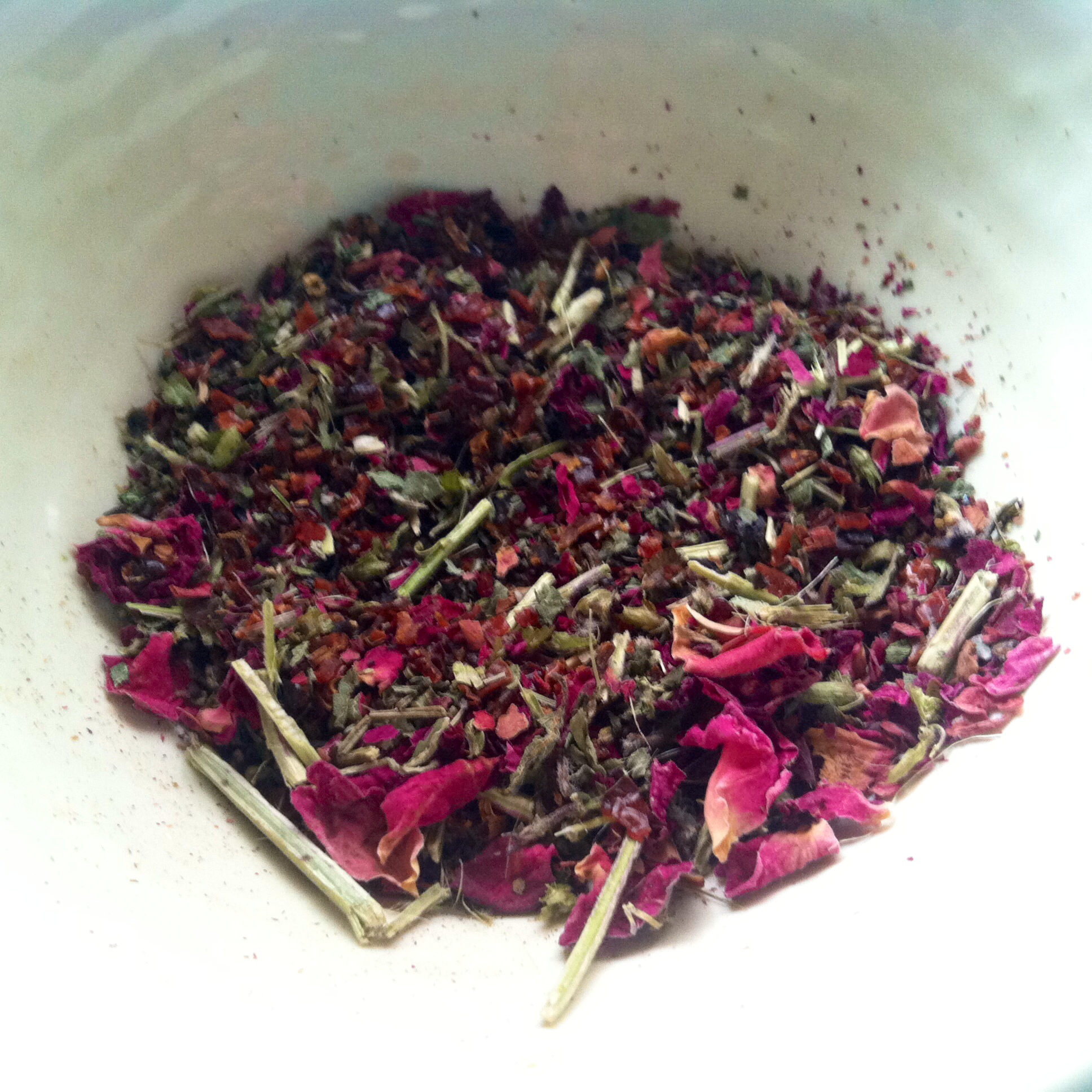
RECIPE: Winter Tulsi-Rose Tea
Tulsi and rose are wonderful companions. Drink this tea when you have the winter blues or need a little pick-me-up.
Mix together:
2 Tblsp. Tulsi
1 Tblsp. Rosehips
½ Tblsp. Rose Petals
Steep up to 1 Tblsp. of the blend in 1 cup of hot water for at least 10 minutes, then strain out the herbs. Add honey if desired.
Steph Zabel is an herbalist and educator based in Somerville, MA who helps urban dwellers connect with the plant world. She teaches herbal classes, is available for individual wellness sessions, and is also the founder of HERBSTALK, a community herbal conference. Learn more about her work at: www.flowerfolkherbs.com and www.herbstalk.org.
References:
Winston, D. and Maimes, S. Adaptogens: Herbs for Strength, Stamina, and Stress Relief. Rochester, VaA Healing Arts Press. 2007.
http://www.gaiaherbs.com/uploads/1596_HPR_HolyBasil_ResearchPaper-1371567034.pdf
http://www.uofmhealth.org/health-library/hn-4597000
http://www.drweil.com/drw/u/QAA346157/holy-basil-to-combat-stress.html
This Web site — Herbs and Botanicals — is for general health information only. This Web site is not to be used as a substitute for medical advice, diagnosis or treatment of any health condition or problem. Users of this Web site should not rely on information provided on this Web site for their own health problems. Any questions regarding your own health should be addressed to your own physician or other healthcare provider.